Listen to this Post
Introduction:
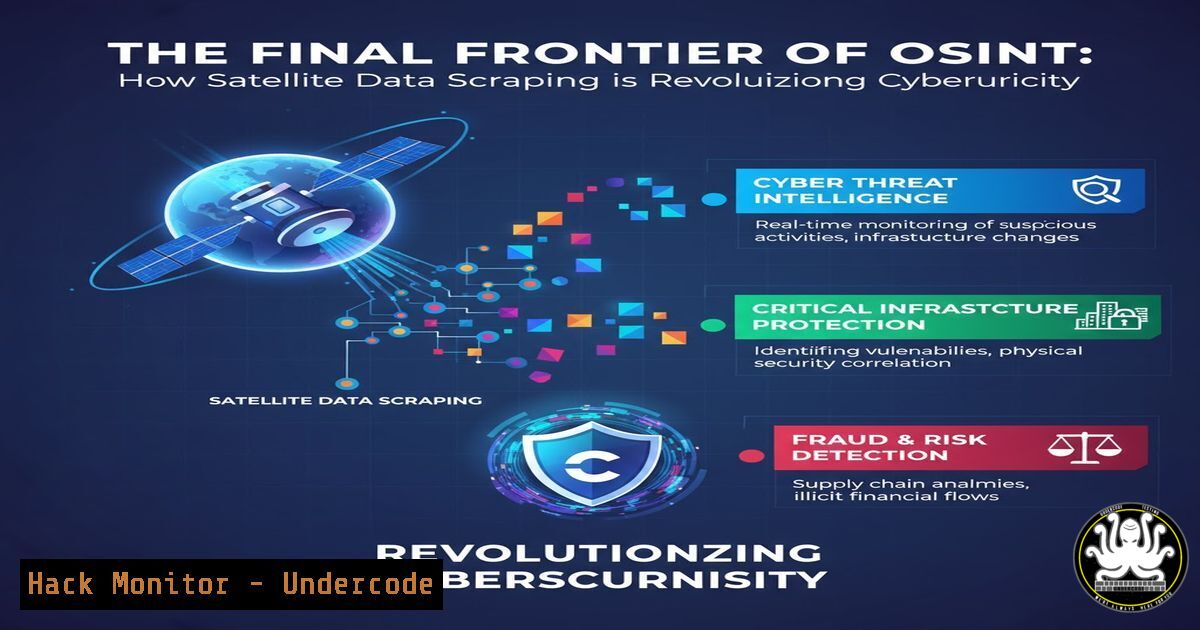
The realm of Open-Source Intelligence (OSINT) has expanded beyond terrestrial networks and data leaks into the celestial sphere. With the advent of tools like SatNow-Scraper, cybersecurity professionals and threat actors alike can now automate the harvesting of detailed technical specifications for commercial satellites. This shift introduces a new attack surface, where supply chain vulnerabilities, communication protocols, and physical components of orbital infrastructure become accessible for analysis, posing unprecedented risks and opportunities.
Learning Objectives:
- Understand the cybersecurity implications of satellite infrastructure data being publicly available.
- Learn how to utilize OSINT tools for technical data extraction and analysis.
- Identify potential attack vectors derived from satellite component and specification data.
You Should Know:
1. Automated Satellite Data Harvesting with SatNow-Scraper
The primary tool discussed, SatNow-Scraper, automates the collection of satellite technical specifications from the SatNow database. This Python-based tool extracts data such as components, subsystems, frequencies, and materials, outputting it in structured formats like JSON for further analysis.
Command:
git clone https://github.com/username/SatNow-Scraper.git
cd SatNow-Scraper
pip3 install -r requirements.txt
python3 satnow_scraper.py --target "satellite_name" --export json
Step-by-step guide:
This command sequence first clones the repository from GitHub. After navigating into the directory, it installs the necessary Python dependencies, such as `requests` and beautifulsoup4. Finally, it executes the scraper, targeting a specific satellite and exporting the harvested data into a JSON file. This data can then be parsed to map a satellite’s technical entrails, identifying critical components and their potential suppliers.
2. Parsing Harvested JSON Data for Component Analysis
Once data is harvested, parsing the JSON output is crucial for identifying specific hardware and software components. This can reveal single points of failure or components with known vulnerabilities.
Command:
jq '.satellites[] | {name: .name, components: [.components[].name]}' satellite_data.json
cat satellite_data.json | python3 -m json.tool | grep -A 5 -B 5 "sensor"
Step-by-step guide:
The first command uses jq, a lightweight command-line JSON processor, to filter the JSON file and extract a list of satellites and their components. The second command pretty-prints the JSON file and uses `grep` to search for specific keywords like “sensor,” displaying the surrounding lines for context. This helps analysts quickly pinpoint specific technologies used onboard.
3. Correlating Satellite Components with Known Vulnerabilities
With a list of components identified, the next step is to cross-reference them with public vulnerability databases. This can uncover potential exploits targeting the satellite’s ground systems or its space-borne hardware.
Command:
 Search CVE databases for a specific component
curl -s "https://cve.circl.lu/api/search/component-vendor" | jq '.'
 Using searchsploit for exploit-db
searchsploit "component_name"
 Nmap script to check for vulnerable services on a ground station IP
nmap -sV --script vuln 192.168.1.50
Step-by-step guide:
The `curl` command queries the CVE (Common Vulnerabilities and Exposures) database from CIRCL for a specific vendor or component. `Searchsploit` locally searches the Exploit Database for public exploits related to the component. The `nmap` command then scans a hypothetical ground station IP address for services with known vulnerabilities, using the `vuln` script category.
4. Mapping Satellite Communication Frequencies
Understanding the communication frequencies of a satellite is vital for signal intelligence (SIGINT) and can be used to identify interception or jamming opportunities.
Command:
 Using gr-osmosdr with GNU Radio for SDR analysis
osmocom_siggen -f 14.5G -s 2e6 -a 0 -g 50
 Using gqrx for visual signal analysis (GUI)
gqrx
 Using rtl_power for frequency scanning
rtl_power -f 14.2G:14.8G:1M -i 1m -e 1h scan.csv
Step-by-step guide:
These commands utilize Software-Defined Radio (SDR) tools. `osmocom_siggen` can generate a test signal at a common satellite downlink frequency (e.g., 14.5 GHz). `gqrx` is a GUI-based SDR receiver for visually analyzing signals. `rtl_power` performs a long-term frequency scan, recording power levels to a CSV file, which can be analyzed to identify active transmission windows.
5. Supply Chain Attack Vector Identification
The data scraped by SatNow-Scraper often includes supplier information for satellite components. This data can be used to map the supply chain and identify weaker, less-secure vendors as potential infiltration points.
Command:
 Using Maltego for entity relationship mapping (GUI)
 Using theHarvester for OSINT on supplier domains
theharvester -d suppliersite.com -l 500 -b google
 Checking supplier site security headers
curl -I https://suppliersite.com | grep -i "strict-transport-security|content-security-policy"
Step-by-step guide:
While Maltego is a GUI tool for link analysis, the command line offers powerful alternatives. `theHarvester` is used to gather emails, subdomains, and other information about a component supplier’s domain. The `curl` command checks the HTTP security headers of the supplier’s website; weak headers could indicate poor security practices, making them a softer target for a supply chain attack.
6. Building a Satellite Asset Inventory for Pentesting
For red teams assessing an organization’s space-based assets, creating a detailed inventory from OSINT data is the first step.
Command:
 Using a simple script to filter and organize SatNow-Scraper output
python3 -c "
import json
data = json.load(open('satellite_data.json'))
for sat in data['satellites']:
print(f\"Name: {sat['name']}, Operator: {sat['operator']}, Freq: {sat['freq']}\")
"
 Importing data into a SQLite database for querying
sqlite3 satellite.db "CREATE TABLE assets (name TEXT, operator TEXT, component TEXT);"
sqlite3 satellite.db ".import --csv satellites.csv assets"
Step-by-step guide:
This inline Python script parses the JSON file and prints a formatted list of satellite names, operators, and frequencies. The subsequent commands create a SQLite database and import data from a CSV file (which can be generated by SatNow-Scraper) for more complex, query-based asset management, enabling efficient tracking of all satellites related to a target organization.
7. Hardening Ground Station Infrastructure
Mitigating the risks exposed by this OSINT requires hardening the systems that communicate with satellites. Securing ground stations is paramount.
Command:
 Auditing listening services on a Linux ground station
netstat -tulnp
ss -tuln
 Implementing firewall rules with UFW/iptables
sudo ufw deny in from any to any port 22
sudo iptables -A INPUT -p tcp --dport 22 -s 10.0.0.0/24 -j ACCEPT
sudo iptables -A INPUT -p tcp --dport 22 -j DROP
 Checking for and applying system updates
sudo apt update && sudo apt upgrade -y
Step-by-step guide:
The `netstat` and `ss` commands list all listening network ports, helping identify unauthorized services. The `ufw` and `iptables` commands demonstrate how to configure a firewall, first denying all SSH access and then creating a rule to only allow it from a trusted internal network (10.0.0.0/24). Finally, the system is updated to patch known vulnerabilities.
What Undercode Say:
- The Space Attack Surface is Now Mappable: Tools like SatNow-Scraper democratize access to critical satellite infrastructure data, effectively creating a publicly available blueprint for potential attacks. The barrier to entry for conducting sophisticated reconnaissance on space assets has been significantly lowered.
- Supply Chain is the New Battlefield: The most significant long-term risk isn’t direct hacking of satellites, but the exploitation of their terrestrial supply chain. By identifying component vendors, threat actors can launch targeted attacks against less-secure third-party suppliers to implant vulnerabilities long before launch.
The emergence of orbital OSINT tools marks a paradigm shift. We are no longer just defending corporate networks; we are defending infrastructure that resides in space but is managed from the ground. The technical data being scraped is not inherently malicious, but its weaponization is inevitable. It provides the targeting information needed for everything from jamming and spoofing to sophisticated kinetic or cyber-kinetic attacks. The security community must rapidly develop frameworks for “Space Asset Hardening,” treating ground stations as critical infrastructure and applying zero-trust principles to the entire satellite control chain. Ignoring this frontier leaves a critical component of national and global infrastructure exposed.
Prediction:
Within the next 2-3 years, we will witness the first publicly attributed cyber attack on a commercial satellite that was planned and reconnoitered using OSINT tools like SatNow-Scraper. This will likely manifest as a targeted jamming attack, a sophisticated signal spoofing campaign, or a ransomware attack targeting the satellite operator’s ground infrastructure, using the scraped data for precise targeting. This event will catalyze the creation of new regulations and security standards for the commercial space industry, forcing a collision between the traditionally open culture of space exploration and the opaque necessities of cybersecurity.
🎯Let’s Practice For Free:
IT/Security Reporter URL:
Reported By: Laurent Biagiotti – Hackers Feeds
Extra Hub: Undercode MoN
Basic Verification: Pass ✅


