Listen to this Post
Introduction:
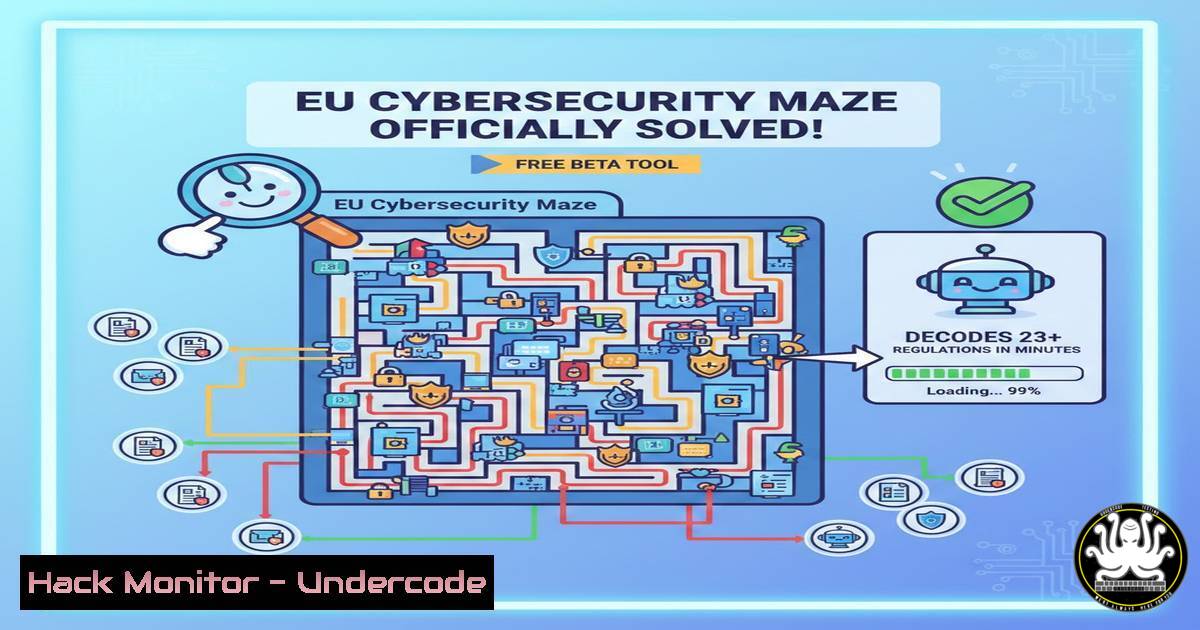
Navigating the complex landscape of European Union cybersecurity regulations is a daunting task for any organization. A new, free beta tool directly addresses this pain point by providing an automated applicability checker for over 23 key regulations, including NIS2, DORA, GDPR, and the AI Act. This innovation is designed to simplify compliance, especially for smaller teams lacking dedicated legal resources.
Learning Objectives:
- Understand the core function and scope of the EU Cybersecurity Regulatory Applicability Checker.
- Learn how to use the tool to conduct a preliminary compliance assessment for your organization.
- Identify key technical and operational next steps after receiving your applicability report.
You Should Know:
- What the Tool Does and How to Access It
This tool is a web-based questionnaire designed to demystify EU cybersecurity compliance. It analyzes your organization’s sector, size, and customer base against a database of regulatory texts to determine which of the 23+ regulations are relevant to you.
Step-by-step guide:
Step 1: Navigate to the tool’s website at `https://cyber-laws.com/en/applicability/`.
Step 2: You will be presented with a series of targeted questions. These typically cover:
Your Organization’s Sector: e.g., Digital Infrastructure, Banking, Healthcare, Public Administration.
Your Size and Type: Micro-enterprise, SME, Large enterprise, Public entity.
Your Customer Base: Whether you serve entities in regulated sectors (like financial institutions under DORA).
Step 3: Submit your answers. The engine processes your inputs and generates a customized report highlighting applicable regulations and, crucially, why they apply based on your specific profile.
- Core Regulations Covered: NIS2, DORA, and the AI Act
The tool’s power lies in its consolidated analysis of intersecting regulations. Understanding their individual scope is key to appreciating the results.
NIS2 Directive: Focuses on the security of network and information systems for medium-large entities in critical sectors (energy, transport, healthcare) and important sectors (digital providers, manufacturing). It mandates risk management, incident reporting, and supply chain security.
DORA (Digital Operational Resilience Act): Specifically targets the financial sector (banks, insurers, crypto-asset service providers). It ensures these entities can withstand all types of ICT-related disruptions and threats.
AI Act: Regulates artificial intelligence systems based on their risk level (unacceptable, high, limited, minimal). It imposes strict requirements on the development and deployment of high-risk AI systems.
3. From Report to Action: Technical Hardening Steps
A regulatory report is just the start. Here are actionable technical steps aligned with common requirements from NIS2 and DORA.
Step-by-step guide (Example – Implementing Basic Security Controls):
Step 1: Asset Inventory. You cannot secure what you don’t know. Use command-line tools to begin cataloging assets.
On Linux: Use `nmap` for network discovery (sudo nmap -sn 192.168.1.0/24) and `dpkg -l` or `rpm -qa` for installed packages.
On Windows: Use PowerShell: `Get-WmiObject -Class Win32_Product | Select-Object Name, Version` for software and `Get-NetIPAddress` for network info.
Step 2: Vulnerability Management. Regularly scan and patch systems.
Use package managers: Linux (sudo apt update && sudo apt upgrade), Windows (winget upgrade --all or Windows Update modules).
Implement a process for monthly critical patch reviews and deployments.
Step 3: Access Control & Logging. Enforce least privilege and ensure audit trails.
On Linux: Review /etc/sudoers, use `auditd` for auditing (sudo auditctl -w /etc/passwd -p wa -k identity_audit).
On Windows: Use Group Policy (gpedit.msc) to enforce password policies and enable PowerShell transcript logging.
- Building a Secure Foundation: Cloud & API Security
Compliance often mandates strong cloud and API security, which are frequent attack vectors.
Step-by-step guide (Cloud Hardening & API Security Check):
Step 1: Harden Cloud Identity (AWS Example). The principle of least privilege is paramount.
Avoid using the root account for daily operations.
Create an IAM user with MFA enabled.
Attach a strict, purpose-built policy (JSON) granting only necessary permissions, instead of using AdministratorAccess.
Step 2: Secure API Endpoints. APIs are gateways to your data.
Enforce HTTPS everywhere: Use TLS 1.2+ and redirect all HTTP traffic.
Implement Rate Limiting: Use a gateway like NGINX (limit_req_zone and `limit_req` directives) to prevent abuse.
Validate Input & Output: Sanitize all incoming data and filter sensitive data in API responses.
Use API Keys & Tokens: Authenticate all requests and rotate keys regularly.
5. Preparing for the Inevitable: Incident Response Planning
NIS2 and DORA have strict incident reporting timelines (e.g., 24 hours for an early warning under NIS2). Having a plan is non-negotiable.
Step-by-step guide (Creating a Basic Incident Response Playbook):
Step 1: Preparation. Form a Computer Security Incident Response Team (CSIRT). Document contact lists and communication plans. Ensure forensic tools are available (e.g., Wireshark, dd, ftkimager).
Step 2: Identification. Train staff to recognize indicators of compromise (unusual network traffic, failed login bursts). Use SIEM alerts or centralized logs (journalctl on Linux, Event Viewer on Windows).
Step 3: Containment. Execute short-term containment (isolate the affected network segment with firewall rules) and long-term containment (remove malware, patch vulnerabilities).
Step 4: Eradication, Recovery & Lessons Learned. Root cause analysis, system restoration from clean backups, and a formal report to improve processes.
What Undercode Say:
Democratizing Compliance: This tool lowers the barrier to entry for complex regulatory understanding, shifting expert analysis from a paid service to an accessible public good. Its true value is in clarifying the interplay between regulations—a task that is manually intensive and error-prone.
A Starting Line, Not a Finish Line: The generated report is a guidance document, not a compliance certificate. It effectively frames the “what,” but organizations must still execute the “how” by implementing technical controls, drafting policies, and potentially seeking formal legal counsel for nuanced interpretations.
The tool represents a significant step towards operationalizing regulatory frameworks. By automating the initial mapping, it allows cybersecurity professionals to focus their scarce resources on the actual engineering and governance work required for compliance, rather than getting lost in preliminary legal research. This is particularly transformative for SMEs in the digital supply chain of larger regulated entities.
Prediction:
This tool will accelerate baseline cybersecurity maturity across the European digital single market, especially for SMEs. We predict its methodology will be adopted by national competent authorities to create standardized self-assessment pre-checks. Furthermore, as the tool evolves, it may integrate with GRC (Governance, Risk, and Compliance) platforms, enabling a direct feedback loop from regulatory text to configured security controls. Ultimately, it sets a precedent for machine-readable regulation, paving the way for more dynamic and automated compliance ecosystems in the future.
▶️ Related Video (76% Match):
🎯Let’s Practice For Free:
IT/Security Reporter URL:
Reported By: Andreimungiu After – Hackers Feeds
Extra Hub: Undercode MoN
Basic Verification: Pass ✅


