Listen to this Post
Introduction:
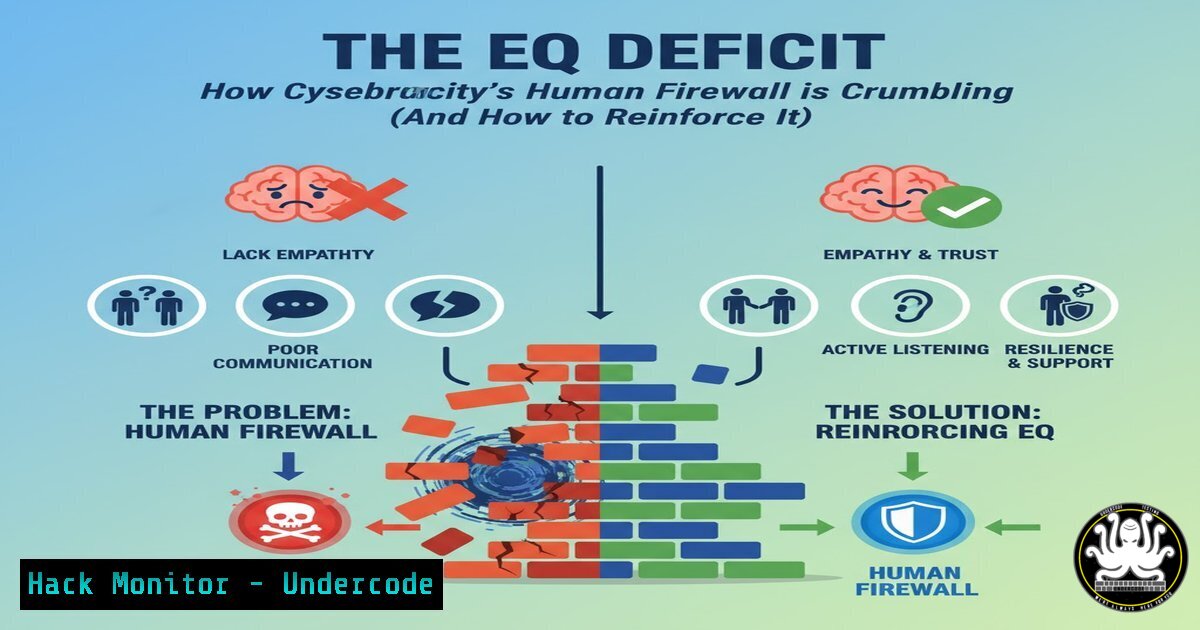
The cybersecurity battlefield is no longer confined to firewalls and intrusion detection systems; it has expanded into the human psyche. While organizations invest heavily in technical defenses, a critical vulnerability often goes unpatched: the emotional intelligence (EQ) of their leaders and security teams. This article explores how cultivating EQ is not a “soft skill” but a strategic imperative for building a resilient security posture and a robust human firewall.
Learning Objectives:
- Understand the critical link between emotional intelligence and effective cybersecurity leadership and incident response.
- Learn practical techniques to leverage EQ for de-escalating security incidents and improving team communication.
- Develop a framework for integrating EQ assessment and training into your overall security program.
You Should Know:
1. The Anatomy of a Panic-Driven Breach
When a security alert blares, the amygdala—the brain’s threat center—can hijack rational thought. A leader low in EQ might respond with blame, panic, or unilateral, rushed decisions, creating chaos. Conversely, a leader with high self-awareness and self-regulation can acknowledge the stress while maintaining a calm, analytical approach. This directly impacts the effectiveness of your Incident Response Plan (IRR).
Step‑by‑step guide explaining what this does and how to use it.
Step 1: Recognize Physical Triggers. Train yourself and your team to notice physical signs of stress: increased heart rate, shallow breathing, tension. This is your early warning system.
Step 2: Implement a “Tactical Pause.” Before any major action, mandate a 60-second pause. Use this time for three deep breaths. This simple act can re-engage the prefrontal cortex, the brain’s logical center.
Step 3: Script Your Calm. Have pre-defined, calm communication phrases ready. For example: “This is a high-stress situation. Let’s all focus on the process we’ve trained for. Team, report status using the IRR checklist.” This prevents emotional, counterproductive language.
2. Empathy as an Intelligence Gathering Tool
Empathy, a core component of EQ, is not about being nice; it’s about understanding perspectives. In cybersecurity, this applies to both attackers and internal users. Understanding the motivations of a threat actor can help anticipate their next move. More critically, empathizing with an employee who fell for a phishing scam yields more valuable intelligence than punishing them.
Step‑by‑step guide explaining what this does and how to use it.
Step 1: Conduct Blameless Post-Mortems. After a security incident involving human error, frame questions with empathy. Instead of “Why did you click that link?” ask “What about that email seemed legitimate at the time? What was the context of your day?”
Step 2: Profile User Personas. Create profiles for different departments (e.g., “Rushed HR Recruiter,” “Distracted Finance Controller”). Use these personas to tailor security training and communication, making it more relevant and effective.
Step 3: Active Listening in SOCs. Security Operations Center (SOC) analysts should be trained in active listening. When taking a report, they should paraphrase the user’s concern: “So, if I understand correctly, you’re worried that the link you clicked may have exposed your credentials?” This builds trust and ensures accurate information collection.
3. Communicating Risk with Clarity and Influence
Technical experts often fail to communicate risk in a way that motivates action from non-technical executives. High EQ involves translating complex, technical threats into relatable business impacts—financial loss, reputational damage, regulatory fines—that resonate on an emotional level with decision-makers.
Step‑by‑step guide explaining what this does and how to use it.
Step 1: Ditch the CVSS Score. Stop leading with “We have a vulnerability with a CVSS score of 8.2.” Instead, say: “This vulnerability could allow an attacker to access our customer database. A breach would likely result in [bash] million in fines under GDPR and irrevocable damage to our brand’s trust.”
Step 2: Use Analogies. Frame cyber risks in terms of physical world risks executives understand. “Not patching this server is like leaving the keys to the main office under the mat. It’s only a matter of time before someone finds them.”
Step 3: Tailor the Message. Understand your audience. The CFO cares about financial loss and stock price. The CMO cares about brand reputation. The COO cares about operational disruption. Craft your risk message accordingly.
4. Hardening the Human Firewall with EQ-Driven Training
Traditional, fear-based security awareness training often fails. EQ-driven training focuses on empowerment and understanding, not shame. It teaches users to recognize the psychological triggers used in phishing attacks (urgency, curiosity, authority) and gives them the confidence to report mistakes without fear.
Step‑by‑step guide explaining what this does and how to use it.
Step 1: Run Simulated Phishing Campaigns with a Twist. Instead of just flagging failures, immediately provide a micro-training video explaining the emotional hook used in that specific phishing email.
Step 2: Promote Psychological Safety. Leadership must explicitly state that reporting a potential security mistake is a valued action. Celebrate “good catches” and “self-reports” publicly to reinforce this culture.
Step 3: Gamify Awareness. Use platforms that turn security training into a competitive game. Leaderboards and rewards for identifying threats can tap into positive emotions like achievement and camaraderie, making learning stick.
5. Technical Controls that Support an EQ-Conscious Culture
Technology can be configured to support, rather than undermine, emotional well-being and clear communication. Automated alerts and SIEM systems should be tuned to reduce “alert fatigue,” a major source of stress and burnout among security professionals.
Step‑by‑step guide explaining what this does and how to use it.
Step 1: Tune SIEM Alerting. Use correlation rules to suppress false positives and elevate only high-fidelity alerts. This reduces noise and prevents the “cry wolf” effect that desensitizes teams.
Example SPLUNK SPL: `index=firewall action=”blocked” | stats count by src_ip | where count > 10` – This finds IPs blocked more than 10 times, helping to prioritize.
Step 2: Implement Automated Status Pages. During an incident, use automated systems to provide status updates to the broader organization. This prevents security teams from being inundated with anxious queries, allowing them to focus.
Step 3: Enforce “Quiet Hours” for Non-Critical Alerts. Configure on-call systems to respect sleep schedules for all but the most critical Severity 1 incidents. This simple tool configuration protects against burnout and promotes long-term team health.
What Undercode Say:
- Emotional Intelligence is the missing layer in your defense-in-depth strategy. You can have the best technology, but without a team that can manage stress, communicate under pressure, and understand human behavior, you have a critical unpatched vulnerability.
- The ROI on EQ training is measured in faster incident containment, reduced burnout and staff turnover, and a more proactive, confident security culture. It is not an expense; it is an investment in operational resilience.
The industry’s focus has been overwhelmingly technological, creating a dangerous asymmetry. We fortify our networks with next-gen firewalls while leaving our human systems—the way we think, communicate, and react under pressure—unhardened. The most sophisticated social engineering attack will fail against an emotionally intelligent individual who can recognize and regulate their impulse to click. Similarly, a major breach will be contained far more effectively by a team that communicates with clarity and empathy rather than one paralyzed by fear and blame. Integrating EQ is the necessary evolution from a purely technical cybersecurity model to a holistic human-technical one.
Prediction:
Within the next 3-5 years, Emotional Intelligence quotient (EQ) assessments will become as standard a hiring and promotion criterion for cybersecurity leadership roles as technical certifications are today. We will see the emergence of “Human-Firewall-as-a-Service” platforms that combine AI-driven behavioral analytics with EQ training modules. Furthermore, cybersecurity insurance providers will begin to mandate demonstrable EQ and psychological safety programs within an organization as a prerequisite for coverage or reduced premiums, formally acknowledging that the human element is the ultimate cyber risk multiplier.
🎯Let’s Practice For Free:
IT/Security Reporter URL:
Reported By: Dennisberry1 Emotionalintelligence – Hackers Feeds
Extra Hub: Undercode MoN
Basic Verification: Pass ✅


