Listen to this Post
Introduction:
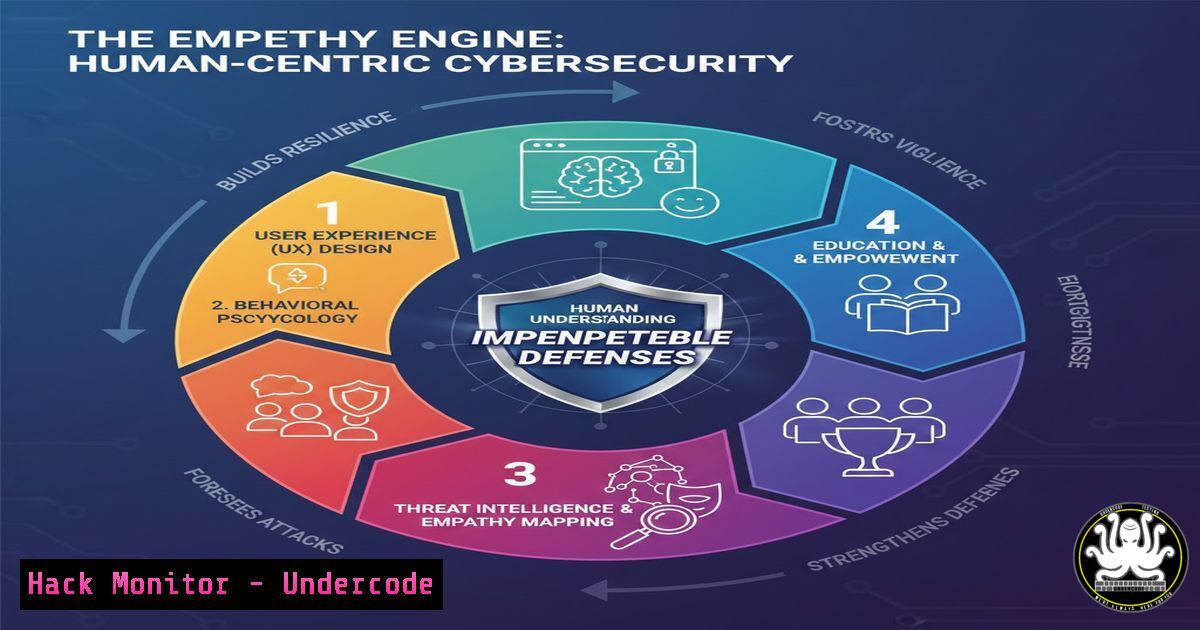
In an industry obsessed with zero-day exploits and AI-driven threat hunting, the most critical vulnerability often remains unpatched: the human disconnect within security teams. The philosophy that true strength lies in slowing down to support struggling colleagues is not just soft skills advice; it is a foundational strategy for creating resilient security operations. This article translates the core tenets of empathy, patience, and collective support into a actionable framework for IT and cybersecurity leadership, demonstrating how psychological safety directly mitigates human error and accelerates incident response.
Learning Objectives:
- Implement communication protocols that reduce blame and encourage vulnerability reporting.
- Design team rituals that foster collective ownership over security postures.
- Apply “walk beside” mentorship to knowledge transfer and cross-training, hardening your human layer.
You Should Know:
- Building a Blameless Post-Mortem Culture: From Shame to Solutions
The instinct to judge during an incident—like a rushed password leak or misconfigured firewall—creates a culture of hiding mistakes. A blameless post-mortem institutionalizes “slowing down” to understand the why behind the error, treating it as a systemic issue, not an individual failing.
Step‑by‑step guide explaining what this does and how to use it.
Step 1: Immediate Containment & Documentation: When a security incident occurs, the first priority is containment. Simultaneously, initiate a draft timeline. Use a shared, secure document.
Step 2: Assemble a Diverse Response Team: Include the individuals involved, their peers, and leads from different functions (e.g., Dev, Sec, Ops).
Step 3: Facilitate the Session with Core Rules: Establish that the goal is to improve systems, not assign blame. Use the phrasing “Our system allowed…” instead of “You did…”.
Step 4: Analyze with the “Five Whys”: For each action leading to the incident, ask “Why did this happen?” iteratively to uncover root causes (e.g., unclear policy, fatiguing alert volume, lack of training).
Step 5: Generate Actionable Fixes: Assign owners to remediate the root causes identified. Example output: “Update CI/CD pipeline to include automatic S3 bucket policy checks” or “Implement mandatory IAM role review training.”
2. Creating Psychological Safety for Threat Intelligence Sharing
If team members feel “unseen or unheard,” critical indicators of compromise (IoCs) or suspicious behaviors may go unreported. Psychological safety ensures that even a junior analyst’s “hunch” is validated and investigated.
Step‑by‑step guide explaining what this does and how to use it.
Step 1: Dedicate a Low-Friction Reporting Channel: Create a dedicated, simple channel (e.g., a `security-hunch` Slack channel or a simple internal form) separate from high-priority incident reporting.
Step 2: Acknowledge Every Submission Publicly: Use automated acknowledgments or have a lead personally thank the contributor. This “gentle check-in” builds trust.
Step 3: Perform a Triage & Feedback Loop: Even if the hunch doesn’t pan out, close the loop. “Thanks for flagging the anomalous logins from IP X. We reviewed and it was a scheduled pentest. Great eye for detail—keep them coming.”
Technical Implementation: Automate part of this with a SIEM alert or a script that parses the reporting channel and creates a low-priority ticket.
 Example pseudo-code for a simple webhook to create a Jira ticket from a Slack message
 This validates the act of reporting.
 Endpoint (e.g., Flask app) receiving Slack webhook
from flask import Flask, request
import requests

app = Flask(<strong>name</strong>)
@app.route('/security-hunch', methods=['POST'])
def create_ticket():
data = request.json
user = data.get('user_name')
text = data.get('text')
 Jira API call to create ticket
jira_payload = {
"fields": {
"project": {"key": "SEC"},
"summary": f"Security Hunch from {user}",
"description": text,
"issuetype": {"name": "Task"},
"priority": {"name": "Low"}
}
}
 ... authentication and POST to Jira...
 Post back to Slack confirmation thread
requests.post(slack_webhook_url, json={"text": f"Ticket SEC-XXX created. Thank you {user}!"})
return "OK"
3. “Walk Beside” Mentorship in Cross-Training & Handovers
High-risk scenarios like penetration testing engagements or critical incident handovers between shifts are where rushing causes catastrophic oversights. A structured “walk beside” handover protocol ensures continuity.
Step‑by‑step guide explaining what this does and how to use it.
Step 1: Mandate Overlap & Shadowing: For key roles (e.g., SOC analysts, on-call engineers), institute a mandatory 30-minute overlap. The outgoing engineer shares their screen.
Step 2: Use a Standardized Handover Template: This isn’t just a chat. Require a filled template in your wiki or ticketing system.
=== INCIDENT HANDOVER REPORT ===
 Ticket/Incident ID: INC-12345
 Summary: Suspected credential stuffing attack on endpoint API.
 Current State: Blocked IP range 192.0.2.0/24, monitoring for new patterns.
 Actions Taken: 1. Updated WAF rules. 2. Reset passwords for 3 compromised accounts.
 Next Steps: 1. Review logs for exfiltrated data (priority). 2. Draft user notification.
 Open Questions/To-Do: Are the compromised accounts all from the same department?
 Links: [SIEM Dashboard] | [WAF Config] | [Ticket History]
Step 3: Active Demonstration: The outgoing engineer should actively demonstrate commands run or logs reviewed, explaining their thought process. For example:
 Instead of just saying "I checked logs," show and explain:
 On a Linux SIEM or log server
zgrep "failed password" /var/log/auth.log | awk '{print $11}' | sort | uniq -c | sort -nr | head -20
 Explain: "This shows the top 20 IPs with failed SSH attempts, which is how I identified the source range."
- Kindness as a Tool for User Security Awareness Training
Traditional security awareness training often induces fear and shame. A compassionate approach, rooted in the “power of kindness,” increases engagement and reduces phish-click rates by making users feel supported, not stupid.
Step‑by‑step guide explaining what this does and how to use it.
Step 1: Reframe the Messaging: Change emails from “You’ve violated policy” to “We’ve noticed a potential security risk and are here to help.”
Step 2: Implement Positive Reinforcement: Use your email security gateway or SaaS platform to reward good behavior.
Technical Config (Example with Microsoft 365 & Power Automate): Create a flow triggered by the “Report Phish” add-in. When a user reports a genuine phish, automatically send a thank-you message and cc their manager: “Thanks for being our security hero today! You just helped protect the entire company.”
Step 3: Run “Phish & Facilitate” Sessions: After a simulated phishing campaign, host optional, blame-free “clinics” to review the emails, explaining the subtle clues. This “invites them in” to learn.
5. Compassionate Automation: Building Guardrails, Not Gates
Automation should act as the supportive colleague, slowing down dangerous actions to prevent mistakes, not as a punitive barrier. This is “slowing down for someone who’s struggling to keep up” engineered into your systems.
Step‑by‑step guide explaining what this does and how to use it.
Step 1: Implement Pre-Check Commands in CI/CD: Before `terraform apply` or `kubectl delete` can run on production, require a dry-run or plan review.
 In a GitLab CI/CD .gitlab-ci.yml file
deploy_production:
stage: deploy
script:
- terraform plan -out=tfplan
- echo "Review the plan above. Manual intervention needed to apply."
- echo "To apply, run: terraform apply tfplan"
when: manual  This stops the pipeline, requiring a conscious, slow click.
Step 2: Use Canary Deployments & Feature Flags: Roll out changes slowly to a small subset, allowing for monitoring and rollback without major impact. This is the technical equivalent of walking beside your users.
Step 3: Code Review as a Kindness Practice: Frame PR reviews not as fault-finding missions, but as collaborative hardening. Use templates that ask: “Have you considered how this new API endpoint could be abused?” rather than “This is insecure.”
What Undercode Say:
- The Human Firewall is Strengthened by Empathy, Not Fear: A team that feels psychologically safe will report anomalies faster, collaborate more effectively during incidents, and engage proactively in security hygiene, directly reducing mean time to detect (MTTD) and respond (MTTR).
- Processes Can Institutionalize Compassion: Blameless post-mortems, structured handovers, and positive reinforcement automation are not “soft”—they are concrete, technical controls that mitigate the highest risk factor: human error driven by stress, fear, and isolation.
The LinkedIn post, while not technical, describes the exact cultural bedrock required for a high-functioning SecOps or IT team. In cybersecurity, the “someone falling behind” could be an overburdened analyst missing a true positive alert, a developer inadvertently introducing a critical vulnerability, or a user about to click a phishing link. The strategic act of “walking beside them”—through guardrail automation, blameless processes, and supportive training—directly translates to fewer breaches, more robust systems, and a resilient organizational security posture. Investing in this “human layer” security yields a higher ROI than any single piece of advanced technology.
Prediction:
The future of cybersecurity leadership will increasingly prioritize “human-centric engineering” and “psychological safety metrics” as key performance indicators. As AI automates routine threat detection and response, the differentiator for elite security organizations will be their team’s ability to collaborate creatively, share intelligence without hesitation, and approach complex threats with the patience and mutual support that only a genuinely empathetic culture can provide. We will see the rise of Chief Trust Officers and Security Culture Managers whose primary tools are not firewalls, but frameworks for fostering connection and collective responsibility.
▶️ Related Video (90% Match):
🎯Let’s Practice For Free:
IT/Security Reporter URL:
Reported By: Pranil Ashok – Hackers Feeds
Extra Hub: Undercode MoN
Basic Verification: Pass ✅


