
Listen to this Post
Introduction:
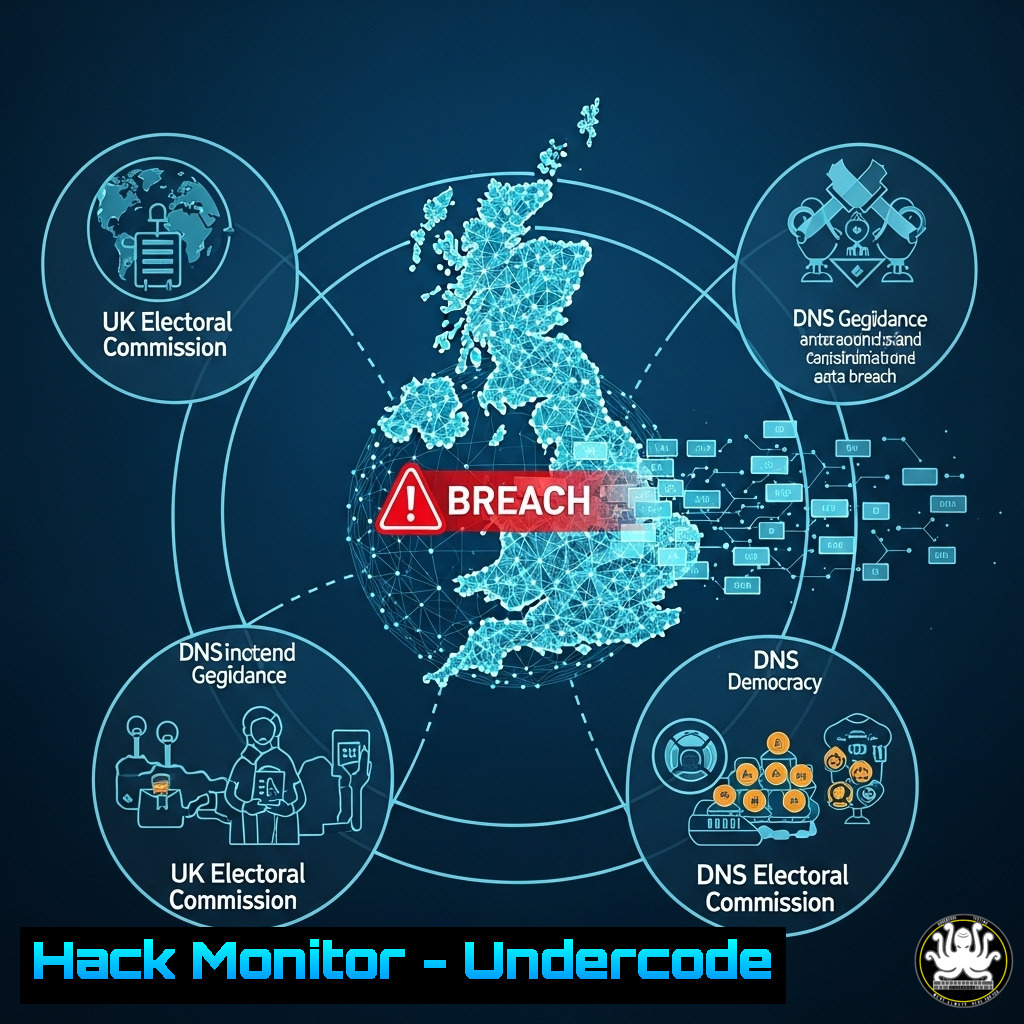
The UK Electoral Commission’s massive data breach, exposing 40 million citizens’ personal data, underscores a critical failure in implementing foundational cybersecurity measures. Despite the incident, fundamental Domain Name System (DNS) vulnerabilities persist, leaving the door open for further exploitation. This article deconstructs the essential DNS security protocols that every organization must enforce to prevent becoming the next headline.
Learning Objectives:
- Understand the critical DNS vulnerabilities that led to and persist after the Electoral Commission breach.
- Learn to implement and verify core DNS security measures, including DNSSEC, DMARC, and SPF.
- Master the command-line tools necessary to audit and harden your organization’s DNS infrastructure.
You Should Know:
1. Enforcing DNSSEC Validation
DNSSEC (Domain Name System Security Extensions) adds a layer of trust by cryptographically signing DNS records, preventing attackers from hijacking queries and redirecting users to malicious sites.
Command (Linux – Validate DNSSEC on a resolver):
`dig +dnssec @1.1.1.1 www.electoralcommission.org.uk | grep ad`
Step-by-Step: This command queries Cloudflare’s public resolver (1.1.1.1) for the Commission’s website with DNSSEC checking enabled. The `grep ad` filters the output to show only the response flags. A result containing `ad` (Authentic Data) confirms the resolver validated the DNSSEC signatures correctly. The absence of `ad` indicates a misconfiguration or lack of DNSSEC.
Command (Linux – Check for DNSSEC signatures on a domain):
`dig +multiline DS electoralcommission.org.uk @8.8.8.8`
Step-by-Step: This queries Google’s DNS (8.8.8.8) for the Delegation Signer (DS) record of the domain. A returned DS record proves the domain has DNSSEC implemented and properly delegated from its parent (.org.uk) zone. No result suggests DNSSEC is not active.
2. Auditing for Open DNS Resolvers
Misconfigured DNS resolvers can be abused in amplification DDoS attacks, turning your infrastructure into a weapon.
Command (Linux – Check for open recursive resolver):
`dig +short @ test.openresolver.com TXT`
Step-by-Step: Replace `
- Implementing DMARC, DKIM, and SPF to Combat Email Spoofing
These protocols work together to prevent threat actors from spoofing your domain in phishing emails, a common post-breach exploitation tactic.
Command (Check DMARC record):
`dig +short TXT _dmarc.electoralcommission.org.uk`
Step-by-Step: This retrieves the DMARC policy record. A correct policy (p=quarantine or p=reject) tells receiving mail servers what to do with emails that fail authentication, drastically reducing spoofing success.
Command (Check SPF record):
`dig +short TXT electoralcommission.org.uk | grep spf`
Step-by-Step: This fetches all TXT records and filters for SPF. The SPF record should list all authorized mail servers (include: mechanisms, `ip4:` ranges). A missing SPF record or one that is too permissive (+all) is a severe misconfiguration.
4. Preventing Zone Transfer Attacks
Unauthorized zone transfers (AXFR requests) can leak entire internal network maps to attackers.
Command (Linux – Test for unrestricted zone transfer):
`dig AXFR @ns1.somedomain.com somedomain.com`
Step-by-Step: Replace `ns1.somedomain.com` with the target name server and `somedomain.com` with the domain. If this command returns a full list of DNS records, the server is misconfigured and allows unauthorized zone transfers. It should only be allowed for designated secondary name servers.
5. Hardening DNS with Response Rate Limiting (RRL)
RRL mitigates DNS amplification attacks by limiting the number of responses to a single client.
Command (Check BIND9 RRL configuration – /etc/bind/named.conf.options):
`rate-limit { responses-per-second 5; window 5; };`
Step-by-Step: This snippet for a BIND9 DNS server configuration file enables RRL. It limits responses to 5 per second per client in a 5-second window. This helps prevent your server from being used in DDoS attacks without impacting legitimate traffic.
6. Probing for Subdomain Takeovers
Misconfigured DNS records (e.g., pointing to decommissioned cloud services) can allow attackers to claim the subdomain.
Command (Using subjack tool to check for takeovers):
`./subjack -w subdomains.txt -t 100 -timeout 30 -o results.txt -ssl`
Step-by-Step: This uses the tool `subjack` to check a list of subdomains (subdomains.txt) for potential takeover vulnerabilities on common cloud services. The `-ssl` flag forces HTTPS checks. Any positive results require immediate action to either remove the stale DNS record or reclaim the service.
7. Continuous DNS Monitoring and Auditing
Security is not a one-time action. Continuous monitoring is required to detect changes and misconfigurations.
Command (Using nslookup for consistent record auditing – Windows/Linux):
`nslookup -type=any electoralcommission.org.uk 8.8.8.8`
Step-by-Step: This command queries for “any” record type for the target domain. Regularly running this and diffing the output against previous results can help identify unauthorized or anomalous changes to DNS records, which is a common attacker tactic after initial compromise.
What Undercode Say:
- Negligence is the Greatest Vulnerability: The Electoral Commission case proves that advanced threats are secondary; the most significant risks stem from neglecting basic, well-understood security hygiene like DNS configurations.
- Public Trust is the Ultimate Target: A breach of a democratic institution doesn’t just steal data—it erodes the foundational trust required for a functioning society, making cybersecurity a non-negotiable pillar of modern governance.
The analysis reveals a dangerous paradox: institutions charged with protecting public trust are often the slowest to adopt the protocols that guarantee it. The Commission’s failure to universally implement DNSSEC, DMARC, and proper DNS auditing creates a blueprint for attackers. This isn’t a lack of capability; it’s a catastrophic lack of priority. The technical neglect detailed here provides a direct vector for disinformation campaigns, fraud, and further breaches, making the entire electoral process—and by extension, democracy itself—a softer target. The commands outlined are not advanced; they are foundational. Their absence is an open invitation to chaos.
Prediction:
Without immediate and comprehensive DNS hardening, government entities worldwide will face an escalating wave of sophisticated attacks targeting democratic processes. We predict a significant rise in “voter suppression-by-hack” campaigns ahead of major elections, leveraging exactly these kinds of DNS and domain vulnerabilities to spread disinformation, disrupt candidate communications, and undermine public confidence in electoral outcomes. The time to act was before the first breach; the second-best time is now.
🎯Let’s Practice For Free:
IT/Security Reporter URL:
Reported By: Andy Jenkinson – Hackers Feeds
Extra Hub: Undercode MoN
Basic Verification: Pass ✅


