Listen to this Post
Introduction:
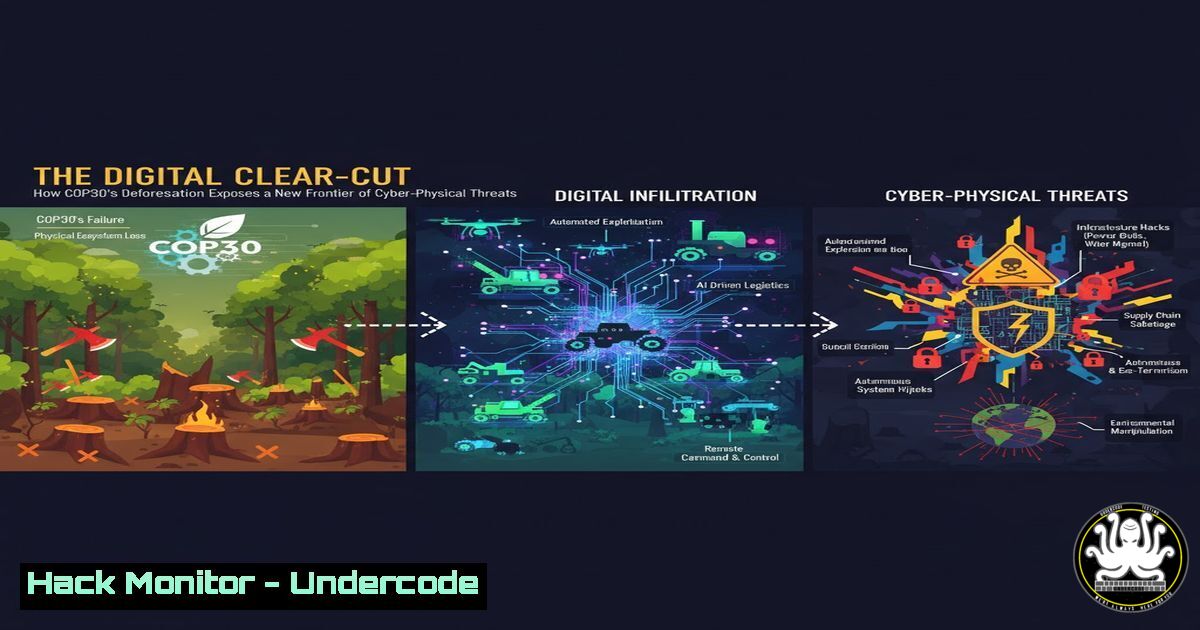
The clearing of 100,000 trees in the Amazon for the COP30 climate summit is not just an ecological catastrophe; it is a stark case study in the convergence of physical and digital security. The rapid development of infrastructure for a major global event creates a perfect storm of cyber vulnerabilities, where rushed IoT deployments, unsecured construction tech, and critical supply chains become prime targets for threat actors. This article dissects the cybersecurity implications of such large-scale, time-sensitive physical projects and provides a technical roadmap for securing them.
Learning Objectives:
- Understand the unique attack surface created by large-scale physical infrastructure projects.
- Learn to audit and secure IoT devices and network backbones deployed in remote, temporary environments.
- Develop incident response strategies for operational technology (OT) and Industrial Control Systems (ICS) compromised during critical event operations.
You Should Know:
- The Expanded Attack Surface: From Bulldozers to Botnets
The construction phase for an event like COP30 relies on a digital ecosystem of connected machinery, GPS systems, and project management software. A compromised system can lead to more than data theft; it can cause physical delays, safety hazards, and massive financial loss.
Step‑by‑step guide explaining what this does and how to use it.
Step 1: Asset Discovery and Inventory. You cannot secure what you do not know. Use network scanning tools to identify every connected device.
Command (Linux): `nmap -sS -O 192.168.1.0/24` (This performs a SYN scan and attempts OS detection on the entire subnet).
Command (Windows with Nmap installed): `nmap -sT -A
Step 2: Segment the Network. Isolate critical construction networks from corporate IT and public-facing networks. This contains any potential breach.
Implementation: Configure VLANs on network switches. For example, place all IoT devices on a dedicated VLAN with firewall rules that only allow necessary communication to a central management server.
Step 3: Harden IoT Devices. Change all default credentials, disable unused services (like Telnet), and ensure firmware is up-to-date.
2. Securing the Temporary Network Backbone
Temporary venues often deploy wireless networks and satellite links rapidly, leading to misconfigurations. An attacker can eavesdrop on sensitive communications or hijack the network.
Step‑by‑step guide explaining what this does and how to use it.
Step 1: Enforce Strong Encryption. Mandate WPA3-Enterprise for Wi-Fi, requiring individual user certificates instead of a shared password. For satellite links, ensure IPsec VPNs are configured end-to-end.
Step 2: Conduct Wireless Penetration Testing. Actively search for rogue access points and weak signals.
Tool (Linux): Use the `aircrack-ng` suite.
`airmon-ng start wlan0` (Puts your wireless card in monitor mode).
`airodump-ng wlan0mon` (Lists all available access points and clients).
Step 3: Monitor Network Traffic. Deploy a Network Intrusion Detection System (NIDS) like Suricata or Zeek on a central network tap to analyze all traffic for malicious patterns.
- The API Security Blind Spot in Supply Chain Logistics
The logistics of transporting materials and personnel are managed through web portals and APIs. A vulnerable API can expose shipment details, personnel data, and even allow for the manipulation of delivery schedules.
Step‑by‑step guide explaining what this does and how to use it.
Step 1: API Discovery. Use tools to catalog all internal and external APIs, as shadow APIs are a common vulnerability.
Tool: `OWASP Amass` in passive mode: amass enum -passive -d targetdomain.com.
Step 2: Fuzz API Endpoints. Test for injection flaws, broken authentication, and excessive data exposure.
Tool: `ffuf` for directory fuzzing: ffuf -u https://target.com/api/FUZZ -w wordlist.txt.
Step 3: Implement Strict Authentication and Rate Limiting. Use OAuth 2.0 and ensure API keys are not exposed in client-side code. Enforce rate limiting to prevent brute-force attacks.
4. Cloud Hardening for Event Management Systems
The registration, scheduling, and operational dashboards for the summit will likely be cloud-hosted (e.g., AWS, Azure). Misconfigured cloud storage is a leading cause of data breaches.
Step‑by‑step guide explaining what this does and how to use it.
Step 1: Audit S3 Buckets and Blob Storage. Ensure no storage containers are set to public unless absolutely necessary.
AWS CLI Command: `aws s3api get-bucket-acl –bucket my-bucket` (Check ACL).
AWS CLI Command: `aws s3api get-public-access-block –bucket my-bucket` (Check public access block settings).
Step 2: Enable Comprehensive Logging.
AWS: Enable AWS CloudTrail across all regions and send logs to a secured S3 bucket.
Azure: Enable Azure Activity Log and Diagnostic Logs.
Step 3: Apply the Principle of Least Privilege. Use IAM Roles and Policies (AWS) or RBAC (Azure) to grant only the permissions absolutely required for a function to operate.
5. Vulnerability Exploitation and Mitigation in OT Environments
The summit’s power, water, and building management systems (BMS) run on Operational Technology (OT). These systems are notoriously fragile and vulnerable to attacks like PLC ladder logic manipulation.
Step‑by‑step guide explaining what this does and how to use it.
Step 1: Passive OT Asset Identification. Use passive network scanners tailored for OT protocols (e.g., Modbus, BACnet) to map the environment without disrupting processes.
Tool: `Wireshark` with OT protocol dissectors. Filter for `modbus` or `bacnet` to observe traffic.
Step 2: Air-Gap and Monitor. Where possible, air-gap OT networks. Where not possible, use a well-configured firewall and an OT-specific IDS like Nozomi Networks or Claroty to monitor for anomalous commands.
Step 3: Patch Management. Work with vendors to apply security patches during planned maintenance windows. Test patches thoroughly in a non-production environment first.
What Undercode Say:
- The irony is palpable: an event meant to address a global systemic risk (climate change) is itself creating a new set of systemic risks through negligent digital security practices.
- This is no longer just about data confidentiality; it’s about cyber-physical integrity. A successful attack could disrupt the summit itself, turning a global solution platform into a global stage for chaos.
The COP30 deforestation story is a powerful metaphor for the hidden digital clear-cuts happening in our infrastructure. The rush to build physical spaces for critical dialogue is creating blind spots that sophisticated threat actors are poised to exploit. This incident should serve as a wake-up call for all large-scale projects: cybersecurity cannot be an afterthought bolted on after the concrete has dried. It must be integrated from the first blueprint, treating the digital and physical realms as a single, interdependent security domain. The credibility of the climate mission itself is now, inextricably, tied to the security of its supporting technology.
Prediction:
The convergence of environmental activism and hacktivism will intensify. We predict the rise of “Green Hat” hackers who will specifically target organizations and projects they deem environmentally destructive. Their tactics will evolve from DDoS attacks and website defacements to sophisticated intrusions into OT and ICS environments, aiming to cause tangible, non-destructive operational delays (e.g., halting machinery) to make a political statement. This will force a fundamental re-evaluation of security postures in the energy, construction, and resource extraction industries, making cyber-resilience a core component of their environmental, social, and governance (ESG) reporting.
🎯Let’s Practice For Free:
IT/Security Reporter URL:
Reported By: Tamleejames3 Outrage – Hackers Feeds
Extra Hub: Undercode MoN
Basic Verification: Pass ✅


