Listen to this Post
Introduction:
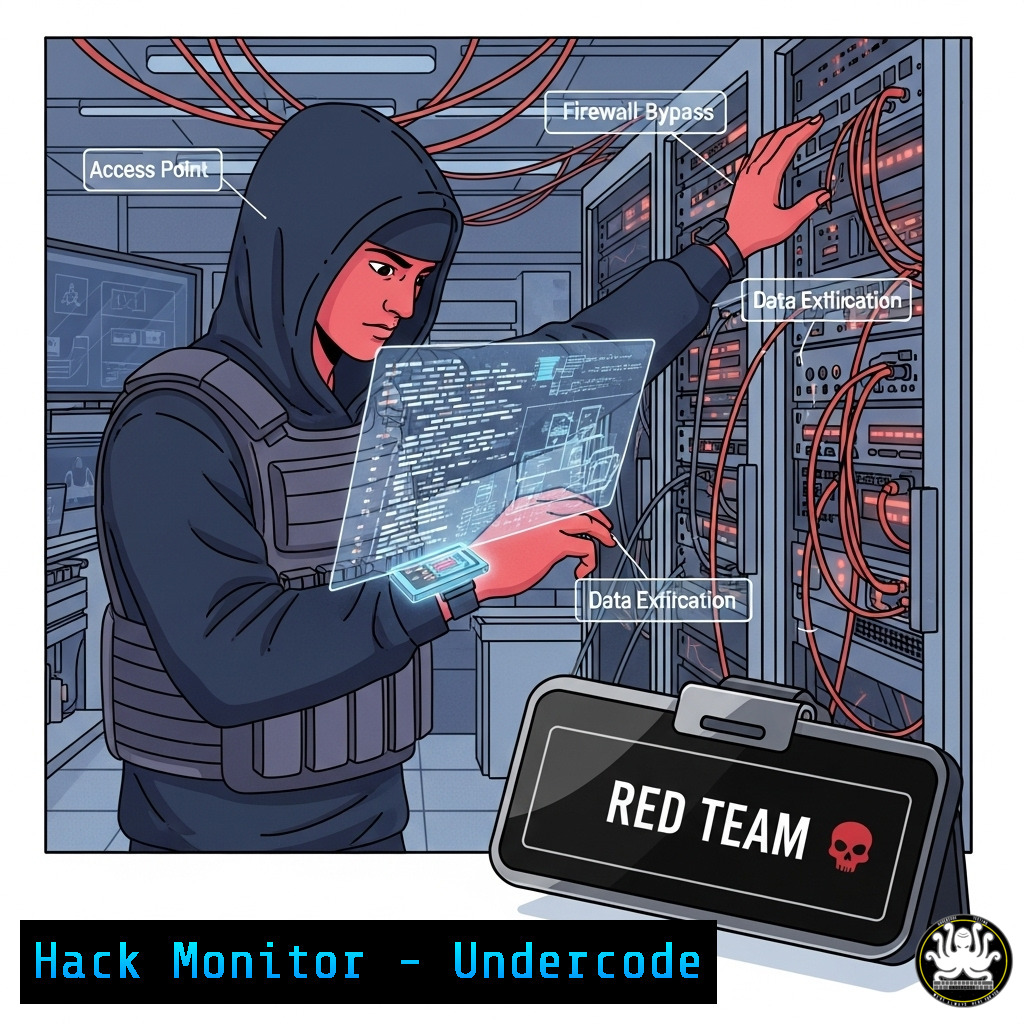
The prestigious DEFCON Black Badge represents the pinnacle of offensive security prowess, recently captured by a team from NUS Greyhats and HTX. This victory at the Red Team Village CTF demonstrates advanced tradecraft that separates elite operators from beginners. Understanding the techniques behind such a win provides critical insights into modern penetration testing methodologies.
Learning Objectives:
- Master essential command-line tools for network reconnaissance and vulnerability scanning
- Implement hardware and RFID hacking techniques for physical security testing
- Develop social engineering approaches for narcotics detection challenges
- Configure advanced red team infrastructure for persistent operations
- Apply digital forensics to analyze attack patterns and strengthen defenses
You Should Know:
1. Network Reconnaissance & Enumeration
Nmap remains the gold standard for network discovery and vulnerability assessment. The winning team likely employed advanced scanning techniques to map the CTF infrastructure rapidly.
nmap -sS -sV -sC -O -A -T4 -p- target_ip
nmap --script vuln -p 1-65535 target_ip
masscan -p1-65535 --rate=1000 target_ip
This comprehensive scan combines SYN stealth scanning (-sS), version detection (-sV), default scripts (-sC), OS fingerprinting (-O), and aggressive timing (-T4). The masscan command provides ultra-fast port scanning at 1000 packets/second, crucial for time-constrained CTF environments.
2. Web Application Exploitation
Modern CTFs heavily feature web application challenges requiring SQL injection and directory traversal expertise.
sqlmap -u "http://target.com/page?id=1" --dbs --batch
gobuster dir -u http://target.com -w /usr/share/wordlists/dirb/common.txt
ffuf -w wordlist.txt -u http://target.com/FUZZ
Sqlmap automates SQL injection detection and database enumeration. Gobuster and ffuf perform directory brute-forcing to discover hidden endpoints. The winning team would have combined these tools to rapidly identify and exploit web vulnerabilities.
3. Hardware & IoT Hacking
The Biohacking Village challenges required hands-on hardware skills, particularly with RFID systems commonly used in physical access control.
proxmark3 -l
hf search
hf mf autopwn
The Proxmark3 commands perform RFID detection (hf search) and automated exploitation (hf mf autopwn). For narcotics identification challenges, teams likely used portable spectrometers combined with Python analysis scripts:
import numpy as np
from sklearn.ensemble import RandomForestClassifier

Load spectral data from suspected substances
spectral_data = np.loadtxt('sample_scan.txt')
model = RandomForestClassifier()
 Pre-trained model to identify narcotics signatures
prediction = model.predict(spectral_data.reshape(1,-1))
4. Privilege Escalation Techniques
Gaining initial access is only half the battle; maintaining persistence requires sophisticated privilege escalation.
linpeas.sh
windows-exploit-suggester.py --update
powerup.ps1 -Invoke-AllChecks
LinPEAS automates Linux privilege escalation enumeration. Windows-Exploit-Suggester identifies missing patches, while PowerUp performs common Windows privilege escalation checks. The winning team would have these tools pre-loaded on their attack infrastructure for rapid deployment.
5. Social Engineering Tradecraft
The narcotics challenge required social interaction, demonstrating that human factors remain critical in security.
setoolkit
social-engineer toolkit
phishing template create
The Social-Engineer Toolkit (SET) automates phishing campaign creation. For in-person social engineering, teams would develop pretexts and backstories to gather information from other attendees while maintaining operational security.
6. Memory Forensics & Malware Analysis
Advanced CTFs often include memory dump analysis and malware reverse engineering challenges.
volatility -f memory.dump --profile=Win7SP1x64 pslist
strings malware.exe | grep -i "http|ftp"
radare2 -A malware.exe
Volatility analyzes memory dumps for suspicious processes. Strings extraction identifies potential command and control servers, while Radare2 provides advanced disassembly capabilities. The winning team would have these tools pre-configured for rapid analysis.
7. Cloud Infrastructure Targeting
Modern CTFs increasingly feature cloud environments, requiring specialized attack methodologies.
pacuro -h
cloud_enum -k keyword -l cloud_enum.txt
aws s3 ls s3://bucket-name/ --no-sign-request
Cloud enumeration tools like Cloud_Enum discover exposed resources, while AWS CLI commands test for misconfigured S3 buckets. The winning team would have automated these reconnaissance steps to rapidly identify cloud-based targets.
What Undercode Say:
- Hardware hacking skills are becoming increasingly valuable as IoT adoption accelerates
- Social engineering remains the most effective bypass for even advanced technical controls
- Cross-disciplinary teams combining different skill sets outperform specialized individual experts
The DEFCON victory demonstrates that future cybersecurity professionals must develop both technical and social skills. While automated tools provide force multipliers, human creativity and adaptability ultimately determine success in complex penetration testing scenarios. The integration of physical hardware challenges with traditional digital attacks creates a more realistic testing environment that better prepares professionals for real-world security assessments.
Prediction:
The convergence of physical and digital security challenges will accelerate, with future DEFCON CTFs incorporating more IoT, industrial control systems, and augmented reality components. This evolution will force red teams to develop increasingly diverse skill sets spanning electrical engineering, chemistry, and social psychology. Organizations that invest in cross-disciplinary training now will gain significant advantages in both offensive and defensive security capabilities.
🎯Let’s Practice For Free:
IT/Security Reporter URL:
Reported By: Wu Yuewei – Hackers Feeds
Extra Hub: Undercode MoN
Basic Verification: Pass ✅


