
Listen to this Post
Introduction:
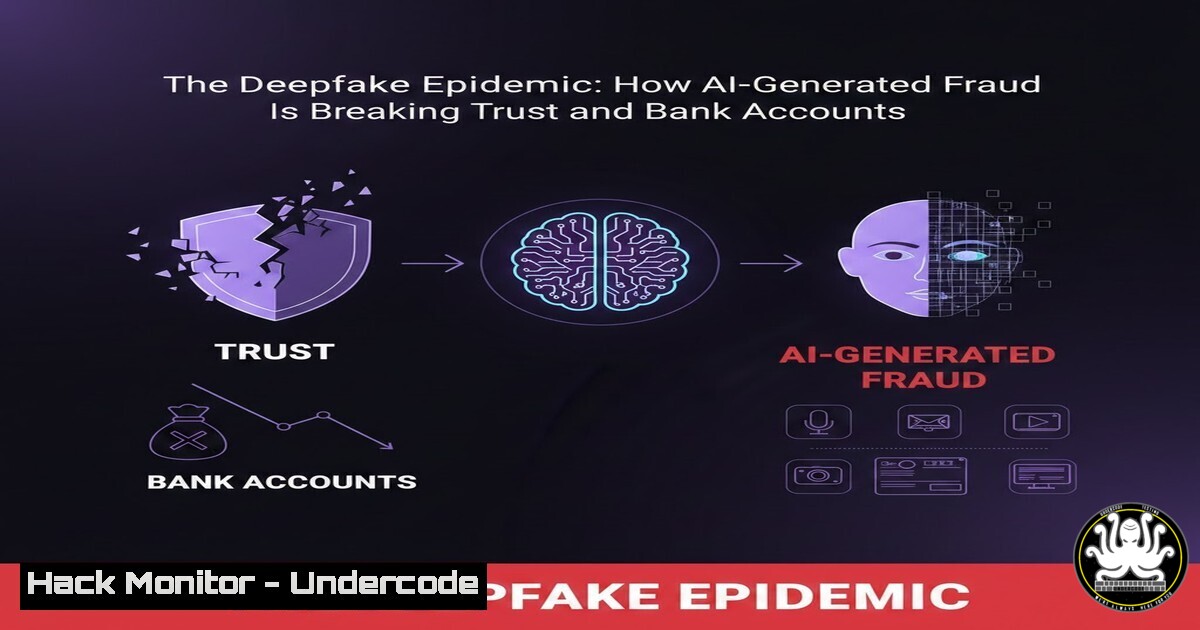
The digital landscape is facing an unprecedented threat from hyper-realistic AI-generated media, known as deepfakes. These sophisticated forgeries, which can clone a person’s voice, face, and mannerisms, are no longer science fiction but a primary tool for cybercriminals. This article delves into the technical mechanics of deepfake scams and provides a actionable blueprint for individuals and organizations to detect, mitigate, and defend against this insidious form of social engineering and identity fraud.
Learning Objectives:
- Understand the technical pipeline used to create deepfakes and identify their digital artifacts.
- Implement robust verification protocols to neutralize deepfake-based impersonation attempts.
- Deploy proactive measures to harden your personal and organizational attack surface against synthetic media exploitation.
You Should Know:
1. The Technical Anatomy of a Deepfake Attack
Deepfakes are created using machine learning models, primarily Generative Adversarial Networks (GANs) or autoencoders. Attackers harvest source material—images from LinkedIn, video calls, or public speeches—to train a model that can synthesize new content. The process involves mapping facial landmarks, learning vocal timbre, and generating frames that mimic natural movement.
Step‑by‑step guide explaining what this does and how to use it.
Step 1: Source Material Collection. Criminals use automated scrapers (e.g., youtube-dl, instaloader) to gather high-quality video/audio of a target from public profiles.
Step 2: Model Training. Using tools like DeepFaceLab or FaceSwap, the attacker trains a model on the harvested data. This requires significant GPU power, often sourced illicitly from cloud platforms.
Step 3: Synthesis & Refinement. The trained model generates the fake content, which is then post-processed to smooth artifacts, sync audio, and match lighting.
2. Detecting Digital Artifacts: A Forensic Approach
While deepfakes are convincing, they often leave subtle digital fingerprints. Forensic analysis can reveal inconsistencies invisible to the naked eye.
Step‑by‑step guide explaining what this does and how to use it.
Step 1: Analyze Video Metadata. Use tools like `exiftool` to check a file’s origin. Deepfakes often have anomalous metadata (e.g., creation software tags).
exiftool suspicious_video.mp4
Step 2: Check for Visual Inconsistencies. Use AI detection platforms like Microsoft Video Authenticator or look for physical impossibilities: unnatural eye blinking patterns, irregular pupil shapes, or hair that doesn’t react to motion.
Step 3: Audio Spectrum Analysis. Use audio editing software (Audacity) to view the spectrogram. Cloned voices may have subtle robotic harmonics or lack consistent background noise profiles.
3. The Ironclad Verification Protocol
When faced with an urgent request, a pre-defined verification protocol is your strongest defense. This process must bypass the potential deepfake channel entirely.
Step‑by‑step guide explaining what this does and how to use it.
Step 1: Establish a “Code Word” or Shared Secret. For high-value executives or family, agree on an out-of-band secret question that is never documented digitally.
Step 2: Initiate Contact via a Trusted, Pre-Existing Channel. If a video call requests a wire transfer, hang up and call the person back on a known number from your contacts, not the number provided in the call.
Step 3: Implement Transactional Delays. For any financial or data transfer request, enforce a mandatory minimum delay (e.g., 30 minutes) for secondary approval, breaking the scammer’s “urgency” spell.
4. Hardening Your Digital Footprint: Operational Security (OpSec)
Reducing the amount of high-fidelity source material available is a critical preventative measure.
Step‑by‑step guide explaining what this does and how to use it.
Step 1: Lock Down Social Media Privacy. Set all profiles (LinkedIn, Facebook) to private. Remove high-resolution profile pictures and videos from public view.
Step 2: Use Audio/Video Distortion in Public Calls. For public webinars, use subtle, non-interfering background filters or slight voice modulation tools available in platforms like OBS Studio to corrupt clean audio/video sampling.
Step 3: Deploy MFA Everywhere. Ensure Multi-Factor Authentication is enabled on all accounts, using hardware keys (YubiKey) or authenticator apps, not SMS. This prevents account takeover that provides more material for impersonation.
 Example: Checking for MFA status in AWS IAM (for cloud admins)
aws iam get-account-summary | grep -A5 -B5 "MFADevices"
5. Organizational Defense: Training and Technical Controls
Enterprises are prime targets for Business Email Compromise (BEC) via deepfake. A layered defense is required.
Step‑by‑step guide explaining what this does and how to use it.
Step 1: Conduct Deepfake-Awareness Training. Simulate a deepfake phishing attack using a synthesized video of your CEO. Use the simulation to train employees on the verification protocol.
Step 2: Implement Email & Collaboration Tool Marking. Configure email gateways (e.g., Microsoft 365 Defender) to apply external sender banners. In Teams or Slack, clearly mark external participants in video calls.
Step 3: Establish a Financial Controls “Four-Eyes Principle.” Mandate that any payment or sensitive data release requires dual, independent authorization via separate communication chains.
What Undercode Say:
- Trust Must Be Actively Verified, Not Given. The foundational principle of digital interaction has shifted. Authenticity can no longer be assumed from sensory input (sight, sound) and must be cryptographically or procedurally proven.
- The Defense is Procedural, Not Just Technological. While AI detection tools are emerging, the most reliable defense is a human-enforced process of breaking the communication chain and verifying through pre-established, secure methods.
Prediction:
Deepfake technology will become cheaper, faster, and more accessible, leading to a surge in personalized, low-cost attacks against individuals and small businesses. We will see the rise of “real-time deepfakes” enabling convincingly fraudulent live video calls. In response, verification technology will integrate directly into communication platforms, likely using blockchain-based digital identity attestations or built-in, real-time AI detection that flags synthetic media before it reaches the user. The arms race between deepfake creation and detection will define the next era of digital trust, making biometrics alone obsolete and pushing us toward multi-factor authentication that includes proof-of-humanity challenges.
▶️ Related Video (84% Match):
🎯Let’s Practice For Free:
IT/Security Reporter URL:
Reported By: Jonathan Morgan – Hackers Feeds
Extra Hub: Undercode MoN
Basic Verification: Pass ✅


