
Listen to this Post
Introduction:
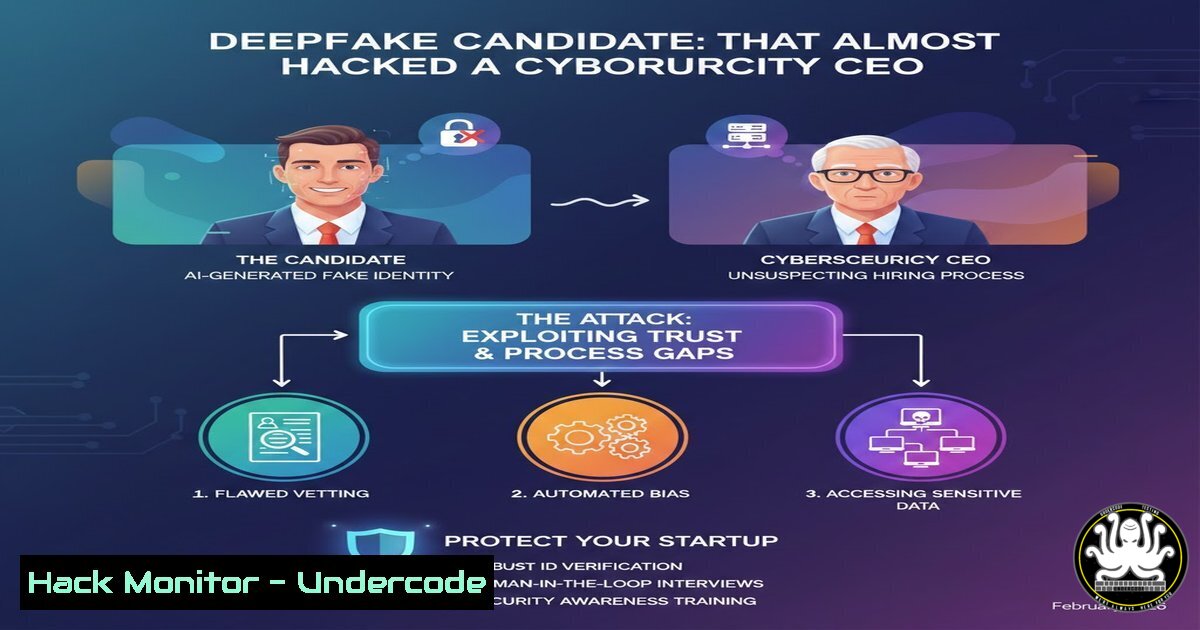
In a stark wake-up call for the cybersecurity industry, Jason Rebholz, CEO of leading MDR firm Expel, found himself face-to-face with a deepfake AI during a job interview for a security researcher role. This sophisticated social engineering attack, leveraging fake profiles, AI-generated resumes, and real-time video synthesis, exposes critical vulnerabilities not in firewalls, but in human resources processes. This incident underscores a paradigm shift: threat actors are now exploiting organizational trust and hiring workflows to infiltrate companies.
Learning Objectives:
- Identify the multi-stage red flags in a deepfake social engineering attack targeting hiring.
- Implement technical and procedural safeguards to vet candidates and digital artifacts.
- Establish a secure hiring protocol that protects executives and the organization from reputational and operational damage.
You Should Know:
1. The Anatomy of a Deepfake Hiring Attack
This attack wasn’t a single action but a multi-layered campaign. It began on LinkedIn, a platform built on professional trust, with a seemingly benign connection referral. The attack chain progressed to a cloud-hosted resume (Vercel), then to a video interview using real-time deepfake technology. Each step was designed to lower the target’s guard by appearing professional and urgent, exploiting the natural desire to find great talent and not miss an opportunity.
Step-by-Step Guide to Understanding the Attack Chain:
Stage 1: The Hook. The attacker used a compromised or fabricated LinkedIn account to message the CEO with a personal referral, bypassing initial cold-contact skepticism.
Stage 2: The Artifact. A professionally crafted resume was hosted on a legitimate platform (Vercel) often associated with tech and AI projects, lending false credibility. Technical due diligence here is key.
Command to Check Domain/URL Reputation: Use tools like `whois` or VirusTotal’s API.
whois vercel-app-url.com
curl -s -X GET "https://www.virustotal.com/api/v3/domains/example.com" -H "x-apikey: YOUR_VT_API_KEY"
Stage 3: The Deepfake. The video interview used generative AI to create a convincing, real-time avatar. Indicators included delayed camera activation, “soft” or inconsistent facial features, glitches during movement, and repetitive, script-like answers.
2. Technical Vetting of Digital Applicant Artifacts
A resume is data. Treat it with the same scrutiny as a suspicious email attachment. Hosting platforms, file metadata, and content originality can reveal fraud.
Step-by-Step Forensic Resume Analysis:
Examine File Metadata: Use command-line tools to extract hidden data from submitted PDFs or DOCs.
 Linux (install exiftool first)
exiftool candidate_resume.pdf
 Look for authoring software, creation dates, or hidden comments.

Windows (PowerShell)
Get-Content -Path .\candidate_resume.pdf -Encoding Byte -TotalCount 1024 | Format-Hex
 This shows the raw header, which can indicate the true source application.
Analyze the Hosting URL: As seen with Vercel, legitimate platforms can be abused. Check the specific subdomain or path for anomalies. Search for the candidate’s name plus key resume phrases in quotes to see if it’s a copied template.
Leverage AI Detection Tools: Utilize AI-content detectors (like Originality.ai, GPTZero) on written resume content and cover letters. While not foolproof, a flag is a significant red flag for a security role.
3. Hardening the Interview Process Against Synthetic Media
The interview must be a verification checkpoint, not just a competency assessment. Establish a mandatory protocol for all hiring managers, especially for remote roles.
Step-by-Step Secure Interview Protocol:
- Pre-Interview Verification: Before any video call, require a brief, informal live video chat via a different platform (e.g., a 2-minute mobile call) to confirm basic human presence.
- In-Call Technical Checks: At the start of the formal interview, ask the candidate to perform simple, unrehearsed physical actions.
“Please wave your hand in front of your face.”
“Can you turn your head slightly to the left and right?”
“Read this random sentence aloud:” (Provide a unique string of words). Deepfakes struggle with real-time synchronization to these unpredictable prompts. - Questioning Tactics: Avoid standard questions. Use interactive scenarios, whiteboarding sessions shared live (Miro, Lucidchart), or ask for opinion-based analysis of recent events. Scripted or repetitive answers are a major indicator.
4. Implementing a Role-Based Hiring Security Policy
No CEO or founder should be the first point of contact for an unsolicited candidate. This creates a high-value, high-pressure attack vector.
Step-by-Step Policy Creation:
Channel All Applications: Mandate that all initial contact goes through a dedicated careers email or an Applicant Tracking System (ATS). Train executives to forward unsolicited direct contacts to HR.
Define a “Two-Person” Rule: For final-stage candidates, especially for sensitive roles, require two separate interviewers on different calls before an offer is extended.
Background Check Integration: Partner with a vendor experienced in detecting fraudulent identities and synthetic media. Reference checks must include verification of past employment via official company channels, not just provided contacts.
5. Leveraging Technology for Continuous Monitoring
Protect your brand and employees from being used as lures. Implement monitoring for digital impersonation.
Step-by-Step Monitoring Setup:
Dark Web & Social Media Monitoring: Use services like Digital Shadows, ZeroFox, or built-in features in EDR/XDR platforms to alert when company executive names, images, or domains are associated with malicious campaigns.
Internal Awareness Training: Conduct simulated phishing and vishing (voice phishing) exercises that include deepfake audio or video elements to train staff.
API Security for HR Tools: If using cloud-based ATS or HR platforms (e.g., Greenhouse, Lever), ensure their API keys and integrations are secured. Enforce Multi-Factor Authentication (MFA) and review access logs.
 Example: Review AWS CloudTrail logs for unauthorized access to your HR app's S3 bucket (if self-hosted)
aws cloudtrail lookup-events --lookup-attributes AttributeKey=EventName,AttributeValue=GetObject --region us-east-1 --start-time 2023-10-01T00:00:00Z
What Undercode Say:
- Trust, but Verify Digitally. The foundational principle of “zero trust” must extend to human interactions in the digital hiring space. Professional networks and urgency are weapons in this new social engineering arsenal. Verification through independent, technical means is non-negotiable.
- Your Process Is Your Perimeter. For startups and mature enterprises alike, the weakest link is often the ad-hoc process. A formal, documented hiring security protocol acts as a critical layer of defense, reducing the “inner turmoil” and psychological pressure on individuals by providing clear steps to follow.
Analysis: The Expel incident is not an anomaly but a blueprint. It reveals a targeted exploitation of startup culture—fast-moving, trust-based, with executives closely involved in hiring. The attacker’s sophistication was moderate (using off-the-shelf deepfake tech) but the psychological manipulation was high-level, exploiting professional courtesy and the fear of missing out on talent. The true failure was a process failure, not the CEO’s individual judgment. This attack vector is scalable and will be commoditized, moving from targeting CEOs to targeting junior engineers with access to specific code repositories or internal systems. The reputation damage for a security company is profound, but the operational risk for any company is a malicious insider granted legitimate access.
Prediction:
Within the next 18-24 months, deepfake-based social engineering will become a standard tool in initial access broker (IAB) kits. We will see the emergence of “HR Phishing as a Service,” where threat actors offer tailored deepfake interviews and forged digital personas to target specific roles. Compliance frameworks like ISO 27001 and SOC 2 will evolve to include controls around digital identity verification in hiring processes. Companies that fail to adapt their hiring security will suffer not only data breaches but also severe reputational loss, as stakeholders question their foundational operational security.
▶️ Related Video (72% Match):
🎯Let’s Practice For Free:
IT/Security Reporter URL:
Reported By: Mthomasson Dprk – Hackers Feeds
Extra Hub: Undercode MoN
Basic Verification: Pass ✅


