
Listen to this Post
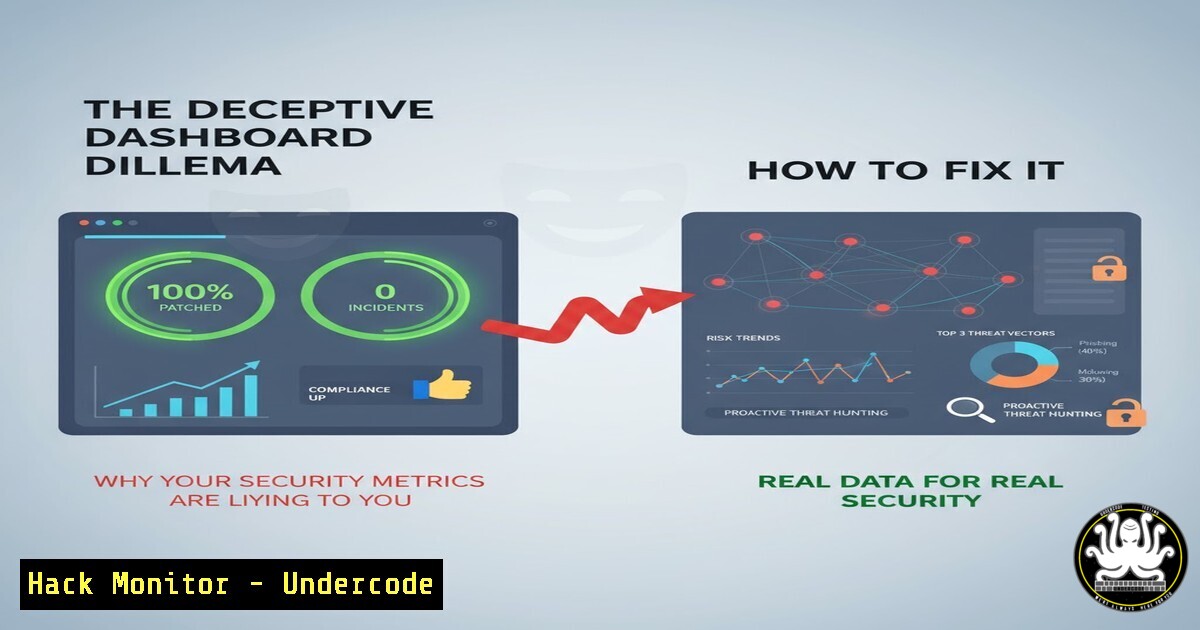
Introduction:
Executive security dashboards are intended to provide leadership with clear visibility into organizational risk posture. However, many dashboards present misleading metrics that create a false sense of security while obscuring genuine vulnerabilities. This discrepancy between reported metrics and actual security effectiveness represents a critical blind spot that can have devastating business consequences when real incidents occur.
Learning Objectives:
- Identify common misleading security metrics and understand why they fail to represent true risk
- Implement context-rich alternatives that accurately reflect security posture
- Develop automated validation processes to ensure metric accuracy and relevance
You Should Know:
1. The Activity vs. Results Measurement Fallacy
Security teams often measure activity completion rather than security outcomes. The classic example “100% of endpoints have antivirus installed” demonstrates compliance but reveals nothing about detection or response capabilities. This creates a dangerous gap between perceived and actual security.
Step-by-step guide explaining what this does and how to use it:
– Audit current dashboard metrics and categorize each as either “activity-based” or “outcome-based”
– Replace activity metrics with validated effectiveness measures
– Implement automated testing to validate security controls
– For endpoint protection, use these PowerShell commands to verify actual functionality:
 Verify antivirus is actually running and detecting threats
Get-MpComputerStatus | Select-Object AntivirusEnabled, RealTimeProtectionEnabled
 Test detection capability with EICAR test file
Invoke-WebRequest -Uri "https://www.eicar.org/download/eicar.com" -OutFile "C:\test\eicar.com"
2. Context-Free Percentage Pitfalls
Metrics like “95% of vulnerabilities patched” seem impressive but become meaningless without context. The remaining 5% might include critical internet-facing systems that represent disproportionate risk. Absolute numbers without environmental context provide false comfort.
Step-by-step guide explaining what this does and how to use it:
– Implement asset criticality scoring for all systems
– Develop weighted risk calculations that consider business impact
– Use vulnerability management tools with business context integration
– Example Nessus scan analysis with criticality weighting:
 Parse vulnerability scan results with asset criticality
nessus_parser --scan-results latest_scan.nessus --asset-criticality criticality_map.csv --output weighted_risk_report.html
 Generate prioritized patch list based on exploitability and business impact
vuln_prioritizer --cvss-threshold 7.0 --internet-facing --authentication-systems --output patch_priority.csv
3. The Data Recency Deception
Many dashboards present outdated information as current, such as last quarter’s penetration test results. This creates a “rearview mirror” security posture that misses emerging threats from new cloud deployments, acquisitions, or shadow IT/AI implementations.
Step-by-step guide explaining what this does and how to use it:
– Implement real-time monitoring dashboards with live data feeds
– Establish continuous assessment processes for new environments
– Configure automated discovery for shadow IT resources
– Cloud security posture monitoring with AWS Config:
 Continuous compliance monitoring for AWS
aws configservice put-configuration-recorder --configuration-recorder name=default,roleARN=arn:aws:iam::123456789012:role/config-role --recording-group allSupported=true,includeGlobalResourceTypes=true
 Real-time alerting for new resource creation
aws cloudwatch put-metric-alarm --alarm-name "new-resource-created" --metric-name "ResourceCount" --namespace "AWS/Config" --statistic Sum --period 300 --threshold 1 --comparison-operator GreaterThanThreshold
4. Tool Proliferation Misrepresentation
Having numerous security tools often indicates integration challenges rather than security maturity. Multiple alert streams without correlation create noise that obscures genuine threats while giving the appearance of comprehensive coverage.
Step-by-step guide explaining what this does and how to use it:
– Conduct tool effectiveness assessment and rationalization
– Implement Security Orchestration, Automation and Response (SOAR) platform
– Develop unified alert correlation and scoring
– SIEM correlation rule example for multi-tool alerting:
 Elasticsearch SIEM correlation rule
rule_name: "Multi-tool Lateral Movement Detection"
description: "Correlate EDR alert with network anomaly and authentication event"
indices:
- "logs-endpoint.events."
- "logs-network.traffic."
- "logs-windows.security."
query: |
(event.category:("process" OR "network") AND event.outcome:"success") OR (winlog.event_id:4624 AND logon.type:3)
correlation:
- EDR_alert: "LSASS memory access"
- Network_alert: "SMB traffic spike"
- Auth_alert: "Multiple failed logons followed by success"
5. Business Impact Obscuration
Effective security organizations measure how security choices affect business outcomes, including revenue impact, risk reduction per euro spent, and detection/response time improvements. Most dashboards lack these business-contextual metrics.
Step-by-step guide explaining what this does and how to use it:
– Develop business-focused security metrics framework
– Implement cost-benefit analysis for security investments
– Create security value demonstration methodology
– Business impact calculation script:
 Calculate security investment ROI
def calculate_security_roi(implementation_cost, risk_reduction, incident_cost_avoided):
annual_benefit = incident_cost_avoided  risk_reduction
roi = (annual_benefit - implementation_cost) / implementation_cost
return roi

Example: Web Application Firewall implementation
waf_cost = 50000  Annual cost
historical_incidents = 5
average_incident_cost = 100000
risk_reduction = 0.8  80% reduction in web attacks

roi = calculate_security_roi(waf_cost, risk_reduction, historical_incidents  average_incident_cost)
print(f"WAF ROI: {roi:.2%}")
6. Risk-Based Metric Implementation
Transition from compliance-focused metrics to risk-based measurements that accurately reflect security posture. This involves mapping technical controls to business risks and measuring risk reduction rather than control implementation.
Step-by-step guide explaining what this does and how to use it:
– Conduct business impact analysis for all critical assets
– Develop risk quantification model
– Implement risk-based reporting dashboard
– FAIR risk analysis implementation:
-- Risk quantification database schema
CREATE TABLE risk_scenarios (
scenario_id UUID PRIMARY KEY,
asset_id UUID NOT NULL,
threat_community VARCHAR(100),
loss_event_frequency DECIMAL,
loss_magnitude_min DECIMAL,
loss_magnitude_max DECIMAL,
risk_rating VARCHAR(50)
);

-- Calculate annualized loss expectancy
SELECT
asset_id,
(loss_event_frequency  (loss_magnitude_min + loss_magnitude_max)/2) as ale
FROM risk_scenarios
WHERE risk_rating IN ('HIGH', 'MEDIUM');
7. Validation and Continuous Improvement Framework
Establish processes to regularly validate metric accuracy and relevance. This includes automated testing, stakeholder feedback loops, and continuous metric refinement based on changing business needs and threat landscapes.
Step-by-step guide explaining what this does and how to use it:
– Implement metric validation automation
– Establish quarterly metric review cycles
– Develop stakeholder feedback mechanisms
– Automated dashboard validation script:
 Dashboard metric validation framework
class MetricValidator:
def <strong>init</strong>(self, metric_name, data_source, validation_rules):
self.metric_name = metric_name
self.data_source = data_source
self.validation_rules = validation_rules

def validate_freshness(self, max_age_hours=24):
 Check data recency
current_time = datetime.now()
data_age = current_time - self.data_source.last_update
return data_age.total_seconds() / 3600 <= max_age_hours

def validate_completeness(self, threshold=0.95):
 Check data coverage
total_assets = self.data_source.get_total_assets()
monitored_assets = self.data_source.get_monitored_assets()
return monitored_assets / total_assets >= threshold

def run_validations(self):
results = {
'freshness': self.validate_freshness(),
'completeness': self.validate_completeness(),
'accuracy': self.validate_accuracy()
}
return all(results.values()), results
What Undercode Say:
- Context is King: Security metrics without business context are not just useless—they’re dangerous, creating false confidence while critical risks go unaddressed.
- Validation is Non-Negotiable: Unvalidated metrics are worse than no metrics at all, as they provide the illusion of knowledge without the substance.
The fundamental issue with current security dashboards isn’t just poor metric selection—it’s a systemic failure to connect technical measurements with business risk. Organizations that excel in security measurement don’t just track different metrics; they build entirely different measurement philosophies. They understand that the purpose of security metrics isn’t to demonstrate compliance but to inform risk decisions and drive security effectiveness. The gap between activity measurement and outcome validation represents the single biggest opportunity for security program improvement. As AI and cloud technologies accelerate business transformation, the consequences of misleading dashboards will only magnify, making metric reform not just a best practice but a business imperative.
Prediction:
Within two years, regulatory bodies will mandate specific security metric validation requirements, and shareholder lawsuits will increasingly target organizations with misleading security reporting. The emergence of AI-powered security validation platforms will automate metric accuracy testing, making unvalidated dashboards legally and reputationally untenable. Organizations that fail to transition to context-rich, validated security metrics will face not only increased breach risks but also regulatory penalties and investor confidence erosion, creating a clear competitive advantage for those who embrace transparent, business-aligned security measurement.
🎯Let’s Practice For Free:
IT/Security Reporter URL:
Reported By: Nikolozk Many – Hackers Feeds
Extra Hub: Undercode MoN
Basic Verification: Pass ✅


