
Listen to this Post
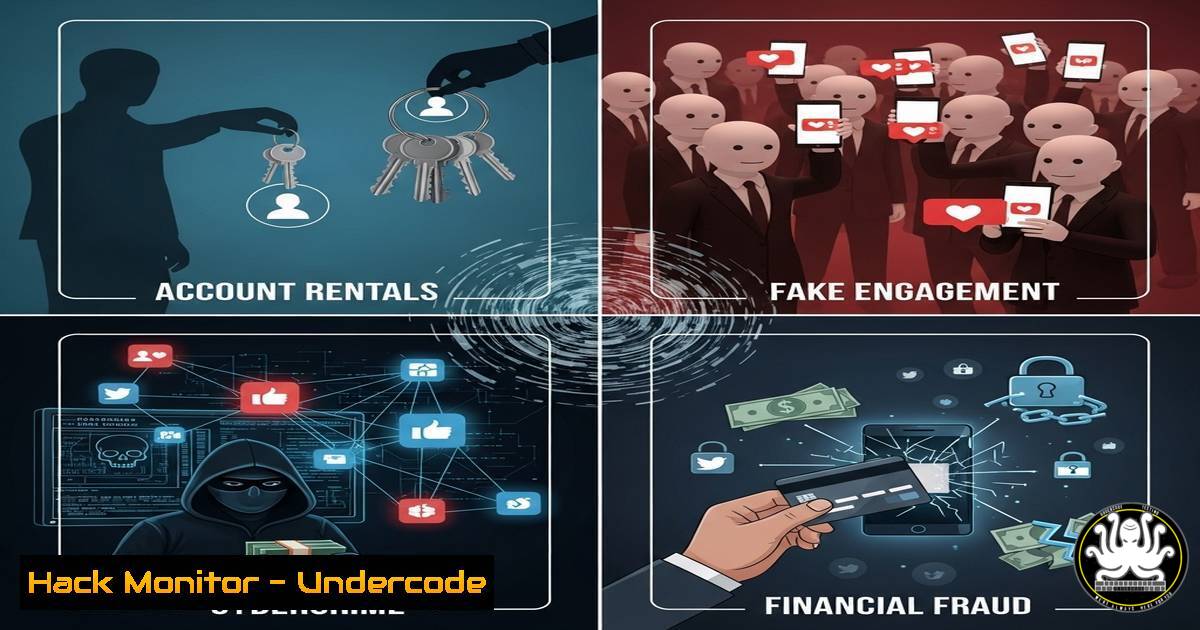
Introduction:
The burgeoning underground economy of rented social media accounts and fake engagement represents a critical threat vector for cybercrime and financial fraud. These compromised accounts provide bad actors with a veil of legitimacy, enabling sophisticated social engineering, phishing campaigns, and money laundering operations. This article dissects the technical mechanics behind these schemes and provides cybersecurity professionals with the tools to detect and mitigate these threats.
Learning Objectives:
- Understand the technical methods used to detect fake and rented social media accounts.
- Learn command-line and OSINT techniques for investigating suspicious online profiles.
- Implement security controls to protect organizational social media assets from compromise.
You Should Know:
1. Investigating Account Anomalies with OSINT Tools
Verified command and tool list:
`theHarvester -d linkedin.com -l 500 -b google` – Performs email and subdomain enumeration.
`sherlock
`maltego` – Uses transforms to map relationships between emails, names, and social profiles.
Step‑by‑step guide:
To investigate a potentially fraudulent account, start with a known profile name or email. Use `sherlock` to quickly see if that same username was created across multiple platforms simultaneously, a common automation tactic. Feed any discovered emails into `theHarvester` to find associated domains. Finally, use Maltego to visually map the connections between these data points, revealing a network of potentially fake profiles.
2. Analyze Phishing Links Shared from Compromised Accounts
Verified command and code snippet:
`curl -I “https://suspect-link.com” | grep -i “location:”` – Checks for HTTP redirects.
`urlscan.io API` – Submits URLs for automated analysis.
`python3 phishtank.py –check
Step‑by‑step guide:
Fraudulent accounts often post phishing links. Use `curl` to perform a header request on the shortened URL (like lnkd.in) to see the final destination without visiting it. For a deeper analysis, submit the final URL to `urlscan.io` via its web interface or API to get a screenshot, DOM analysis, and network request trace. Automate checks against known bad lists with a Python script leveraging the Phishtank database.
3. Detecting Fake Engagement Networks
Verified command and tool:
`Socialbearing.com` – Analyzes Twitter engagement quality.
`FollowerAudit.com` – Checks for fake Instagram/LinkedIn followers.
`botometer @username` – Checks the likelihood of a Twitter account being a bot.
Step‑by‑step guide:
Rented accounts often have inorganic engagement. For Twitter, use `Socialbearing` to analyze the followers of a suspect account; a high ratio of inactive accounts, default profiles, or bot-like names is a red flag. `FollowerAudit` provides a similar service for Instagram and LinkedIn. The `botometer` API can be scripted to score a list of accounts engaging with a post, identifying bot-driven amplification.
4. Hardening Organizational Social Media Accounts
Verified configuration:
Enable Two-Factor Authentication (2FA) on all corporate accounts.
Use LinkedIn’s “Session Management” to review and revoke active sessions.
Implement a Social Media Management tool (e.g., Hootsuite, Sprout Social) with role-based access control (RBAC).
Step‑by‑step guide:
Prevent corporate account takeover by enforcing mandatory 2FA for all marketing and PR team members. Regularly audit active sessions via the platform’s security settings to ensure no unrecognized devices are logged in. Utilize a management platform that provides detailed access logs and allows permissions to be granted without sharing the master account password, significantly reducing the risk of insider threats or credential theft.
5. Monitoring for Brand Impersonation and Fake Pages
Verified command and code snippet:
`google-alerts “your company name” -monitor for new mentions.`
`whois impersonating-domain.com` – Checks domain registration details.
`nslookup
Step‑by‑step guide:
Set up Google Alerts for your brand name and key executives to be notified of new pages or posts. When a fake page or impersonating domain is found, use `whois` to gather registration information (often obfuscated, but still useful for reporting). Use `nslookup` to resolve the domain to an IP address, which can then be checked against threat intelligence feeds to see if it’s known for hosting phishing kits.
What Undercode Say:
- The deliberate lack of enforcement by platforms, despite having the technical capability, creates a low-risk, high-reward environment for cybercriminals.
- This is not a technology failure but a policy and economic one, where platform growth and engagement metrics are prioritized over user security.
The analysis suggests a grim reality: the infrastructure to detect and eliminate fake accounts and malicious activity exists in abundance. Machine learning models can identify bot behavior, network analysis can reveal coordinated inauthentic activity, and simple heuristics can flag obvious fraud. The persistence of these problems indicates a calculated business decision. The platforms profit from inflated user numbers and engagement, turning a blind eye to the fraud facilitated on their networks until public pressure or regulatory action forces their hand. This creates a perpetual cat-and-mouse game where security professionals are always at a disadvantage.
Prediction:
The market for rented and fake accounts will mature into a more sophisticated Cybercrime-as-a-Service (CaaS) model, offering “vetted” accounts with aged histories and realistic activity patterns, making them nearly indistinguishable from genuine users. This will lead to an epidemic of highly credible spear-phishing and business email compromise (BEC) attacks originating from within professional networks. Regulatory pressure, particularly from the EU’s DSA and similar laws, will eventually force platforms to implement more transparent and aggressive enforcement, but not before significant financial damage is done.
🎯Let’s Practice For Free:
IT/Security Reporter URL:
Reported By: Nigelmorriscotterill Im – Hackers Feeds
Extra Hub: Undercode MoN
Basic Verification: Pass ✅


