Listen to this Post
Introduction:
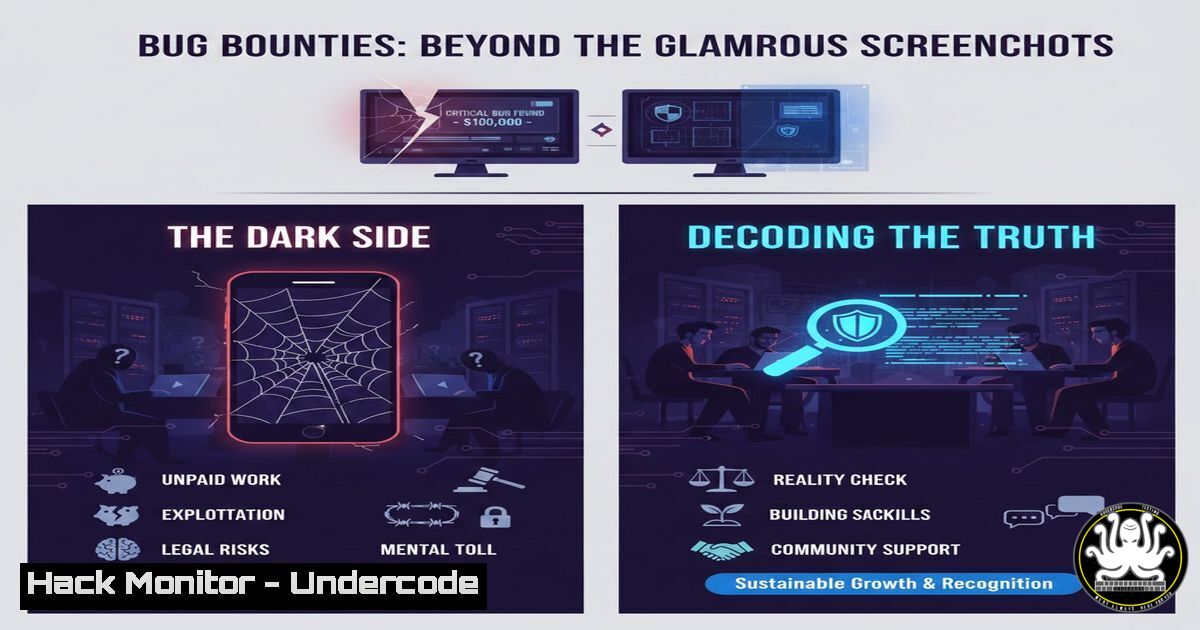
The public narrative of bug bounty hunting is often dominated by triumphant screenshots of lucrative payouts and elite hacker leaderboards. However, a critical look behind these curated images reveals a complex reality where intense competition, inconsistent rewards, and platform-centric systems create significant challenges for security researchers. This article moves past the hype to examine the operational truths, psychological pressures, and structural dynamics that define modern vulnerability disclosure programs.
Learning Objectives:
- Deconstruct the disparity between public perceptions and the genuine operational challenges within bug bounty platforms.
- Analyze the platform-centric model’s impact on researcher incentives, payout structures, and the ethical disclosure landscape.
- Equip researchers and organizations with strategic knowledge to navigate bounties effectively, from technical methodology to legal self-protection.
You Should Know:
- Beyond the Payout Screenshot: The Economics of “Duplicate” and “N/A”
A celebratory screenshot of a four- or five-figure bounty rarely tells the full story. The most common outcomes for a submitted report are “Duplicate” or “Out of Scope/Not Applicable,” representing hours of unpaid research. Platforms and programs are incentivized to minimize payouts, often employing stringent triage processes. Researchers must strategize to avoid these dead ends.
Step-by-Step Guide to Mitigating Duplicate Efforts:
- Automate Initial Reconnaissance: Before manual testing, use tools to gather intelligence on recently awarded bugs for a target program. The `bbscope` tool can query public bounty platforms for recent activity (use responsibly and in accordance with platform terms).
Example command to check HackerOne public hacktivity (conceptual)
This helps gauge recent vulnerability types reported
bbscope h1 -t <target_company> -b
- Focus on Novel Attack Surfaces: Prioritize testing new features, recently acquired subsidiaries, or less-obscure API endpoints and subdomains that other hunters may have missed. Use continuous discovery tools.
Using amass for continuous passive enumeration of new assets
amass enum -passive -d target.com -config config.ini
- Deep Dive Over Spray-and-Pray: Instead of reporting a basic XSS, invest time in developing a full exploit chain (e.g., XSS -> Steal Session -> Account Takeover -> Access to Internal Admin Panel). A complex, high-impact finding is less likely to be a duplicate and commands a higher reward.
-
The Platform Paradox: Centralized Power and Researcher Leverage
Bug bounty platforms act as intermediaries, controlling communication, triage, and payout decisions. This centralization creates a power imbalance where a researcher’s reputation and income can be heavily influenced by platform-specific rules and triager judgments. Understanding this ecosystem is key to navigating it successfully.
Step-by-Step Guide to Building Platform Reputation:
- Start with “Good First Bug” Programs: Many platforms label easy-to-fix issues for newcomers. Submitting well-written, polite, and technically accurate reports for these builds a positive reputation score from the start.
- Master Report Writing: A report is your primary interface. It must be clear, concise, and professional.
Template: Use a clear structure: Summary, Vulnerability Detail (with CVSS vector), Step-by-Step Proof of Concept (PoC), Impact Analysis, Remediation Suggestions.
PoC is Key: Provide a working, non-destructive proof. For a web vulnerability, include a minimal HTML file or a `curl` command.Example curl PoC for a simple IDOR curl -H "Authorization: Bearer <USER_A_TOKEN>" https://api.target.com/v1/user/123/records Then, demonstrate access to another user's data by changing the ID curl -H "Authorization: Bearer <USER_A_TOKEN>" https://api.target.com/v1/user/456/records
- Engage Professionally in Triage: Respond promptly and politely to triager questions. If you disagree with a decision, present additional technical evidence calmly. Public disputes often harm the researcher’s standing more than the platform’s.
-
From Hunter to Entrepreneur: Managing Your Security Business
Treating bug hunting as a freelance business is essential for sustainability. This involves tracking time, managing taxes, diversifying income, and understanding legal agreements.
Step-by-Step Guide to Operational Management:
- Time Tracking: Use tools like `Toggl` or a simple spreadsheet to log hours spent per target. This data is crucial for calculating your effective hourly rate and identifying the most worthwhile programs.
- Legal Awareness: Before participating, read the program’s Terms and Conditions and Vulnerability Disclosure Policy (VDP). Note clauses on allowed testing scope, data handling, and payment terms. Never test outside the defined scope.
- Document Everything: Maintain detailed, dated notes of your testing methodology, all HTTP requests/responses (using `Burp Suite` history or `OBS` screen recording), and all communications with the platform. This is your evidence in case of a dispute.
-
The Technical Grind: Automating the Workflow for Efficiency
Reliance on purely manual testing is inefficient. Successful hunters build personalized toolchains to automate reconnaissance, vulnerability detection, and report generation.
Step-by-Step Guide to a Basic Automation Stack:
1. Asset Discovery: Automate subdomain enumeration and screening.
 Chain subfinder, httpx, and nuclei for initial screening
subfinder -d target.com -silent | httpx -silent | nuclei -t ~/nuclei-templates/ -severity low,medium,high,critical -o findings.txt
2. Continuous Monitoring: Set up alerts for new assets. A simple script can run daily diffs.
 Example script snippet for daily diff
subfinder -d target.com -o new_subs.txt
sort old_subs.txt > old_sorted.txt
sort new_subs.txt > new_sorted.txt
comm -13 old_sorted.txt new_sorted.txt > new_subdomains_daily.txt
cp new_subs.txt old_subs.txt
3. Proof-of-Concept Crafting: For common bugs, prepare template PoC code (HTML for XSS, Python scripts for SSRF) that you can quickly adapt.
5. Psychological Resilience: Combating Burnout and Isolation
The work is solitary, repetitive, and filled with rejection. Ignoring mental health is a direct threat to long-term success and well-being.
Step-by-Step Guide to Maintaining Resilience:
- Set Rigorous Boundaries: Designate specific work hours. Never let hunting consume evenings and weekends. Use operating system tools to enforce this.
On Linux, use systemd timers or cron to shutdown work VMs at a set time
Example cron job to run a shutdown script at 7 PM
0 19    /home/$USER/scripts/shutdown_work_vms.sh
- Celebrate Small Wins: A clean, well-written report accepted as “Triaged” is a win. A helpful interaction with a triager is a win. Track these, not just bounties.
- Find Community: Engage with other hunters on dedicated Discord servers, Mastodon instances, or local meetups. Sharing struggles normalizes them and provides peer support unavailable on the competitive platforms.
-
The Ethical Crossroads: Navigating “Grey Areas” and Platform Policies
Researchers constantly face ethical decisions: How aggressively to fuzz? What to do with a critical bug in a program with poor communication? The “hacker mindset” must be balanced with a strong ethical framework.
Step-by-Step Guide to Ethical Decision-Making:
- The Rule of Thumb: If an action is not explicitly permitted in the program’s scope and rules, do not do it. When in doubt, ask the program’s security team via the platform.
- Scenario – Critical Bug in a Non-Responsive Program: If you find a severe flaw (e.g., RCE, data leak) in a program that ignores reports, escalate politely through the platform’s defined channels. If still ignored after a reasonable time (e.g., 30-45 days), consider responsible disclosure to a CERT/CSIRT (like CERT/CC) who can act as a neutral coordinator. Never threaten the company or sell the vulnerability.
- Data Handling Ethics: If you accidentally access user data during testing, stop immediately. Document the steps that led to the access, do not download or view the data beyond what is necessary to prove the bug, and report it immediately as a high-security privacy violation.
What Undercode Say:
- Bug Bounties as a Supplement, Not a Foundation: The glamorized model of full-time bounty hunting is unsustainable for the vast majority. It should be treated as a potential revenue stream within a broader cybersecurity career or consulting business, not as a primary career plan.
- The System is Optimized for the Buyer (The Company): Platforms and programs are designed to procure security testing at a variable, success-based cost. Researchers must develop sophisticated business, technical, and psychological skills to operate effectively within this buyer-favorable market.
The current model creates a paradox: it relies on the passion and skill of individual researchers but structures rewards in a way that leads to widespread burnout and attrition. This is not sustainable for the health of the security ecosystem. The future will likely see a stratification between a small elite of full-time hunters and a larger pool of professionals who participate casually. Pressure may grow for more standardized minimum response times, clearer scope definitions, and alternative compensation models (like paid retainer-based audits for top researchers) to ensure the long-term viability of crowdsourced security.
Prediction:
The growing awareness of the “dark side” will drive a market correction in bug bounties over the next 3-5 years. We will see the rise of hybrid models that combine traditional bounties with paid, time-boxed “micro-audits” and retainer programs for trusted researchers. Platform algorithms may begin to factor in “researcher health” metrics to ensure sustainability. Furthermore, increased regulatory focus on software liability in the wake of major breaches could force companies to adopt more transparent and equitable vulnerability disclosure practices, moving power slightly away from platforms and towards a more balanced researcher-company relationship.
▶️ Related Video (82% Match):
🎯Let’s Practice For Free:
IT/Security Reporter URL:
Reported By: Rajan Kumar – Hackers Feeds
Extra Hub: Undercode MoN
Basic Verification: Pass ✅


