
Listen to this Post
Introduction:
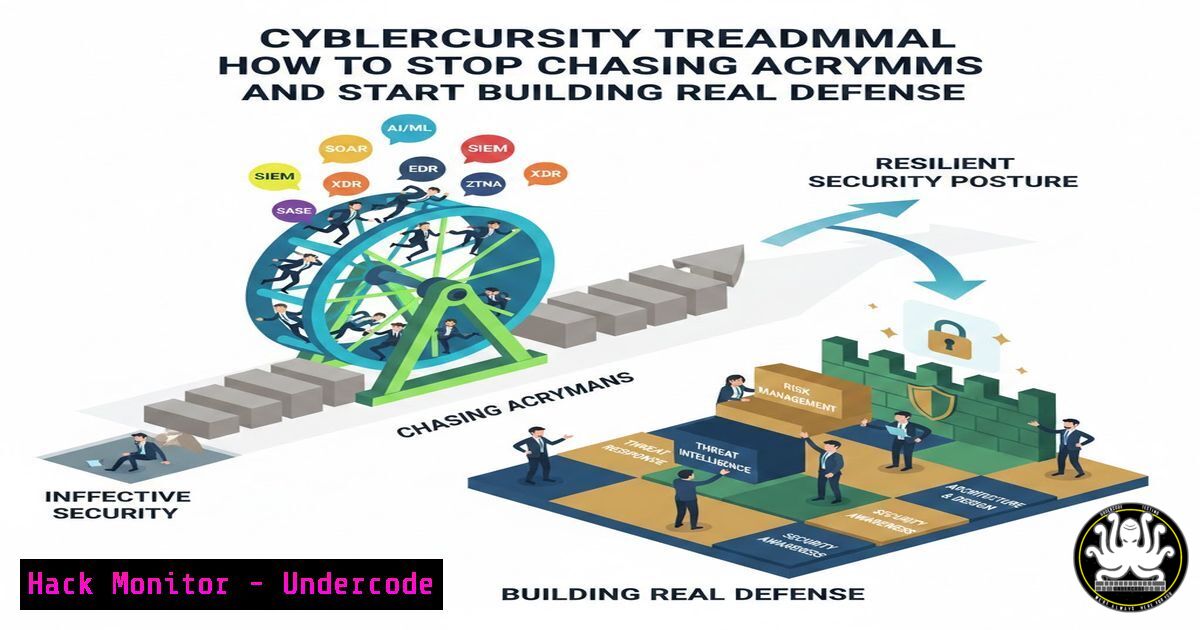
The cybersecurity landscape evolves at a breakneck pace, where a single week away can leave professionals drowning in new threats, tools, and terminology. This constant flux creates a reactive cycle of fatigue, undermining strategic defense. This article provides a concrete framework to transition from overwhelmed to operational, automating threat intelligence and hardening systems against the very chaos described.
Learning Objectives:
- Learn to automate the consolidation of threat feeds and vulnerability databases to cut through noise.
- Implement foundational hardening commands for both Linux and Windows to reduce immediate attack surface.
- Develop a process for evaluating new security tools/platforms against existing stack capabilities to avoid “solution sprawl.”
You Should Know:
1. Automating Threat Intelligence Aggregation
The manual tracking of “600 new threats” is unsustainable. The solution is to automate aggregation from key sources like CISA’s Known Exploited Vulnerabilities (KEV) catalog and open-source intelligence feeds.
Step‑by‑step guide explaining what this does and how to use it.
First, leverage a simple Python script with `requests` and `feedparser` libraries to pull data. For a Linux environment, you can use `cron` to schedule daily feeds.
 Example cron job to run a threat intel aggregator script daily at 8 AM
0 8    /usr/bin/python3 /home/secure/scripts/threat_feeds.py
Create a script (threat_feeds.py) that fetches from CISA’s KEV (https://www.cisa.gov/sites/default/files/feeds/known_exploited_vulnerabilities.json). Parse the JSON for CVEs with high activity. Simultaneously, use the `osquery` tool on endpoints to cross-reference running software versions against these CVEs, generating an internal actionable report.
2. Foundational System Hardening Commands
Before adopting the next “lobster-themed platform,” ensure core systems are locked down. Start with baseline configurations.
Step‑by‑step guide explaining what this does and how to use it.
For Linux (Ubuntu/Debian):
- Audit unused accounts: `awk -F: ‘($3 < 1000) {print $1}' /etc/passwd` to identify system accounts. Lock non-essential ones:
sudo usermod -L <username>. - Check for non-root users with UID 0:
awk -F: '($3 == 0) {print $1}' /etc/passwd. This should only return ‘root’. - Ensure firewall is active:
sudo ufw enable && sudo ufw default deny incoming.
For Windows (via PowerShell Admin):
- Enable Windows Defender Application Control (WDAC) for code integrity:
Set-MpPreference -EnableControlledFolderAccess Enabled. - Disable SMBv1 if not needed:
Disable-WindowsOptionalFeature -Online -FeatureName SMB1Protocol. - Force network logons for admins (mitigates pass-the-hash):
Set-ItemProperty -Path "HKLM:\SOFTWARE\Microsoft\Windows\CurrentVersion\Policies\System" -Name "LocalAccountTokenFilterPolicy" -Value 0.
3. Decoding the Acronym Onslaught with Structured Learning
New acronyms (e.g., XDR, CNAPP, SASE) often represent market convergence. Build a personal evaluation matrix.
Step‑by‑step guide explaining what this does and how to use it.
Create a spreadsheet with columns: Acronym, Core Function, Overlap with Current Tools (e.g., SIEM, EDR), Problem it Solves, and Maturity Score (1-5). Before deep-diving into any new tool, research which of the MITRE ATT&CK framework techniques it addresses. Use free resources like the ATT&CK Navigator (https://mitre-attack.github.io/attack-navigator/) to map capabilities. This prevents chasing features that merely rebrand existing controls.
4. Vulnerability Prioritization with EPSS Integration
With hundreds of new CVEs, use the Exploit Prediction Scoring System (EPSS) to prioritize patching based on real-world exploit likelihood, not just CVSS score.
Step‑by‑step guide explaining what this does and how to use it.
Query the EPSS API (https://api.first.org/data/v1/epss) for your identified CVEs. Integrate it into a ticketing system.
 Example curl command to get EPSS score for CVE-2024-12345
curl -s "https://api.first.org/data/v1/epss?cve=CVE-2024-12345" | jq '.data[bash].epss'
Combine a high EPSS score (>0.2) with internal asset criticality. Automate tickets for vulnerabilities where (EPSS > 0.2) AND (asset criticality = High) using a script that interfaces with your ITSM platform’s API.
5. Simulating Emerging Threats with Breach-and-Attack Simulation
Proactively test your defenses against the “new threats” instead of just reading about them. Use open-source tools to simulate adversary techniques.
Step‑by‑step guide explaining what this does and how to use it.
Deploy Caldera (MITRE’s adversary emulation platform) or Infection Monkey (for network penetration testing) in a isolated lab.
 Quick start with Infection Monkey on a Linux scanner
docker run --rm -p 5000:5000 infectionmonkey/monkey:latest
Access the web UI, configure the scan to target test machines, and run simulations. The tool will attempt lateral movement, privilege escalation, and exfiltration, providing a report highlighting security control gaps aligned with specific ATT&CK techniques. This turns abstract threat alerts into concrete architectural feedback.
What Undercode Say:
- Automation is Non-Negotiable: The speed of threat evolution mandates automated ingestion, correlation, and initial prioritization. Human analysis must be reserved for complex decision-making, not data collection.
- Foundational Hygiene Precedes Fancy Tools: No new “platform” can compensate for unpatched systems, misconfigured permissions, or excessive user privileges. Hardening commands are the bedrock of security.
The core issue isn’t the volume of change but the lack of a filter. Professionals are drowning in undifferentiated data. The strategic shift required is from being a consumer of threat intelligence to being an orchestrator of defensive systems. This means building automated pipelines that transform raw data (CVEs, acronyms, alerts) into prioritized engineering tickets and configuration changes. The goal is to make your security posture adaptive by design, turning the treadmill into a powered conveyor belt that moves you ahead of the chaos.
Prediction:
The current fatigue-driven “acronym sprawl” and platform proliferation will catalyze a strong market consolidation phase within 2-3 years, driven by AI-powered security operations platforms. These platforms will absorb niche functionalities (XDR, CNAPP, ASPM) into unified, reasoning systems that automatically map threats to controls, translate alerts into plain English, and prescribe configuration changes. The winning solutions will not be those that add more dashboard lobster traps, but those that significantly reduce the cognitive load and manual toil described in the post, allowing cybersecurity professionals to focus on strategic risk management rather than reactive tool-juggling.
🎯Let’s Practice For Free:
IT/Security Reporter URL:
Reported By: Amymtom Cybersecurity – Hackers Feeds
Extra Hub: Undercode MoN
Basic Verification: Pass ✅


