Listen to this Post
Introduction:
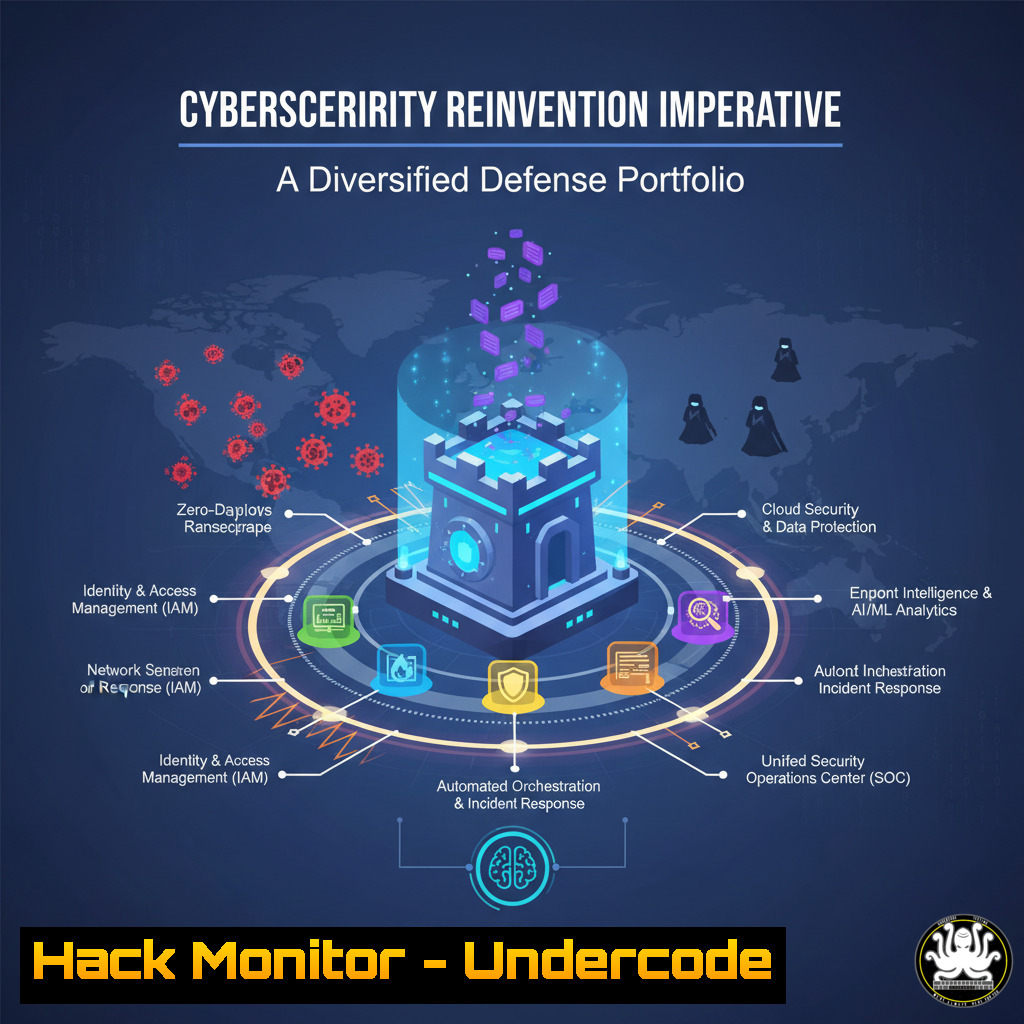
In an era of permanent cyber uncertainty and increasingly interconnected digital ecosystems, organizations can no longer afford to bet their entire security posture on a single, siloed solution. Just as a financial advisor would never recommend putting all your savings into one stock, modern CISOs must diversify their strategic investments across people, processes, and technology to build resilient defenses against evolving threats. The shift toward system-wide, radical reinvention in business strategy directly parallels the necessary evolution in cybersecurity, where incremental security patches are no longer sufficient against ecosystem-level attacks.
Learning Objectives:
- Understand the critical components of a diversified cybersecurity portfolio across prevention, detection, and response
- Master essential commands and techniques for hardening systems across Linux, Windows, and cloud environments
- Develop capabilities for continuous security monitoring and threat hunting across your entire digital ecosystem
You Should Know:
1. System Hardening Fundamentals
 Linux: Audit system permissions and harden configurations
find / -type f -perm /6000 -ls 2>/dev/null | head -20
grep PASS_MAX_DAYS /etc/login.defs
sysctl -a | grep kernel.randomize_va_space
This sequence identifies SUID/SGID files (common privilege escalation vectors), checks password policy compliance, and verifies ASLR (Address Space Layout Randomization) status. Run these commands during security audits to identify baseline configuration weaknesses that attackers frequently exploit.
2. Windows Security Configuration Audit
 Windows: Check critical security settings
Get-MpComputerStatus | Select RealTimeProtectionEnabled, AntivirusEnabled
Get-LocalUser | Where-Object Enabled -eq "True" | Format-Table Name, PasswordRequired, PasswordLastSet
Get-Service | Where-Object {$_.Status -eq "Running"} | Select-Object Name, DisplayName
These PowerShell commands verify Windows Defender status, audit enabled local accounts, and enumerate running services. Regular execution helps maintain visibility into your endpoint security posture and identifies potential misconfigurations that could weaken your defensive position.
3. Network Security Mapping
 Network reconnaissance and service enumeration
nmap -sS -sV -O -T4 192.168.1.0/24
ss -tuln | grep LISTEN
netstat -an | findstr LISTENING  Windows equivalent
Network mapping provides critical visibility into your attack surface. The nmap command performs SYN scan with version detection and OS fingerprinting, while ss/netstat show listening ports. This foundational intelligence informs firewall rules and service hardening decisions across your portfolio.
4. Cloud Security Hardening
 AWS S3 Bucket Security Audit
aws s3api list-buckets --query "Buckets[].Name"
aws s3api get-bucket-acl --bucket YOUR_BUCKET_NAME
aws s3api get-bucket-policy --bucket YOUR_BUCKET_NAME
Misconfigured cloud storage represents a critical ecosystem-level vulnerability. These AWS CLI commands enumerate S3 buckets and audit their access controls. Regular execution helps prevent data exposure incidents by ensuring proper bucket policies and ACLs are maintained across your cloud portfolio.
5. API Security Testing
 API endpoint security assessment with curl
curl -H "Authorization: Bearer $TOKEN" https://api.example.com/v1/users \
-X GET -I | grep -E "(HTTP|X-|Server)"
curl -X POST https://api.example.com/v1/auth -d '{"user":"admin","pass":"test"}' \
-H "Content-Type: application/json" --max-time 5
APIs represent critical interconnection points in modern digital ecosystems. These curl commands test authentication mechanisms and response headers for common vulnerabilities. Automated API security testing should be integrated throughout your development lifecycle to maintain portfolio integrity.
6. Continuous Vulnerability Monitoring
 Automated vulnerability scanning integration
docker run --rm aquasec/trivy image YOUR_IMAGE_NAME
grep -r "password|secret|key" /etc/ /home/ 2>/dev/null | grep -v ".bash_history"
find /var/log -name ".log" -mtime -1 -exec ls -la {} \;
This multi-layered approach combines container vulnerability scanning, credential exposure detection, and log monitoring. Integrating these checks into CI/CD pipelines and daily operations provides continuous portfolio assessment rather than point-in-time security validation.
7. Incident Response Readiness
 Live incident response data collection
ps aux --sort=-%mem | head -10
lsof -i -P | grep LISTEN
last -20 | head -10
wmic process get name,processid,commandline /format:csv  Windows
During security incidents, rapid data collection is critical. These commands identify resource-intensive processes, network connections, and recent logins across systems. Maintaining incident response capabilities across your portfolio ensures you can contain breaches before they escalate to ecosystem-level impacts.
What Undercode Say:
- Strategic diversification beats tactical perfection in modern cybersecurity
- Ecosystem-level thinking is no longer optional for security leaders
- The half-life of security controls continues to decrease exponentially
The data clearly shows that organizations treating cybersecurity as a series of isolated projects rather than an integrated portfolio are fundamentally misaligned with today’s threat landscape. Just as business leaders are shifting toward radical, system-wide reinvention, security professionals must embrace portfolio thinking that spans prevention, detection, response, and recovery. The most successful organizations will be those that allocate security resources across multiple intensity levels and scopes—from incremental patching to radical architectural changes—creating defensive depth that can withstand the permanent uncertainty of digital business.
Prediction:
Within three years, organizations failing to adopt diversified cybersecurity portfolios will experience catastrophic breaches at unprecedented rates. The convergence of AI-powered attacks, software supply chain vulnerabilities, and ecosystem interdependence will render single-focus security strategies completely obsolete. Companies that successfully implement reinvention-based security models—distributing investments across multiple defensive layers, intelligence sources, and response capabilities—will achieve order-of-magnitude improvements in resilience, turning cybersecurity from a cost center into a competitive advantage in turbulent digital markets.
🎯Let’s Practice For Free:
IT/Security Reporter URL:
Reported By: Nadyazhexembayeva Would – Hackers Feeds
Extra Hub: Undercode MoN
Basic Verification: Pass ✅


