Listen to this Post
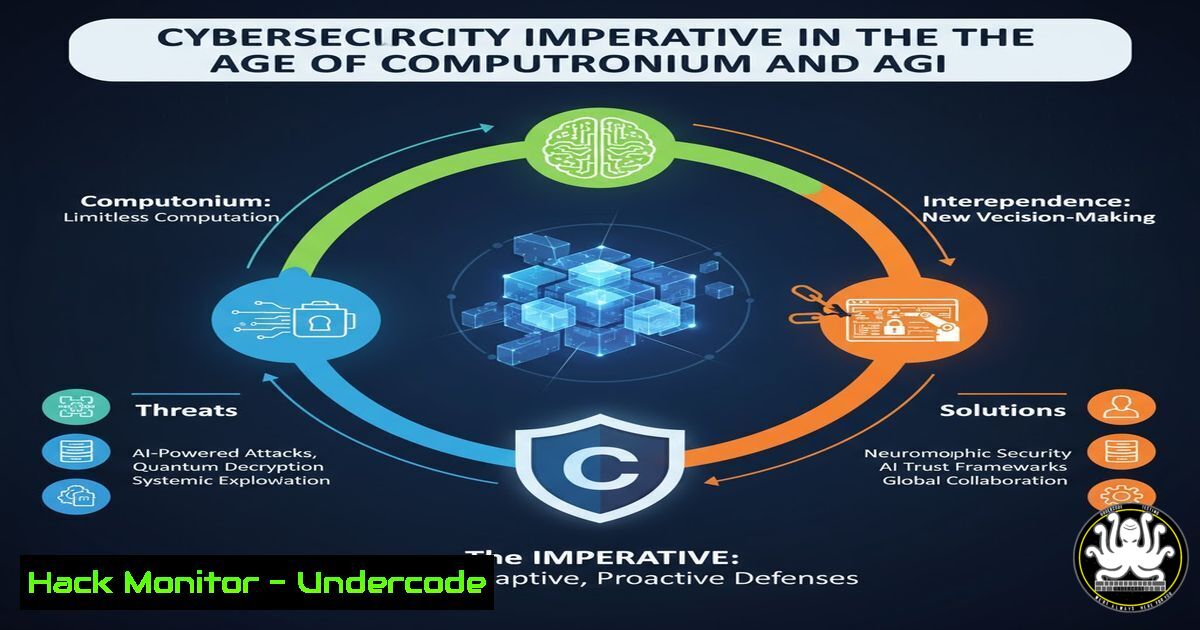
Introduction:
The conceptual leap towards a post-Singularity “Computronium Universe,” where matter is optimized for computation, presents not just a philosophical frontier but a tangible future cybersecurity battlefield. As Artificial General Intelligence (AGI) evolves, the attack surface expands beyond networks and data to encompass the very fabric of a computationally saturated reality. This article deconstructs the security implications and provides a foundational toolkit for professionals navigating this transition.
Learning Objectives:
- Understand the core cybersecurity threats emerging from AGI and hyper-computational environments.
- Learn practical command-line and code-level techniques for securing AI systems and infrastructure today.
- Develop a forward-looking security posture to mitigate risks associated with autonomous, agentic AI systems.
You Should Know:
1. Securing the AI Development Pipeline
The foundation of a secure AGI begins with a hardened development environment. Adversarial attacks often originate through compromised toolchains and data pipelines.
Verified Command List:
 Linux: Audit file integrity in your AI model training directory
find /path/to/training_data -type f -exec sha256sum {} \; | sort > current_hashes.txt
diff baseline_hashes.txt current_hashes.txt

Linux: Monitor for suspicious processes accessing GPU resources (commonly used for AI)
nvidia-smi --query-compute-apps=pid,process_name,used_memory --format=csv

Python: Basic sanitization check for training data before ingestion
import hashlib
def verify_dataset_integrity(filepath, expected_hash):
with open(filepath, 'rb') as f:
file_hash = hashlib.sha256(f.read()).hexdigest()
if file_hash != expected_hash:
raise SecurityException("Dataset integrity check failed!")
Step-by-step guide:
The `find` and `sha256sum` commands create a cryptographic baseline of your training data. Any deviation, detected by diff, indicates potential tampering. Concurrently, `nvidia-smi` allows for real-time monitoring of computational resources, alerting you to unauthorized AI model access or inference operations. The Python snippet should be integrated into all data loading routines to prevent data poisoning attacks.
2. Hardening Agentic AI Communication Channels
Agentic AI systems that orchestrate workflows must communicate securely. Unencrypted inter-agent communication is a primary attack vector for model theft or manipulation.
Verified Command List:
 Using OpenSSL to generate robust keys for AI agent authentication
openssl genpkey -algorithm ED25519 -out ai_agent_private.key
openssl pkey -in ai_agent_private.key -pubout -out ai_agent_public.key

Linux: Create an encrypted channel using SSH tunneling for agent communication
ssh -f -N -L 8080:localhost:8888 user@ai-orchestrator-host -i /path/to/ssh_key

Python (using requests): Enforce TLS and certificate verification for API calls
import requests
response = requests.post('https://ai-agent-endpoint.com/api', json=payload, verify='/path/to/ca-bundle.crt')
Step-by-step guide:
The OpenSSL commands generate a modern, strong key pair for authenticating AI agents. The SSH command establishes a secure tunnel, forwarding local port 8080 to the AI orchestrator’s port 8888, ensuring all traffic is encrypted in transit. The Python code demonstrates a non-negotiable practice: always verifying TLS certificates to prevent man-in-the-middle attacks that could intercept or alter agent instructions.
3. Quantum-Resistant Cryptography Preparations
While quantum-encrypted blockchains were mentioned, the transition to post-quantum cryptography (PQC) is critical for long-term data protection against future quantum attacks.
Verified Command List:
 Using OpenSSL to experiment with quantum-safe signature algorithms (e.g., Dilithium)
openssl genpkey -algorithm dilithium2 -out pqc_private.key
openssl pkey -in pqc_private.key -pubout -out pqc_public.key

Python: Using a PQC library (e.g., liboqs) to encapsulate a key
from oqs import keyencapsulation
kem = keyencapsulation.KeyEncapsulation('Kyber512')
public_key = kem.generate_keypair()
ciphertext, shared_secret = kem.encap_secret(public_key)
Step-by-step guide:
These commands provide a hands-on introduction to PQC. The OpenSSL example uses a proposed algorithm for digital signatures, while the Python code with the `liboqs` library demonstrates a Key Encapsulation Mechanism (KEM), which is used for secure key exchange. Integrating these algorithms now protects data against “harvest now, decrypt later” attacks.
4. API Security for AI Microservices
AGI architectures will be built on vast networks of microservices. Securing their APIs is paramount to prevent unauthorized access and prompt injection attacks.
Verified Command List:
 Using curl to test API security headers
curl -I https://api.ai-service.example/v1/predict | grep -i "strict-transport-security|x-content-type-options"

Linux: Use jq to parse and monitor AI API logs for anomalous patterns
tail -f /var/log/ai-api.log | jq 'select(.status_code == 401 or .status_code == 403)'

Python: Implementing a simple rate limiter for an AI endpoint using Flask
from flask_limiter import Limiter
from flask_limiter.util import get_remote_address
limiter = Limiter(app, key_func=get_remote_address)
@app.route('/generate')
@limiter.limit("10 per minute")
def generate_text():
 AI inference logic here
Step-by-step guide:
The `curl` command checks for critical HTTP security headers that enforce HTTPS and prevent MIME sniffing. The `jq` command filters live logs for authentication and authorization failures, which can indicate brute-force attacks. The Python Flask code implements a rate limiter, a crucial defense against Denial-of-Wallet and resource exhaustion attacks on costly AI inference APIs.
- Infrastructure as Code (IaC) Security for AI Labs
The “Quantum AI Innovation Lab” must be built on secure, reproducible infrastructure. Misconfigurations in IaC are a common source of breaches.
Verified Command List:
 Using tfsec to scan Terraform configurations for the AI lab's cloud setup
tfsec /path/to/terraform_files

Using checkov to scan for cloud misconfigurations in IaC
checkov -d /path/to/iac_directory

Linux: Validate the integrity of your IaC template hashes
git log -p --follow terraform/main.tf | grep -i "^+.password|^+.key"
Step-by-step guide:
`tfsec` and `checkov` are static analysis tools that scan Infrastructure as Code files for security misconfigurations before deployment, such as publicly accessible storage buckets holding model weights. The `git log` command audits the history of your infrastructure code for accidental commits of secrets, a common and critical error.
6. Container Security for Isolated AI Environments
Containerization is essential for reproducible AI training and deployment. Escaping a container can lead to full compromise of the host system and the AI models it contains.
Verified Command List:
 Use Docker's security scanning
docker scan my-ai-training-image:latest

Linux: Run a container with enhanced security profiles
docker run --security-opt=no-new-privileges:true --cap-drop=ALL -it my-ai-image

Linux: Audit container for vulnerabilities with trivy
trivy image my-ai-training-image:latest
Step-by-step guide:
`docker scan` and `trivy` provide vulnerability assessment for container images, identifying known CVEs in the underlying OS and Python packages. The `docker run` command demonstrates a least-privilege principle, starting a container without any Linux capabilities and preventing privilege escalation, drastically reducing the impact of a breach.
7. Behavioral Monitoring for Agentic AI
As AI becomes “agentic” and autonomous, monitoring its actions for deviation from intended behavior is a new layer of cybersecurity.
Verified Code Snippet:
 Python: A simple log auditor for AI agent actions
import json
import smtplib
from datetime import datetime

def audit_agent_action(agent_id, action, resource, risk_score):
log_entry = {
"timestamp": datetime.utcnow().isoformat(),
"agent_id": agent_id,
"action": action,
"resource": resource,
"risk_score": risk_score
}
 Log to a secured, centralized system
with open('/secure_logs/ai_actions.log', 'a') as f:
f.write(json.dumps(log_entry) + '\n')
 Alert if risk is high
if risk_score > 0.8:
send_alert(f"High-risk action by {agent_id}: {action} on {resource}")

Example usage within an agent's code
audit_agent_action("Orchestrator_AI", "SHUTDOWN_SYSTEM", "Node_45", 0.95)
Step-by-step guide:
This Python code provides a framework for building an audit trail for every significant action an autonomous AI agent takes. By logging the agent ID, action, target, and a pre-calculated risk score, security teams can trace malfunctions or malicious activities back to their source. High-risk actions, like shutting down a system, trigger immediate alerts.
What Undercode Say:
- The Perimeter is Now Conceptual: The attack surface is no longer just your network; it’s your training data, your model weights, and the decision-making processes of your agentic AI. Security must be integrated at the data, model, and agent layer.
- Autonomy Demands Auditability: The more autonomous a system is, the more robust and immutable its logging must be. Without a perfect, tamper-proof record of an AGI’s actions and decisions, attribution and remediation after an incident will be impossible.
The vision of a Computronium Universe forces a paradigm shift in cybersecurity. Defending a world where computation is the substrate of reality requires building security into the genesis of AGI systems today. The techniques outlined—from data integrity checks and PQC to agent auditing—are the initial building blocks for a security posture that can scale alongside AI’s rapid evolution. The conversation must move from preventing intrusion to managing the risk of inherently powerful, autonomous systems.
Prediction:
The convergence of AGI, agentic systems, and hyper-computation will not cause a single, catastrophic “Cyber-Singularity” breach. Instead, we will witness a prolonged “Era of Algorithmic Instability,” where novel, emergent vulnerabilities in complex AI ecosystems will be exploited. These won’t be traditional hacks, but sophisticated “prompt-flow” manipulations and “goal-function” hijackings, leading to large-scale, paradoxical system failures that are incredibly difficult to diagnose and attribute. The cybersecurity industry will pivot from threat intelligence to “behavioral forensics,” specializing in interpreting the actions of non-human intelligences.
🎯Let’s Practice For Free:
IT/Security Reporter URL:
Reported By: Trey Rutledge – Hackers Feeds
Extra Hub: Undercode MoN
Basic Verification: Pass ✅


