Listen to this Post
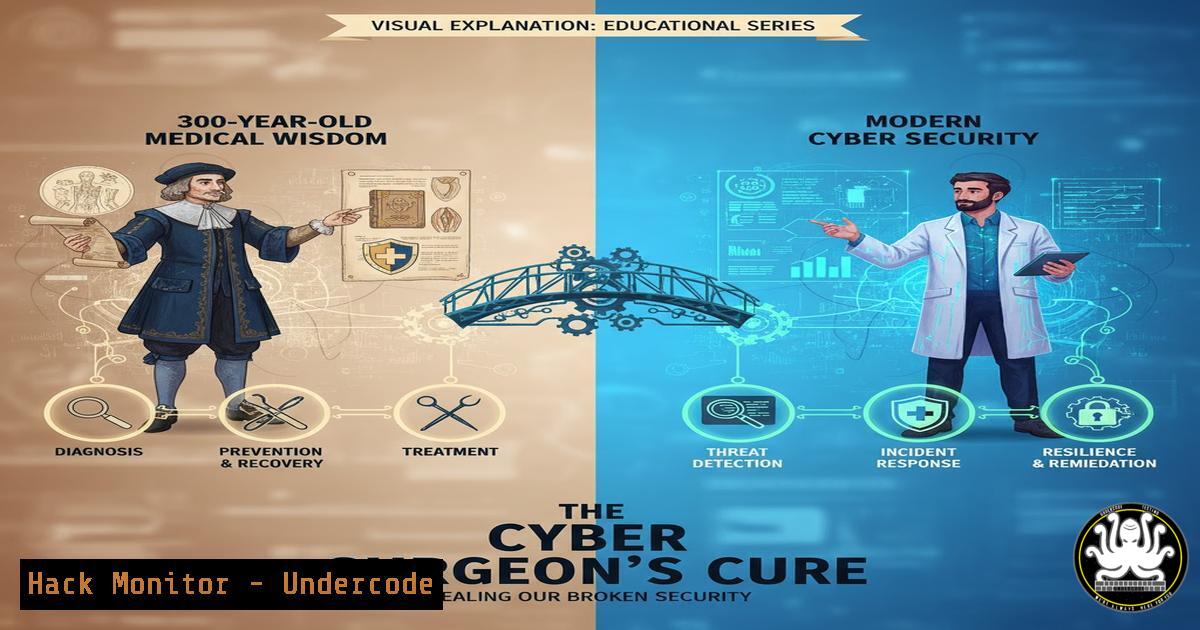
Introduction:
The cybersecurity field is plagued by a dangerous divide between policy-makers and practitioners, mirroring the 18th-century rift between physicians and barber-surgeons. This cognitive anchoring prevents effective defense against modern attackers who exploit identity systems and unmonitored endpoints while security teams remain focused on traditional network and endpoint controls.
Learning Objectives:
- Bridge the gap between theoretical security controls and practical implementation
- Apply empirical, evidence-based approaches to cybersecurity risk management
- Master technical controls across identity, cloud, and endpoint security
You Should Know:
1. Identity Access Audit with Azure AD PowerShell
Connect to Azure AD
Connect-AzureAD

Get sign-in logs for the past 30 days
Get-AzureADAuditSignInLogs -Filter "createdDateTime gt 2023-10-01" |
Select-Object UserDisplayName, AppDisplayName, IPAddress, RiskState, Status |
Export-Csv -Path "C:\audit\signin_logs.csv" -NoTypeInformation

List conditional access policies
Get-AzureADMSConditionalAccessPolicy |
Select-Object DisplayName, State, Conditions
This PowerShell script connects to Azure AD and extracts critical sign-in data and conditional access policies. The first command authenticates to your Azure AD tenant. The second command retrieves all sign-in logs from the specified date, filtering for key attributes like user identity, application, IP address, and risk state. The final command enumerates all conditional access policies, showing their current enforcement status. Run this weekly to identify anomalous sign-in patterns and ensure conditional access policies are properly configured.
2. Linux Privilege Escalation Vulnerability Assessment
System information gathering for privilege escalation assessment
uname -a
cat /etc/issue
hostname

SUID and GUID files check
find / -perm -u=s -type f 2>/dev/null
find / -perm -g=s -type f 2>/dev/null

World-writable files
find / -perm -o=w ! -path "/proc/" ! -path "/sys/" 2>/dev/null

Processes running as root
ps aux | grep root
This Linux command sequence helps identify common privilege escalation vectors. The `uname` and `/etc/issue` commands reveal OS version for vulnerability matching. The `find` commands locate SUID/GUID executables that could be exploited, while filtering out proc and sys directories to reduce noise. The final command shows all processes running under root context. Regular execution helps maintain system hardening and identify misconfigured permissions.
3. Cloud Security Posture Management with AWS CLI
Check S3 bucket policies
aws s3api list-buckets --query 'Buckets[].Name' --output text | \
xargs -I {} aws s3api get-bucket-policy --bucket {} --output text 2>/dev/null

Security group assessment
aws ec2 describe-security-groups --query 'SecurityGroups[?IpPermissions[?ToPort==`22` && IpRanges[?CidrIp==`0.0.0.0/0`]]].GroupId' --output text

IAM user access key age check
aws iam list-users --query 'Users[].UserName' --output text | \
xargs -I {} aws iam list-access-keys --user-name {} --query 'AccessKeyMetadata[?Status==`Active`]' --output table
This AWS security assessment script checks three critical areas: S3 bucket policies for public exposure, security groups with overly permissive SSH access, and aging IAM user access keys. The S3 command lists all buckets and attempts to retrieve their policies. The security group command identifies rules allowing SSH from anywhere. The IAM command displays all active access keys with their creation dates. Run monthly to maintain cloud hygiene.
4. Network Segmentation Verification with Nmap
Port scanning with service detection
nmap -sS -sV -T4 -p- 192.168.1.0/24 -oA network_scan

Firewall rule testing
nmap -sA -T4 -p 22,80,443,3389,5432 target_ip

OS fingerprinting and vulnerability assessment
nmap -O -sS -script vuln target_ip --script-args mincvss=7.0
This Nmap sequence provides comprehensive network visibility. The SYN scan (-sS) with service detection (-sV) maps all open ports and services across the subnet. The ACK scan (-sA) tests firewall statefulness for critical services. The final command combines OS detection with vulnerability scripting, filtering for high-severity CVSS scores. Use these commands to validate segmentation controls and identify misconfigured services.
5. Windows Security Configuration Audit
Audit policy configuration
auditpol /get /category:

Windows Defender status
Get-MpComputerStatus | Select-Object AntivirusEnabled, AntispywareEnabled, RealTimeProtectionEnabled

User account control verification
Get-ItemProperty "HKLM:\SOFTWARE\Microsoft\Windows\CurrentVersion\Policies\System" |
Select-Object EnableLUA, ConsentPromptBehaviorAdmin

Service account permissions
Get-WmiObject -Class Win32_Service | Select-Object Name, StartName, State  |
Where-Object {$_.StartName -like "$"}
This Windows security audit checks critical security configurations. The `auditpol` command displays current auditing settings across all categories. The Defender status check ensures antivirus and real-time protection are active. The registry query verifies User Account Control settings, while the WMI command identifies services running under privileged accounts. Regular execution helps maintain baseline security compliance.
6. API Security Testing with OWASP ZAP
Start ZAP in daemon mode
zap.sh -daemon -port 8080 -host 127.0.0.1 -config api.disablekey=true

Automated API scanning
docker run -v $(pwd):/zap/wrk/:rw -t owasp/zap2docker-stable zap-api-scan.py \
-t https://api.target.com/v2/api-docs -f openapi -r scan_report.html

JWT token analysis
python3 jwt_tool.py JWT_TOKEN_HERE -C -d wordlist.txt
This API security workflow uses OWASP ZAP for comprehensive testing. The first command starts ZAP in headless mode. The docker command performs automated OpenAPI specification scanning, generating an HTML report. The final command uses jwt_tool to analyze JWT tokens for weaknesses. Integrate this into CI/CD pipelines to catch API vulnerabilities early.
7. Memory Analysis with Volatility for Incident Response
Image information and process listing
volatility -f memory.dump imageinfo
volatility -f memory.dump --profile=Win10x64_19041 pslist

Network connections and malware detection
volatility -f memory.dump --profile=Win10x64_19041 netscan
volatility -f memory.dump --profile=Win10x64_19041 malfind -D output/

Registry analysis for persistence
volatility -f memory.dump --profile=Win10x64_19041 printkey -K "Software\Microsoft\Windows\CurrentVersion\Run"
This Volatility framework sequence enables deep memory forensics during incident response. The commands progress from basic image identification to process enumeration, network connection analysis, malware scanning, and persistence mechanism detection. The `malfind` command exports suspicious memory regions for further analysis. This approach bridges the gap between theoretical detection rules and actual memory artifacts.
What Undercode Say:
- Empirical evidence must drive security control selection and implementation
- The practitioner-scientist model combining hands-on experience with structured experimentation is essential
- Organizations must reject cybersecurity mysticism in favor of measurable technology hygiene
The divide between security theorists and practitioners creates measurable attack surfaces that modern adversaries systematically exploit. While policy teams architect ideal control frameworks, operational teams battle real-world constraints that prevent perfect implementation. The solution lies in adopting John Hunter’s scientific method—treating each security control as a hypothesis to be tested through controlled experimentation and empirical observation. Organizations that regularly validate their security assumptions through technical testing and measure control effectiveness quantitatively demonstrate significantly lower breach costs. The era of security by compliance must evolve into security by verifiable evidence, where every control’s value is demonstrated through reproducible testing rather than theoretical alignment with frameworks.
Prediction:
Within three years, organizations adopting evidence-based security practices will demonstrate 60% faster threat detection and 45% lower incident costs through continuous control validation. The security industry will shift from compliance-centric certification to empirical security ratings based on continuously tested control effectiveness, forcing vendors to demonstrate real-world protection rather than feature checklist compliance.
🎯Let’s Practice For Free:
IT/Security Reporter URL:
Reported By: Tonymartinvegue Walking – Hackers Feeds
Extra Hub: Undercode MoN
Basic Verification: Pass ✅


