Listen to this Post
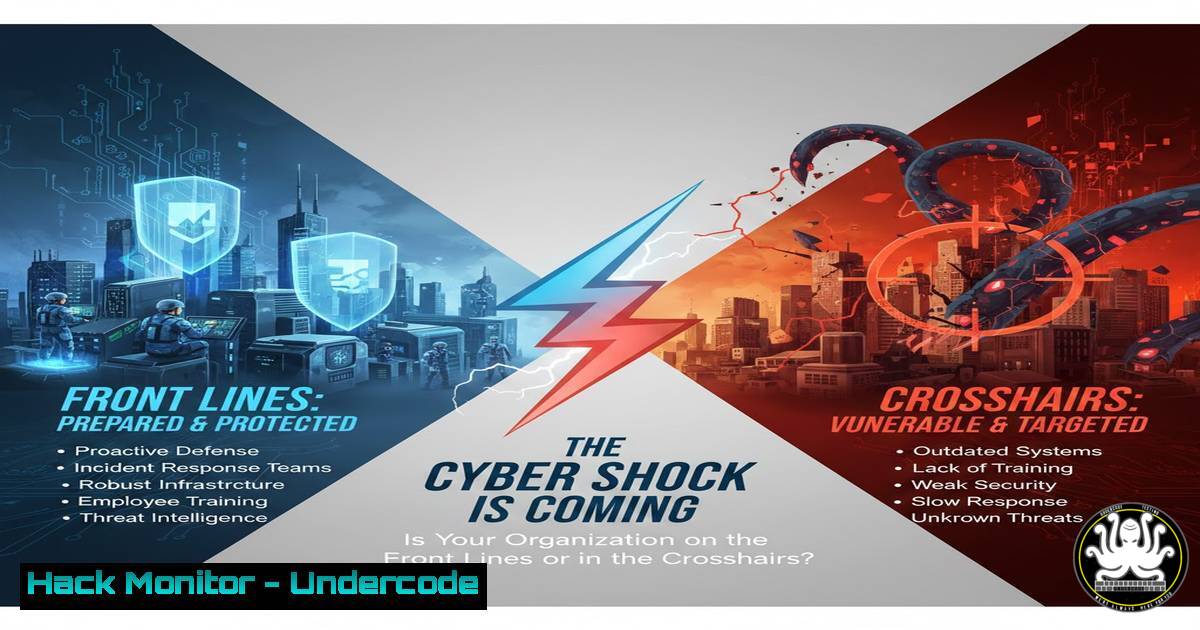
Introduction:
The concept of a “cyber shock”—a large-scale, crippling cyber attack on critical infrastructure—has moved from theoretical war-gaming to a concrete planning horizon for national defense agencies. As highlighted at the European Cyber Week, military cyber commands, intelligence services, and critical operators are now aligning strategies under the stark reality of 1,361 incidents handled by France’s ANSSI last year alone. This article translates high-level warnings into actionable technical and collaborative defenses, because as emphasized by leaders, “cyber defense is a team sport.”
Learning Objectives:
- Understand the critical technical dependencies within your infrastructure that attackers target.
- Implement concrete steps to foster operational collaboration between public, private, and defense sectors.
- Move beyond theoretical training to establish practical, cross-functional cyber crisis exercises.
You Should Know:
- Mapping Critical Dependencies: Your First Line of Cyber Terrain Intelligence
The foundation of resilience is knowing what you must defend. Critical dependency mapping goes beyond a simple asset list; it involves understanding the technological and supply-chain interconnections that, if compromised, would cause operational collapse.
Step‑by‑step guide explaining what this does and how to use it:
1. Inventory Active Assets: Use network scanning tools to discover all devices. On Linux, use `nmap` for a basic sweep: sudo nmap -sn 192.168.1.0/24. For a more persistent, agent-based inventory, consider tools like Osquery.
2. Map Network Flow and Dependencies: Identify how systems communicate. Use tools like Wireshark for packet analysis or Zeek (formerly Bro) for network traffic metadata. Diagram connections between OT (Operational Technology) networks, IT networks, and external vendor interfaces.
3. Identify Single Points of Failure: Analyze your diagram. Is there a legacy Windows Server 2012 R2 system (Get-ComputerInfo -Property "WindowsProductName", "WindowsVersion" in PowerShell) that multiple SCADA systems rely on? Is a critical process dependent on a single, external SaaS API?
4. Categorize by Criticality: Classify assets using a framework like NIST’s Impact Levels (Low, Moderate, High). Prioritize “High” impact assets for immediate hardening.
- Forging Public-Private- Defense Links: Sharing Technical Indicators of Compromise (IOCs)
Collaboration requires sharing actionable threat intelligence, not just policies. This means exchanging technical IOCs like malicious IPs, file hashes, and anomalous command-and-control patterns.
Step‑by‑step guide explaining what this does and how to use it:
1. Format Your Intelligence: Use standardized formats like STIX/TAXII to share IOCs. This ensures compatibility with national agency systems (like ANSSI’s platforms) and partner organizations.
2. Integrate IOCs into Defenses: Automatically block known malicious indicators. In Linux, you can use `iptables` to block a malicious IP: sudo iptables -A INPUT -s 94.102.61.25 -j DROP. On enterprise firewalls or SIEMs (like Splunk or Elastic SIEM), import curated IOC feeds to generate alerts.
3. Participate in ISACs (Information Sharing and Analysis Centers): Join sector-specific ISACs (e.g., Energy, Financial, Health). Contribute anonymized data from your own incidents and benefit from shared threat feeds relevant to your industry.
- From PowerPoint to Practice: Building a Realistic Cyber Range
Theoretical simulations are insufficient. Organizations must train in isolated, realistic digital environments that mimic their own operational technology (OT) and IT landscapes.
Step‑by‑step guide explaining what this does and how to use it:
1. Build a Lab Environment: Use virtualization (VMware, VirtualBox) and containerization (Docker) to clone critical system images. For OT training, leverage purpose-built cyber ranges like GRF or open-source ICS software.
2. Simulate a Targeted Attack: Red Team deploys a simulated attack. Example: Use Metasploit to exploit a known vulnerability on a simulated Windows target: use exploit/windows/smb/ms17_010_eternalblue. The Blue Team must detect and respond.
3. Inject Crisis Communication: During the exercise, force communication between technical teams, legal, PR, and executive management, simulating the pressure of a real incident.
- Hardening the Foundation: Zero Trust in Critical Infrastructure
Assume breach. A Zero Trust architecture minimizes lateral movement by verifying every request, even from inside the network.
Step‑by‑step guide explaining what this does and how to use it:
1. Segment Networks Aggressively: Isolate OT networks from IT using next-generation firewalls. Within IT, implement micro-segmentation.
2. Enforce Least-Privilege Access: Use tools like `sudo` on Linux with precise rules (/etc/sudoers) and Just-In-Time (JIT) administrative access in Windows Server/Active Directory environments. Replace broad service accounts with specific ones.
3. Implement Strong Authentication & Logging: Enforce MFA everywhere possible. Ensure centralized logging is enabled (journalctl on systemd systems, Windows Event Forwarding) and that logs are ingested into a secured SIEM.
5. Proactive Hunting: Assuming Adversaries Are Already Inside
With advanced persistent threats (APTs), prevention will fail. Proactive hunting searches for hidden adversaries using anomaly detection.
Step‑by‑step guide explaining what this does and how to use it:
1. Establish a Baseline: Know normal network traffic, process execution, and user behavior. Tools like Osquery can help: `SELECT FROM processes WHERE parent NOT IN (SELECT pid FROM processes);` to find orphaned processes.
2. Hunt for Anomalies: Search for signs of living-off-the-land techniques. Look for PowerShell execution with encoded commands (powershell -enc), anomalous outbound connections from critical servers, or scheduled tasks created at unusual times.
3. Leverage EDR/XDR: Deploy Endpoint Detection and Response tools. Configure them to alert on specific MITRE ATT&CK techniques (e.g., T1059 – Command and Scripting Interpreter) and ensure 24/7 monitoring coverage.
What Undercode Say:
- The “Cyber Shock” is a Preparedness, Not a Prediction: The warning is not about if but when. The 3-4 year horizon is a deadline for building collective resilience, not a distant forecast.
- Technical Synchronization is the New Diplomacy: The most vital public-private partnerships are built on the seamless, automated exchange of technical data (IOCs, TTPs), not just memorandums of understanding. Shared tools and protocols are the bedrock of collective defense.
Prediction:
Within the next 3-5 years, organizations that have invested in technical dependency mapping and formalized, practice-driven collaboration frameworks will weather the inevitable “cyber shock” with contained damage and rapid recovery. Those operating in silos, relying on outdated perimeter defenses and theoretical plans, will face existential disruption. The divide will not be between sectors, but between the coordinated and the isolated. The future battlefield is digital, and the winning strategy is a unified, technically integrated defense network.
🎯Let’s Practice For Free:
IT/Security Reporter URL:
Reported By: UgcPost 7402774405061234688 – Hackers Feeds
Extra Hub: Undercode MoN
Basic Verification: Pass ✅


