Listen to this Post
Introduction:
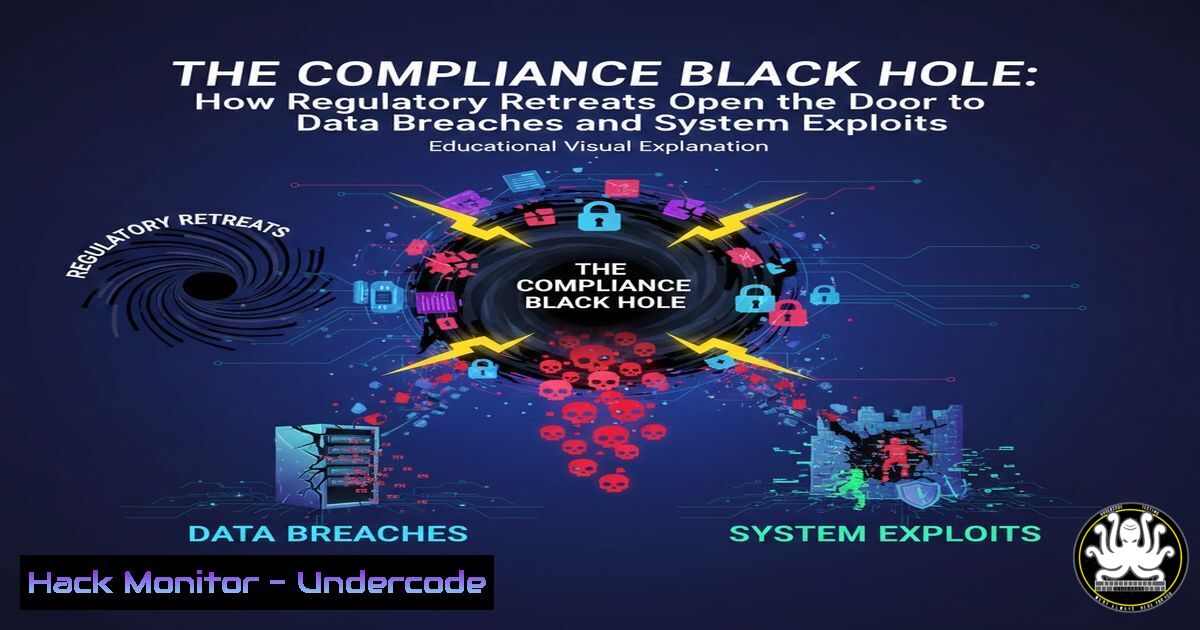
The recent withdrawal of the Solicitors Regulation Authority’s (SRA) proposed changes to complaint handling rules is more than a regulatory footnote; it is a case study in how opaque governance and abandoned process cycles create tangible cybersecurity and data integrity risks. When oversight bodies fail to enforce transparent feedback and improvement mechanisms, they indirectly foster environments where security vulnerabilities, non-compliant data handling, and internal threats can flourish undetected. This analysis translates this regulatory gap into the language of IT governance, demonstrating how weak administrative controls directly enable technical exploits.
Learning Objectives:
- Understand how gaps in regulatory compliance frameworks map directly to IT security control failures.
- Learn to implement technical logging, monitoring, and access controls that enforce accountability and create audit trails.
- Develop a proactive strategy for using automation and configuration management to harden systems against compliance-related vulnerabilities.
You Should Know:
- The Link Between Abandoned Processes and Security Debt
The commentary on the SRA withdrawal highlights a “learning and improvement cycle” being abandoned. In IT, this is analogous to neglecting patch management, vulnerability scanning, and policy review cycles. This creates “security debt”—unaddressed weaknesses that accumulate over time. The result is systems that are non-compliant with standards like ISO 27001 or GDPR, and inherently more susceptible to breach.
Step‑by‑step guide explaining what this does and how to use it.
Step 1: Automate Compliance Scanning. Use tools like OpenSCAP for Linux or Microsoft Baseline Security Analyzer (MBSA) for Windows to regularly assess configuration against benchmarks.
Linux: `sudo oscap xccdf eval –profile xccdf_org.ssgproject.content_profile_cis_level1_server –results scan-results.xml –report scan-report.html /usr/share/xml/scap/ssg/content/ssg-ubuntu2204-ds.xml`
Windows: Run `mbsacli.exe /xmlout /nvc /nd` from an elevated command prompt.
Step 2: Enforce Policy-as-Code. Use infrastructure-as-code tools to ensure systems are deployed in a compliant state every time. A simple Ansible playbook snippet to ensure auditd is installed and running:
- name: Harden auditd for compliance logging
hosts: all
tasks:
- name: Ensure auditd is installed
apt:
name: auditd
state: present
when: ansible_os_family == "Debian"
- name: Ensure auditd service is enabled and started
systemd:
name: auditd
enabled: yes
state: started
2. Data Protection Vulnerabilities in Unregulated Environments
The comment mentioning “Data protection issues are out there and need attention” is a direct call to action for IT. Without clear regulatory pressure, firms may under-invest in data classification, encryption, and access controls, leaving sensitive client data exposed.
Step‑by‑step guide explaining what this does and how to use it.
Step 1: Discover and Classify Sensitive Data. Use tools like `find` and `grep` to locate potentially sensitive files (e.g., containing national insurance numbers). Then, implement classification labels.
Linux CLI search example: `find /home -type f -name “.txt” -exec grep -l “NZ[0-9]\{6\}A” {} \;` (Searches for a pattern similar to a NZ tax number).
Step 2: Apply Disk and File-Level Encryption. For data at rest, use full-disk encryption (e.g., BitLocker on Windows, LUKS on Linux). For specific files/folders, use GPG.
Linux (LUKS): `sudo cryptsetup luksFormat /dev/sdX1` then sudo cryptsetup open /dev/sdX1 secure_volume.
Linux (GPG): `gpg –symmetric –cipher-algo AES256 sensitive_document.pdf`
- The Transparency Gap: A Lack of Audit Logging
The disappointment expressed over a lack of explanation mirrors a critical IT failure: inadequate audit logging. Without comprehensive, immutable logs, security incidents are impossible to investigate, and accountability vanishes.
Step‑by‑step guide explaining what this does and how to use it.
Step 1: Centralize Logging with a SIEM. Forward all system, application, and security logs to a centralized Security Information and Event Management (SIEM) system like the ELK Stack (Elasticsearch, Logstash, Kibana) or a commercial solution.
Step 2: Configure Critical Windows and Linux Audit Policies.
Windows (via GPO or auditpol): `auditpol /set /subcategory:”Process Creation” /success:enable /failure:enable`
Linux (auditd rules): Add to /etc/audit/audit.rules: -a always,exit -F arch=b64 -S execve -k process_creation. This logs all command execution.
4. Whistleblowers & Insider Threat Detection
The mention of “whistleblowers” points to the insider threat vector. Effective IT controls can detect anomalous behavior that may indicate data exfiltration or fraud, whether malicious or accidental.
Step‑by‑step guide explaining what this does and how to use it.
Step 1: Implement User and Entity Behavior Analytics (UEBA). Use tools to baseline normal user activity (logon times, data access patterns, file transfer volumes) and alert on deviations.
Step 2: Enforce Least Privilege and Monitor Access.
Windows: Use `Get-ADUser -Identity username -Properties MemberOf` in PowerShell to audit group memberships.
Linux: Regularly review sudo access with `sudo -l` for each user or audit /etc/sudoers.
Network Monitoring: Use Wireshark or Zeek (Bro) to detect large, unusual outbound data flows: `zeek -i eth0 -C local “Site::local_nets += { 192.168.1.0/24 }”`
5. API Security for Legal Tech Platforms
Modern legal firms rely on platforms (like The Access Group) that use APIs. Regulatory uncertainty can lead to rushed integrations with poor API security, exposing back-end systems.
Step‑by‑step guide explaining what this does and how to use it.
Step 1: Implement API Gateways & Rate Limiting. Use Kong or AWS API Gateway to enforce authentication, input validation, and rate limits to prevent abuse.
Step 2: Test APIs for OWASP Top 10 Vulnerabilities. Use OWASP ZAP or Burp Suite to perform automated and manual security testing on your API endpoints.
Basic ZAP CLI scan: `zap-cli quick-scan –self-contained –start-options ‘-config api.disablekey=true’ http://your-api-endpoint:8080`
What Undercode Say:
- Regulatory Fluidity is a Technical Risk. Changes or withdrawals in policy create ambiguity that often leads to frozen IT budgets for security/compliance tools, delayed patches, and deprecated, vulnerable systems lingering in production.
- Process is a Security Control. The “learning and improvement cycle” is the manual counterpart to the automated CI/CD pipeline. Abandoning it breaks the feedback loop that secures systems, creating a direct path from governance failure to exploit.
The core issue is that regulatory frameworks are the business logic that should drive technical configuration. When those frameworks become unstable or opaque, IT and security teams lose their mandate for proactive investment. The resulting environment is one of reactive firefighting, where vulnerabilities are addressed only after exploitation, not prevented through disciplined governance. The comments on the post reveal a professional services industry aware of the threats (data protection, fraud) but potentially hamstrung by a lack of clear, enforced rules from the top, leading to inconsistent and weak technical implementations across firms.
Prediction:
In the next 3-5 years, we will see a rise in targeted cyber-attacks and data leaks specifically against legal and professional service firms that have been weakened by inconsistent regulatory pressure. Threat actors will exploit the “compliance gap” as a known attack surface. This will force a convergence: regulatory bodies themselves will begin mandating specific technical controls (encryption standards, mandatory audit log retention periods, API security protocols) rather than just procedural guidelines. Furthermore, AI-driven compliance automation will become essential, using natural language processing to monitor regulatory announcements in real-time and automatically map them to required technical control changes in an organization’s IT infrastructure, effectively future-proofing systems against the type of uncertainty demonstrated by the SRA’s withdrawal.
▶️ Related Video (76% Match):
🎯Let’s Practice For Free:
IT/Security Reporter URL:
Reported By: Brian Rogers – Hackers Feeds
Extra Hub: Undercode MoN
Basic Verification: Pass ✅


