Listen to this Post
Introduction:
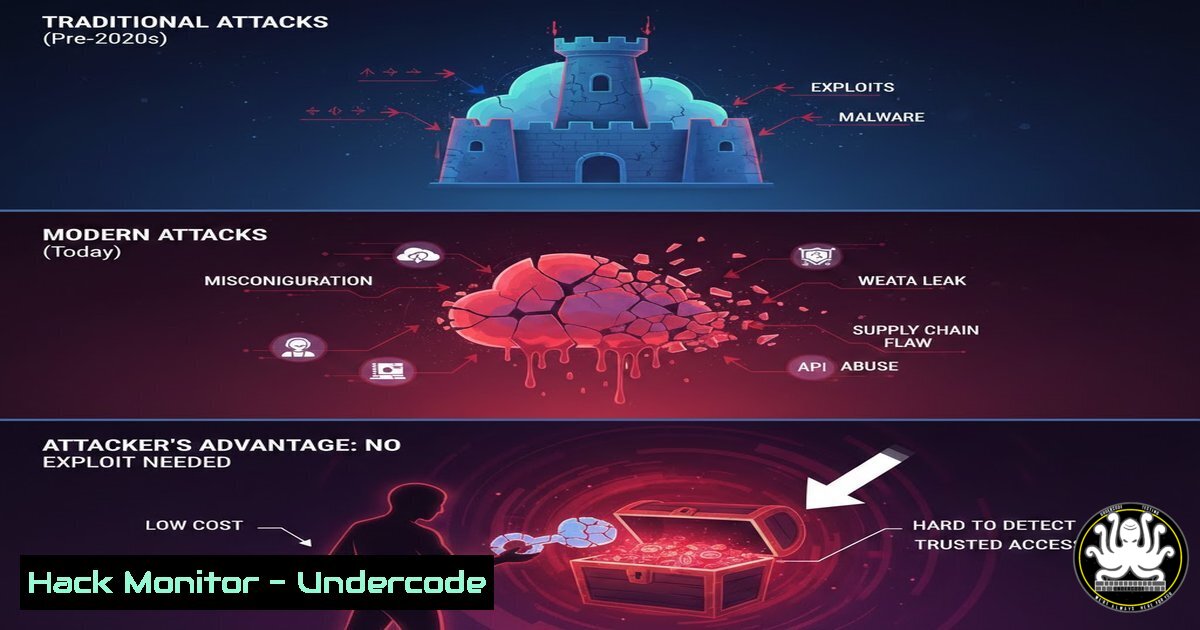
Forget zero-days and buffer overflows. The most critical vulnerability in your cloud environment isn’t a bug—it’s your meticulously designed permission model working exactly as intended. Modern cloud breaches are a story of logic, not loopholes, where attackers chain trusted identities and broad permissions to steal data and persist, all without breaking a single rule. This paradigm shift has rendered traditional vulnerability scanning obsolete, demanding a new approach focused on attack path analysis.
Learning Objectives:
- Understand why cloud compromise follows permission logic, not exploit chains.
- Learn to identify and map critical cloud attack paths involving identity, inheritance, and trust.
- Apply practical commands and methodologies to manually uncover these paths and prioritize remediation.
You Should Know:
- Cloud Compromise is a Logic Puzzle, Not a Lock Pick
Traditional on-premises security models are built on a foundation of perimeter defense and vulnerability patching. In the cloud, this model is inverted. The primary attack surface shifts from software flaws to the complex web of trust between identities (users, service principals, roles) and resources.Step-by-step guide explaining what this does and how to use it:
The first step is recon. You need to map the digital terrain of identities and their basic permissions. - Enumerate Identities: In Azure, use Microsoft Graph PowerShell to list all service principals, which often have excessive permissions.
Connect to Microsoft Graph
Connect-MgGraph -Scopes "Application.Read.All"
Get all service principals
Get-MgServicePrincipal -All
- List User Roles: In AWS, use the CLI to list all IAM users and their attached policies to understand the human attack surface.
List all IAM users
aws iam list-users
Get policies attached to a specific user
aws iam list-attached-user-policies --user-name <UserName>
-
Initial Analysis: Export this data. The goal is not to audit each one yet, but to understand the scale and identify obvious high-privilege accounts (e.g., those with
Owner,AdministratorAccess, or “ actions). -
The Devil is in the Inheritance: Mapping Permission Cascades
A permission granted at a high level (e.g., subscription or management group in Azure, an AWS Organization) cascades down to all child resources. An identity with read access to a storage account might be harmless, but if that permission is inherited from a subscription-level role, it may apply to hundreds of databases and key vaults.Step-by-step guide explaining what this does and how to use it:
You must trace permissions to their root to understand true scope. - Check Role Assignments in Azure: Use Azure PowerShell to see where a role is assigned.
Get all role assignments for a specific user/SPN
Get-AzRoleAssignment -SignInName <a href="mailto:user@domain.com">user@domain.com</a> -ExpandPrincipalGroups
- Analyze AWS Policy Simulation: The AWS IAM simulator is crucial for understanding effective permissions.
Simulate if a user can perform 's3:ListAllMyBuckets' on a specific bucket
aws iam simulate-principal-policy --policy-source-arn arn:aws:iam::123456789012:user/TestUser --action-names s3:ListAllMyBuckets --resource-arns arn:aws:s3:::example-bucket
-
Manual Mapping: Create a simple diagram: Identity -> Assigned Role -> Scope of Assignment (Management Group/Subscription/Resource Group) -> Potential Child Resources.
-
Trust is the Ultimate Vulnerability: Abusing Federated Relationships
Cloud environments are connected. An identity in Microsoft Entra ID can be trusted to assume a role in AWS. A service principal might have permission to add credentials to another service principal. These trust relationships are powerful enablers for lateral movement.Step-by-step guide explaining what this does and how to use it:
Attackers look for the weakest link in a chain of trust. - Inspect Federated Identity in AWS: Check identity providers for potential external trust.
List identity providers configured in AWS IAM
aws iam list-saml-providers
aws iam list-open-id-connect-providers
- Check App & Service Principal Permissions in Azure: A key attack vector is a service principal with the `Application.ReadWrite.All` Graph API permission, allowing it to modify other applications.
Connect with sufficient permissions and check a service principal's MS Graph permissions
Get-MgServicePrincipalAppRoleAssignment -ServicePrincipalId <ObjectId> | Format-List
- Follow the Trust: Document any cross-account, cross-service, or cross-directory trust. Ask: “If this identity is compromised, what other identities can it become?”
4. From Isolated Findings to Critical Attack Paths
A finding like “VM has a publicly open management port” is a medium risk. A finding like “Service Principal has Contributor role on Resource Group” is a medium risk. But if that same Service Principal is assigned to the publicly accessible VM, an attacker can exploit the open port to steal the SPN’s credentials and gain “Contributor” rights across the entire resource group. This chain is the attack path.
Step-by-step guide explaining what this does and how to use it:
Manually building these paths requires connecting reconnaissance data.
- Correlate Data Points: Use your maps from steps 1-3. Overlay the resource map (public endpoints, unprotected storage) with the identity/permission map.
- Ask “What If?”: For each over-permissioned identity (I), ask: What is the most likely initial access (A) to compromise it? (e.g., a developer’s workstation with weak credentials that can assume I). Then ask: Once I is compromised, what is the highest-value asset (B) it can reach?
- Document the Narrative: Write it as a story: “An attacker phishes Developer X (A), who has the `Azure VM Contributor` role. They access VM-Web01, which has a Managed Identity (I) with `Key Vault Secrets Officer` permissions. The attacker uses I to retrieve database connection strings from KeyVault-Prod (B), leading to a full data breach.”
-
Automating the Hunt: From Manual Scripts to Specialized Platforms
Manual analysis is insightful but doesn’t scale. The industry is moving towards automated attack path discovery.Step-by-step guide explaining what this does and how to use it:
Tools like ARGOS, mentioned in the source content, automate the collection and graph analysis described above. The manual equivalent involves complex scripting. - Automated Collection Script (Conceptual): A script would loop through all subscriptions/accounts, collecting every role assignment, trust policy, and resource configuration.
- Graph Database Analysis: The collected data is ingested into a graph database (e.g., Neo4j) where identities and resources are “nodes,” and permissions/trusts are “edges.”
- Path Querying: You run algorithms to find the shortest or most permissive path between a “compromise entry point” node (like a public storage bucket) and a “crown jewel” node (like a database with PII).
- Platform Advantage: As per the URL content, platforms like ARGOS compress this process from “days of preparation into minutes,” providing visual attack path diagrams and prioritized findings based on actual reachability, not just severity scores.
6. The Pentester’s New Mandate: Modeling Breach Scenarios
The core deliverable of a cloud infrastructure pentest is no longer a list of CVEs. It is a set of validated attack path narratives that answer the business question: “If someone gets in, what happens next, and how do we stop it?”
Step-by-step guide explaining what this does and how to use it:
This final step shifts from discovery to communication and remediation guidance.
1. Validate Critical Paths: For the top 2-3 attack paths, attempt to safely demonstrate them (with explicit authorization) from start to finish in a test environment.
2. Calculate Blast Radius: Document the total number of resources, data stores, and business functions that fall within the culmination point of the attack path.
3. Prescribe Surgical Remediation: Recommend the minimum change to break the most critical links. Instead of “remove all broad permissions,” suggest “Change the Service Principal’s subscription-level Reader role to a resource-specific role on the two necessary storage accounts.”
What Undercode Say:
- Key Takeaway 1: The greatest cloud risk is architectural, not algorithmic. Attackers win by understanding your design better than you do, abusing intended permissions and trust to create unintended compromise chains.
- Key Takeaway 2: Effective cloud defense requires shifting from a vulnerability-centric view to a graph-centric view. You must continuously model your environment as an attacker would, mapping the dynamic relationships between identities and resources to discover exploitable paths before they are exploited.
The analysis reveals a fundamental maturation in cybersecurity. As cloud adoption deepens, the attacker’s toolkit has evolved from exploit code to graph theory and identity calculus. Security tools that only check for misconfigurations in isolation are providing a false sense of security. The future belongs to security platforms and practitioner mindsets that can continuously compute and visualize the “blast radius” of any single flaw within the complex, interconnected system. The post underscores that the human element—the ability to reason about these paths and tell the story of a breach—remains irreplaceable, even as automation handles the scale.
Prediction:
Within the next 18-24 months, “Attack Path Management” will become a standardized, mandatory module in cloud security posture platforms, much like vulnerability scanners are today. Compliance frameworks (e.g., NIST, CIS) will begin to include requirements for documented attack path analysis and graph-based risk assessments. Furthermore, we will see the rise of AI-assisted “attack simulators” that use natural language to generate hypothetical breach scenarios (“Simulate a breach starting from a phishing email to our CFO”), which the system will then automatically map against the live environment to test detection and response controls.
▶️ Related Video (84% Match):
🎯Let’s Practice For Free:
IT/Security Reporter URL:
Reported By: Obrien David – Hackers Feeds
Extra Hub: Undercode MoN
Basic Verification: Pass ✅


