Listen to this Post
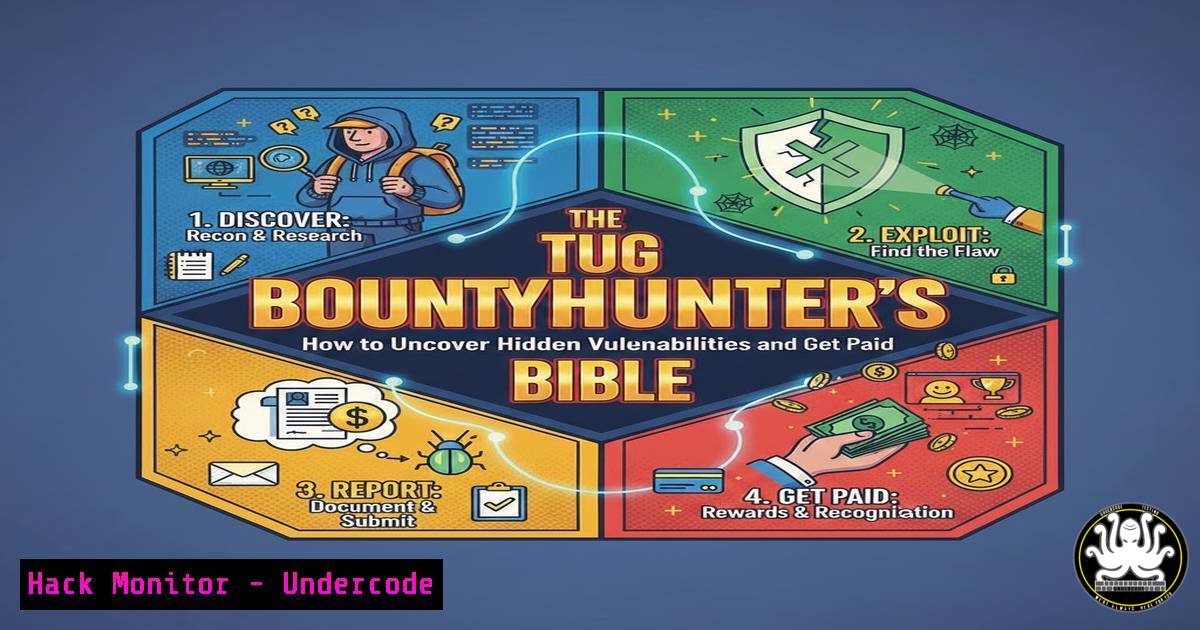
Introduction:
In the ever-escalating cyber arms race, bug bounty platforms have emerged as a critical line of defense, crowdsourcing the ingenuity of ethical hackers to harden digital assets. This ecosystem, powered by communities like the one maintaining the “disclose/bug-bounty-platforms” repository, provides a structured, legal pathway for security researchers to monetize their skills while helping organizations discover critical flaws before malicious actors do. Mastering this landscape is essential for any aspiring cybersecurity professional.
Learning Objectives:
- Navigate and evaluate the comprehensive landscape of bug bounty and vulnerability disclosure programs (VDPs).
- Establish a professional testing workflow, from reconnaissance to validated proof-of-concept.
- Understand the legal and procedural frameworks that govern ethical hacking and responsible disclosure.
You Should Know:
1. Navigating the Bug Bounty Universe
The cornerstone of starting your journey is the curated GitHub repository disclose/bug-bounty-platforms. This resource is more than a list; it’s a categorized index of active platforms, VDPs, and crowdsourced security initiatives. It distinguishes between private, invite-only programs and public, open-to-all opportunities.
Step‑by‑step guide explaining what this does and how to use it.
Step 1: Clone and Explore. Begin by cloning the repository to have a local copy for reference.
git clone https://github.com/disclose/bug-bounty-platforms.git
cd bug-bounty-platforms
Examine the `README.md` and the directory structure. Key files include `data/platforms.json` (structured data on platforms) and various region-specific lists.
Step 2: Categorize Your Targets. Platforms like HackerOne, Bugcrowd, and OpenBugBounty host numerous programs. Filter them based on your interest:
Public Programs: (e.g., Verizon, Intel). Anyone can register and hunt.
Private Programs: Require an invitation, often based on reputation.
VDPs: Often do not offer monetary rewards but are crucial for responsible disclosure and building reputation.
Step 3: Platform Registration and Profile Setup. Choose 1-2 primary platforms. Create a professional profile highlighting your skills. Use a secure, unique password and enable two-factor authentication (2FA) immediately. A complete profile increases your chances of private program invites.
2. Building Your Reconnaissance Engine
Before testing a single endpoint, thorough reconnaissance is non-negotiable. This phase maps the target’s attack surface, identifying domains, subdomains, and underlying technologies.
Step‑by‑step guide explaining what this does and how to use it.
Step 1: Passive Enumeration. Use tools to gather information without directly interacting with the target.
 Use subfinder to find subdomains
subfinder -d target.com -silent -o subdomains.txt
 Use amass for in-depth enumeration
amass enum -passive -d target.com -o amass_passive.txt
 Use httpx to probe for live hosts/web servers
cat subdomains.txt | httpx -silent -o live_hosts.txt
Step 2: Technology Stack Fingerprinting. Identify technologies to tailor your attacks.
 Use whatweb or wappalyzer (CLI/browser extension)
whatweb https://target.com --color=never
 Nuclei can also be used for tech detection
nuclei -u https://target.com -silent -etags tech
Step 3: Service Discovery. Discover open ports and services.
 Use naabu for fast port scanning
naabu -host target.com -silent -o ports.txt
 For deeper service interrogation on a specific port
nmap -sV -sC -p 443 target.com -oN nmap_scan.txt
3. Vulnerability Discovery: From Theory to Proof-of-Concept
With a target list, systematic testing begins. Focus on common vulnerability classes like Cross-Site Scripting (XSS), SQL Injection, and insecure direct object references (IDOR).
Step‑by‑step guide explaining what this does and how to use it.
Step 1: Automated Scanning (Carefully). Use automated scanners as a guide, not a crutch. Always verify findings manually.
 Run a nuclei scan with common templates
nuclei -l live_hosts.txt -t ~/nuclei-templates/http/cves/ -o nuclei_scan.txt
Step 2: Manual Testing for Logic Flaws. Automation misses business logic errors. Test for IDOR by manipulating object IDs (e.g., `/api/user/123` -> /api/user/124). Use Burp Suite or OWASP ZAP as intercepting proxies to capture and manipulate requests.
Step 3: Crafting a Valid Proof-of-Concept (PoC). A valid PoC is key to report acceptance. For a Reflected XSS, it’s not enough to say “the parameter `q` is vulnerable.” Provide the full payload and steps to reproduce.
PoC: https://vulnerable.target.com/search?q=<script>alert(document.domain)</script>
For more complex flaws, provide a step-by-step reproduction video or a detailed curl command.
- The Art of the Report: From Finding to Bounty
A well-written report is what turns a finding into a reward. Clarity, reproducibility, and professionalism are paramount.
Step‑by‑step guide explaining what this does and how to use it.
Step 1: Follow the Platform’s Template. Most platforms have a submission form. Adhere to it strictly.
Step 2: Structure Your Report.
- Concise and clear (e.g., “Reflected XSS in `/search` parameter
q“). - Severity/CVSS: Justify your proposed severity using the CVSS calculator.
- Vulnerability Details: Explain the flaw in technical terms.
4. Steps to Reproduce: A numbered, foolproof list.
- Impact: Clearly state what an attacker could achieve.
- Remediation: Suggest a fix (e.g., “Implement context-aware output encoding”).
Step 3: Attach Evidence. Include screenshots, PoC URLs, and video links. Ensure any payloads are clearly visible.
5. Operational Security (OpSec) and Legal Compliance
Ethical hacking operates within strict legal boundaries. Poor OpSec can invalidate your work or lead to legal action.
Step‑by‑step guide explaining what this does and how to use it.
Step 1: Stay Within Scope. Only test domains and systems explicitly listed in the program’s scope. Testing `.target.com` when only `app.target.com` is in scope is a violation.
Step 2: Use Dedicated Environments. Isolate your testing tools and data in a virtual machine (e.g., VMware, VirtualBox) or a cloud instance. This prevents accidental damage to your host system and contains your testing footprint.
Step 3: Document Everything. Keep detailed logs of your testing activities, including timestamps and commands run. This log can serve as evidence of your authorized, methodological work if any dispute arises.
6. Advanced Toolchain Integration
Efficiency comes from automating your workflow. Scripting the recon-to-PoC pipeline saves immense time.
Step‑by‑step guide explaining what this does and how to use it.
Step 1: Create a Bash Script for Recon. Automate the initial phase.
!/bin/bash
 recon_script.sh
target=$1
echo "[+] Starting reconnaissance on $target"
subfinder -d $target -silent -o subfinder_$target.txt
amass enum -passive -d $target -o amass_$target.txt
cat subfinder_$target.txt amass_$target.txt | sort -u > all_subs_$target.txt
httpx -l all_subs_$target.txt -silent -o live_$target.txt
echo "[+] Recon complete. Live hosts saved to live_$target.txt"
Run with: `bash recon_script.sh target.com`
Step 2: Leverage Burp Suite Extensions. Tools like Autorize (for automated authorization testing) and Turbo Intruder (for heavy payload bombing) can significantly enhance manual testing within Burp.
7. From Hunter to Triage: Understanding Platform Operations
To excel, understand the other side. Platform triagers evaluate hundreds of reports. High-quality, unique reports stand out.
Step‑by‑step guide explaining what this does and how to use it.
Step 1: Study Closed/Resolved Reports. Many platforms (like HackerOne Hacktivity) publicize resolved reports. Analyze them to understand what gets accepted, the level of detail required, and common rejection reasons (duplicates, out-of-scope, non-issues).
Step 2: Engage with the Community. Participate in platform-specific chat (e.g., Bugcrowd’s Slack, HackerOne’s Discord). Networking can lead to tips, collaborations, and private invites.
Step 3: Continuous Learning. The landscape changes daily. Follow new CVE disclosures, update your toolchains weekly (git pull on all tool repos), and practice on deliberately vulnerable apps like OWASP WebGoat or PortSwigger’s Web Security Academy.
What Undercode Say:
- The Repository is the Map, Not the Journey. The `bug-bounty-platforms` list is an indispensable starting point, but success is 90% determined by the methodology, tools, and persistence you apply after choosing a target.
- Automation Creates Time, Manual Testing Finds Gold. The most critical vulnerabilities—business logic flaws, complex chained attacks—are discovered through thoughtful manual analysis, not just automated scans. Use automation to handle scale, then focus your intellect on the interesting edges.
The curated list democratizes access to the bug bounty world, but it has also increased competition. The low-hanging fruit on major public programs is quickly harvested. The future successful hunter will be a specialist, developing deep expertise in niche areas like API security, cloud misconfigurations (AWS, Azure, GCP), or specific tech stacks. Furthermore, we predict a rise in “invite-only” and time-boxed “flash” programs as organizations seek to manage report volume while targeting specific skills. Platforms will increasingly leverage AI for initial triage to filter out duplicates and invalid reports, making a researcher’s ability to write clear, machine-readable reports even more valuable. The integration of AI co-pilots into testing tools themselves will also augment, but not replace, the hunter’s creative problem-solving mindset.
▶️ Related Video (82% Match):
🎯Let’s Practice For Free:
IT/Security Reporter URL:
Reported By: Abhirup Konwar – Hackers Feeds
Extra Hub: Undercode MoN
Basic Verification: Pass ✅


