Listen to this Post
Introduction:
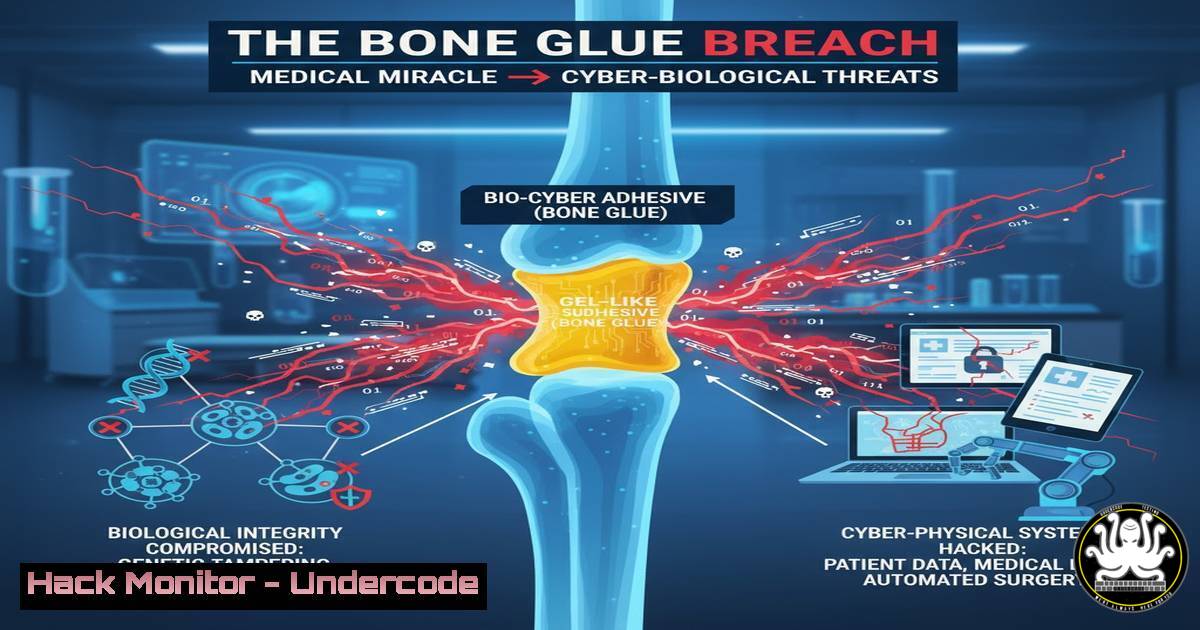
The recent development of Bone-02, a bio-absorbable adhesive that can repair fractures in minutes, represents a monumental leap in medical science. However, this fusion of biology and advanced material science also creates a novel attack surface where cybersecurity failures could have direct, physical consequences on the human body. This article explores the critical IT and security frameworks required to protect such transformative medical technology.
Learning Objectives:
- Understand the unique cybersecurity threats facing advanced bio-integrated medical devices.
- Learn the technical commands and protocols for securing the manufacturing and operational infrastructure of smart medical implants.
- Develop incident response strategies for threats targeting bio-digital systems.
You Should Know:
1. Securing the Biomedical Data Pipeline
The research, development, and patient data surrounding Bone-02 are high-value targets. Securing this data lifecycle is paramount.
Verified Commands & Configurations:
Database Encryption at Rest (PostgreSQL):
`ALTER DATABASE bone_research SET columnar.encryption = ON;`
This command enables encryption for a PostgreSQL database storing sensitive research data, ensuring all data is encrypted on disk.
Network Segmentation with iptables (Linux):
`iptables -A FORWARD -i eth0 -o eth1 -s 10.0.1.0/24 -d 192.168.1.50 -p tcp –dport 5432 -j ACCEPT`
This rule creates a strict firewall forward, only allowing the application subnet (10.0.1.0/24) to connect to the database server (192.168.1.50) on the PostgreSQL port (5432), isolating critical assets.
AWS S3 Bucket Policy for Secure Data Lake:
{
"Version": "2012-10-17",
"Statement": [{
"Effect": "Deny",
"Principal": "",
"Action": "s3:",
"Resource": ["arn:aws:s3:::bone-02-patient-data/"],
"Condition": {"Bool": {"aws:SecureTransport": false}}
}]
}
This policy mandates that all access to the S3 bucket storing patient data must use SSL/TLS, preventing data interception.
2. Hardening the Manufacturing ICS/SCADA Environment
The industrial control systems (ICS) that manufacture Bone-02 are critical infrastructure and must be shielded from cyber sabotage.
Verified Commands & Configurations:
Windows Server Audit Policy (Command Prompt):
`auditpol /set /subcategory:”Process Creation” /success:enable /failure:enable`
Enables detailed auditing for process creation on a Windows server controlling manufacturing equipment, crucial for detecting unauthorized activities.
Application Whitelisting with AppLocker (Windows PowerShell):
`Get-AppLockerPolicy -Local | Test-AppLockerPolicy -UserName “PROD\Operator” -Path “C:\Custom\batch_processor.exe”`
This PowerShell cmdlet tests if a specific executable (batch_processor.exe) is allowed to run for a given user under a deployed AppLocker policy, preventing execution of malicious software.
Segmenting PLC Networks:
Physically and logically separate the network segments containing Programmable Logic Controllers (PLCs) from the corporate IT network. Use unidirectional security gateways (data diodes) to allow data out but prevent commands from coming in.
- Exploiting and Mitigating API Vulnerabilities in Medical Device Cloud
The cloud API that manages patient dosing or material composition data is a prime target.
Verified Commands & Configurations:
Scanning for API Endpoints with OWASP Amass:
`amass enum -active -d apiclinical.bone-02-med.com -src`
This command performs active reconnaissance to discover subdomains and API endpoints associated with the target domain, identifying potential attack surfaces.
Exploiting Broken Object Level Authorization (BOLA) with curl:
`curl -H “Authorization: Bearer
If the API does not properly check authorization, a low-privilege user could access record 15021, which belongs to another patient. This tests for a common critical vulnerability.
Mitigation: Implementing JWT Validation Middleware (Node.js):
const jwt = require('jsonwebtoken');
const authenticateToken = (req, res, next) => {
const authHeader = req.headers['authorization'];
const token = authHeader && authHeader.split(' ')[bash];
if (token == null) return res.sendStatus(401);
jwt.verify(token, process.env.ACCESS_TOKEN_SECRET, (err, user) => {
if (err) return res.sendStatus(403);
req.user = user;
next();
});
};
This code snippet is a middleware function that validates a JSON Web Token (JWT) on every API request, ensuring only authorized users can proceed.
4. Reverse Engineering the Implant’s Embedded Software
Attackers may attempt to analyze the firmware of the smart injector or the implant itself to find vulnerabilities.
Verified Commands & Configurations:
Basic Firmware Analysis with Binwalk (Linux):
`binwalk -eM bone02_injector_firmware.bin</h2>
This command automatically scans, extracts (-e), and recursively extracts matched files (-M) from the firmware image, revealing file systems and hidden data.
<h2 style="color: yellow;"> Disassembling Code with Ghidra Headless:</h2>
<h2 style="color: yellow;">analyzeHeadless /path/to/project -import firmware.bin -postScript AnalyzeFunctionPrototypes.java</h2>
This runs Ghidra, a powerful NSA-developed reverse engineering tool, in headless mode to automatically analyze a firmware binary and help identify vulnerable functions.
<h2 style="color: yellow;"> Binary Hardening Check with checksec (Linux):</h2>
<h2 style="color: yellow;">checksec –file=/usr/local/bin/bone02_driver`
This command automatically scans, extracts (-e), and recursively extracts matched files (-M) from the firmware image, revealing file systems and hidden data.
<h2 style="color: yellow;"> Disassembling Code with Ghidra Headless:</h2>
<h2 style="color: yellow;">
This runs Ghidra, a powerful NSA-developed reverse engineering tool, in headless mode to automatically analyze a firmware binary and help identify vulnerable functions.
<h2 style="color: yellow;"> Binary Hardening Check with checksec (Linux):</h2>
<h2 style="color: yellow;">
This script checks for the presence of security features like PIE (Position Independent Executable) and stack canaries in a binary, which are crucial for mitigating memory corruption exploits.
5. AI-Powered Threat Detection for Anomalous Biological Data
Machine learning models must be deployed to detect subtle anomalies that could indicate manipulation of biological data or implant behavior.
Verified Commands & Configurations:
Training an Anomaly Detection Model (Python with Scikit-learn):
from sklearn.ensemble import IsolationForest
import pandas as pd
data = pd.read_csv('bone_density_logs.csv')
model = IsolationForest(contamination=0.01, random_state=42)
model.fit(data[['density_readings', 'curing_time']])
anomalies = model.predict(data[['density_readings', 'curing_time']])
This Python script uses an Isolation Forest algorithm to learn normal patterns from bone density and curing time data, flagging statistical outliers that could indicate a fault or cyber-physical attack.
Deploying a Sigma Rule for SIEM Detection:
title: Unauthorized Access to Biomedical Research Server
logsource:
product: windows
service: security
detection:
selection:
EventID: 4625
TargetUserName: 'svc_research'
WorkstationName: 'CLINIC-WKSTN-'
condition: selection
This Sigma rule (convertible to Splunk, Elasticsearch, etc.) alerts on failed logins for a critical research service account from unexpected workstations.
6. Incident Response for a Compromised Bio-Integrated System
When a cyber-biological system is breached, the response must address both digital and patient safety.
Verified Commands & Configurations:
Forensic Image Acquisition with dc3dd (Linux):
`dc3dd if=/dev/sdb of=/evidence/bone02_injector_1.img hash=sha256 log=/evidence/bone02_injector_1.log`
This command creates a forensically sound bit-for-bit image of a storage device (e.g., from a compromised injector), calculates a SHA-256 hash for integrity, and logs all activity.
Isolating a Compromised Server with Windows Firewall:
`netsh advfirewall firewall add rule name=”QUARANTINE_IN” dir=in action=block remoteip=any`
`netsh advfirewall firewall add rule name=”QUARANTINE_OUT” dir=out action=block remoteip=any`
These commands immediately block all inbound and outbound traffic to a Windows server, containing a threat while investigation occurs.
Memory Dump with WinPMem (Windows):
`WinPMem_v3.3.rc1.exe memory_dump.raw`
This tool acquires a physical memory dump from a live Windows system for later analysis, which is critical for detecting fileless malware and rootkits.
What Undercode Say:
- The Attack Surface is Now the Human Body. The convergence of IT, OT, and biology means a remote code execution vulnerability could potentially be translated into a physical denial-of-service attack on a patient’s health. The stakes have been fundamentally raised.
- Regulatory Frameworks Are Lagging. The pace of biomedical innovation far outstrips the development of robust cybersecurity standards and regulations for these devices, creating a dangerous gap that adversaries will exploit.
The development of Bone-02 is a testament to human ingenuity, but it also serves as a stark warning. We are entering an era where the traditional boundaries of cybersecurity are dissolving. The “endpoint” is no longer just a server or a phone; it can be a person. Security for such technologies cannot be an afterthought. It must be “bio-secure by design,” involving rigorous threat modeling that considers not just data theft, but kinetic harm. The security community must collaborate urgently with biomedical engineers, regulators, and ethicists to build resilient systems. Failure to do so will inevitably lead to the first major cyber-biological incident, shaking public trust and potentially causing irreversible harm.
Prediction:
Within the next 3-5 years, we will witness the first publicly disclosed, state-sponsored cyberattack aimed at sabotaging a advanced medical treatment or implant, not for ransom, but to discredit a nation’s technological prowess or directly harm a specific individual. This will trigger a global regulatory scramble, leading to the creation of a new “FDA for Cyber-Biological Security” that will mandate stringent, auditable security controls for all connected medical devices with physical outputs. The cybersecurity skillset will become non-negotiable in the biomedical engineering field.
🎯Let’s Practice For Free:
IT/Security Reporter URL:
Reported By: Jean De – Hackers Feeds
Extra Hub: Undercode MoN
Basic Verification: Pass ✅


