Listen to this Post
Introduction:
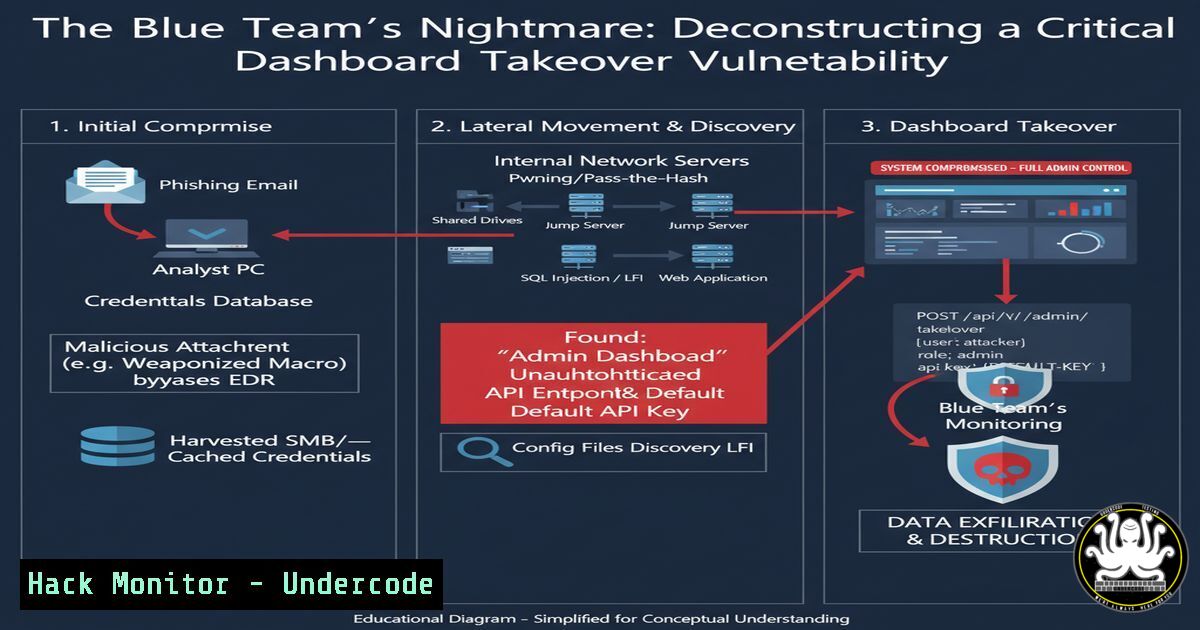
A recent bug bounty disclosure highlights a critical dashboard takeover vulnerability, a class of flaw that can lead to complete compromise of an administrative interface. Such vulnerabilities often stem from improper authorization checks and insecure direct object references (IDOR), allowing attackers to escalate privileges and access sensitive data or functionality. Understanding the technical mechanisms behind these flaws is essential for both offensive security testers and defensive blue teams.
Learning Objectives:
- Identify common authorization bypass techniques in web applications.
- Understand methods for testing and validating access control vulnerabilities.
- Learn mitigation strategies to secure application endpoints and API routes.
You Should Know:
1. Testing for IDOR with curl
Verified Linux/Windows/Cybersecurity command list or code snippet or tutorials related to article
Step‑by‑step guide explaining what this does and how to use it.
`curl -H “Authorization: Bearer
`curl -H “Authorization: Bearer
This command sequence tests for Insecure Direct Object Reference (IDOR). The first command accesses a resource with your own user ID (123). The second command attempts to access a resource belonging to another user (456) using the same token. If the second request returns data for user 456, a critical IDOR vulnerability is confirmed. Always use this technique only on authorized systems.
2. Burp Suite Intruder for Parameter Brute-Forcing
Verified Linux/Windows/Cybersecurity command or code snippet related to article
Step‑by‑step guide explaining what this does and how to use it.
Intercept a legitimate dashboard request in Burp Suite. Right-click and “Send to Intruder.” In the Positions tab, clear positions and highlight the user ID parameter (e.g., userId=123). In the Payloads tab, set a numerical payload range (e.g., 1-1000). Start the attack. Analyze responses for differing status codes (200 OK vs 403 Forbidden) or length changes, which may indicate unauthorized access to other user accounts.
3. JWT Tampering for Privilege Escalation
`echo -n ‘{“alg”:”HS256″,”typ”:”JWT”}’ | base64 | tr -d ‘=’`
`echo -n ‘{“user”:”admin”,”role”:”superuser”}’ | base64 | tr -d ‘=’`
This demonstrates the first steps in JWT structure manipulation. Many applications use JSON Web Tokens (JWT) for session management. If the signature is not properly validated, an attacker can decode the token, change the `role` from `user` to admin, re-encode it, and gain elevated privileges. Tools like `jwt_tool` automate this testing process.
4. Browser DevTools for Client-Side Authorization Bypass
Open browser Developer Tools (F12) and navigate to the Network tab. Perform an action as a low-privilege user. Identify the API call that fetches dashboard data. Right-click the request and “Copy as cURL.” Paste the command into a terminal and modify the `POST` body or parameters to mimic an admin action (e.g., change `isAdmin: false` to isAdmin: true). Execute the modified command to test for broken access control.
5. SQL Injection to Bypass Login
`’ OR ‘1’=’1′ — `
`admin’– `
`’ UNION SELECT 1, ‘admin’, ‘hashed_password’ — `
These are classic SQL injection payloads used to bypass authentication. The first payload tricks the SQL query into always evaluating as true, potentially granting access. The second payload comments out the password check for the admin user. The third uses a UNION SELECT to inject a known user record. Mitigation requires using parameterized queries.
- Hardening Session Management with `httpOnly` and `Secure` Flags
Example Set-Cookie header:
`Set-Cookie: sessionId=abc123; HttpOnly; Secure; SameSite=Strict; Path=/`
This HTTP response header is critical for mitigating session hijacking. The `HttpOnly` flag prevents client-side scripts from accessing the cookie, blocking many XSS attacks. The `Secure` flag ensures the cookie is only sent over HTTPS. `SameSite=Strict` mitigates CSRF attacks. Always configure your application sessions with these flags.
7. Implementing Role-Based Access Control (RBAC) in Code
Node.js/Express Example:
function requireRole(role) {
return (req, res, next) => {
if (req.user && req.user.role === role) {
next();
} else {
res.status(403).send('Forbidden');
}
};
}
app.get('/admin/dashboard', requireRole('admin'), (req, res) => {
// Serve admin dashboard
});
This middleware function checks the user’s role before granting access to a specific route. This server-side check is essential, as client-side checks can be easily bypassed. Every privileged endpoint must have a corresponding authorization check.
What Undercode Say:
- Authorization is a Server-Side Responsibility. Client-side checks are merely for user experience and offer zero security. All access control logic must be enforced on the server.
- Continuous Testing is Non-Negotiable. Automated security testing in CI/CD pipelines, combined with manual penetration testing, is crucial for catching these subtle flaws before production deployment.
- The dashboard takeover vulnerability class is a stark reminder that modern applications are a complex mesh of API endpoints and user roles. A single missed server-side check on one endpoint can nullify an otherwise robust security posture. The trend towards microservices and SPAs (Single-Page Applications) increases the attack surface, making comprehensive authorization testing more critical than ever. Bug bounty reports like this one are invaluable for the community, highlighting real-world patterns of failure that developers and defenders must anticipate.
Prediction:
As applications become more interconnected and reliant on microservices architectures, we will see an increase in complex authorization flaws that span multiple systems. Future attacks may leverage AI to automatically map user role relationships and identify inconsistent access control patterns across thousands of API endpoints, making manual testing insufficient. The industry will respond with increased adoption of zero-trust architectures and standardized, declarative authorization languages like Rego (used in Open Policy Agent) to centrally manage and audit access policies across an entire application ecosystem.
🎯Let’s Practice For Free:
IT/Security Reporter URL:
Reported By: Siddharthgupta123 Bugbounty – Hackers Feeds
Extra Hub: Undercode MoN
Basic Verification: Pass ✅


