Listen to this Post
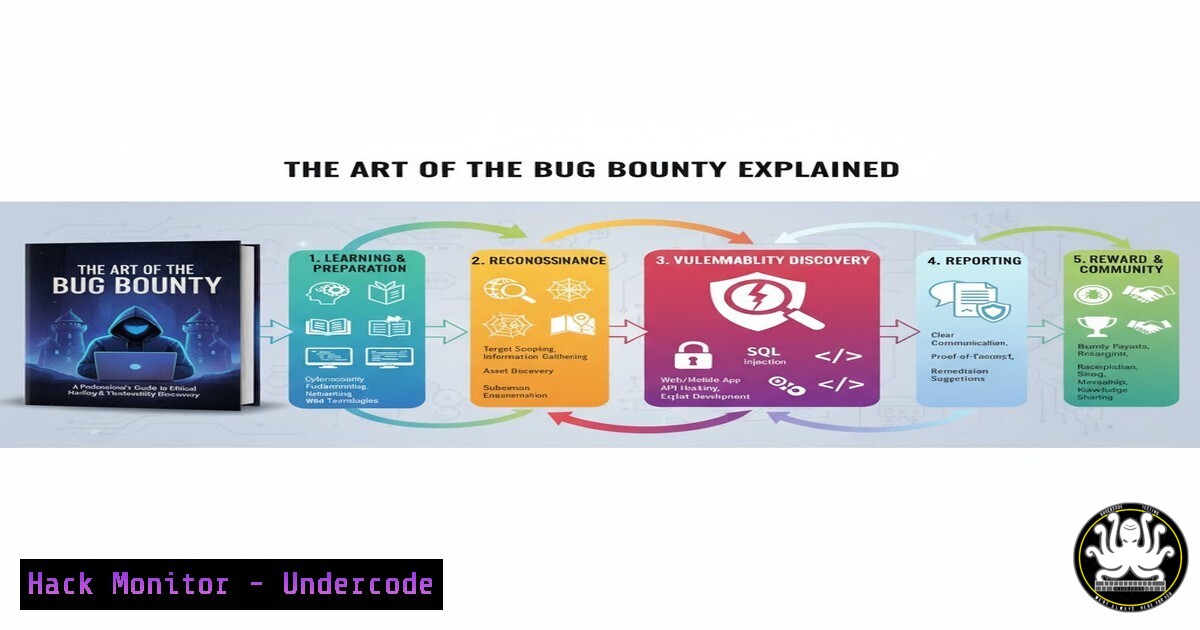
Introduction:
The world of cybersecurity is a constant battleground, and ethical hackers are the frontline defenders who use offensive techniques to uncover critical vulnerabilities before malicious actors can exploit them. As demonstrated by security professionals like Yash Vardhan Tripathi, successfully reporting vulnerabilities to major tech firms like Docker, Inc. is not only a career milestone but a vital contribution to global digital security. This article deconstructs the core skills and methodologies required to excel in the dynamic field of offensive security and bug bounty hunting.
Learning Objectives:
- Master fundamental command-line tools for reconnaissance and vulnerability assessment on both Linux and Windows platforms.
- Understand the process of validating, exploiting, and responsibly disclosing common web application and container security flaws.
- Develop a structured approach to penetration testing, from initial footprinting to proof-of-concept creation.
You Should Know:
1. The Reconnaissance Phase: Uncovering the Digital Footprint
Before a single line of code is tested, an ethical hacker must map the target’s attack surface. This involves passive and active reconnaissance to identify domains, subdomains, and running services.
Verified Linux/Windows/Cybersecurity command list or code snippet or tutorials related to article
`subfinder -d target.com` (Subdomain enumeration)
`amass enum -passive -d target.com` (Network mapping)
`nmap -sC -sV -O target_ip` (Service and OS detection)
`theHarvester -d target.com -b google` (Email and name harvesting)
`ffuf -w /usr/share/wordlists/SecLists/Discovery/Web-Content/common.txt -u http://target.com/FUZZ` (Directory Bruteforcing)
Step‑by‑step guide explaining what this does and how to use it.
Reconnaissance is the foundational step. Begin with passive tools like `subfinder` and `amass` to discover subdomains without directly touching the target. Then, use `nmap` to perform a port scan on the discovered IP addresses; the `-sC` flag runs default scripts, `-sV` probes service versions, and `-O` attempts OS detection. Finally, use a fuzzing tool like `ffuf` to discover hidden directories and files on web servers by iterating through a wordlist.
- Intercepting and Manipulating Traffic: The Power of the Proxy
A web application proxy is the ethical hacker’s primary tool for inspecting and manipulating HTTP/S requests between the browser and the server, allowing for the testing of input validation and business logic flaws.
Verified Linux/Windows/Cybersecurity command or code snippet related to article
`burpsuite` (Launch Burp Suite Community/Professional)
`mitmproxy` (Start the mitmproxy console)
Browser configuration to `127.0.0.1:8080` (Proxy setup)
Step‑by‑step guide explaining what this does and how to use it.
After installing a tool like Burp Suite, launch it and ensure the built-in proxy listener is active (typically on 127.0.0.1:8080). Configure your web browser to use this IP and port as its proxy. All web traffic will now be routed through Burp Suite. You can then intercept requests, modify parameters (e.g., changing a `user_id` from 1001 to 1000 to test for Insecure Direct Object References), and forward them to the server to observe the response.
3. Container Security Assessment: Probing Docker Environments
With the rise of containerization, platforms like Docker have become high-value targets. Understanding how to assess a misconfigured Docker daemon or container image is crucial.
Verified Linux/Windows/Cybersecurity command or code snippet related to article
`docker images` (List local images)
`docker ps -a` (List all containers)
`docker run -it –rm -v /:/mnt alpine` (Mount host filesystem from a container)
`nmap -sV -p 2375,2376
`dockerd –tlsverify –tlscacert=ca.pem –tlscert=server-cert.pem –tlskey=server-key.pem -H=0.0.0.0:2376` (Secure Docker Daemon configuration)
Step‑by‑step guide explaining what this does and how to use it.
If a Docker API port (2375/tcp) is exposed and unprotected, an attacker can control the Docker daemon remotely. Use `nmap` to discover this. A common misconfiguration allows an unprivileged user to mount the host’s root filesystem inside a container. The command `docker run -it –rm -v /:/mnt alpine` demonstrates this: it runs an Alpine container with the host’s root directory (/) mounted at `/mnt` inside the container, granting full access to the host. The secure `dockerd` command shows how to enforce TLS authentication.
4. Exploiting Injection Flaws: SQL and Command Injection
Injection vulnerabilities remain a top critical risk. They occur when untrusted data is sent to an interpreter as part of a command or query.
Verified Linux/Windows/Cybersecurity command or code snippet related to article
`sqlmap -u “http://target.com/page?id=1” –batch –dbs` (Automated SQL injection testing)
`’; DROP TABLE users;–` (Classic SQL Injection payload)
`127.0.0.1 && whoami` (Command Injection for Unix/Linux)
`127.0.0.1 | dir C:\` (Command Injection for Windows)
`curl -X POST http://target.com/query –data ‘user=admin’ OR ‘1’=’1’` (Manual SQLi testing)
Step‑by‑step guide explaining what this does and how to use it.
For SQL injection, a tool like `sqlmap` automates the process of detecting and exploiting flaws. The command provided will test the `id` parameter and attempt to enumerate available databases. For manual testing, appending a single quote (') to a parameter and observing error messages is a starting point. Command injection is often tested in fields that expect an IP address or hostname. The payload `&& whoami` attempts to execute the `whoami` command on the server if the input is not properly sanitized.
5. Cloud Hardening: Securing IAM and Storage
Misconfigured cloud services are a leading cause of data breaches. Properly configuring Identity and Access Management (IAM) and storage buckets is non-negotiable.
Verified Linux/Windows/Cybersecurity command or code snippet related to article
`aws iam list-users` (AWS CLI – List IAM users)
`aws s3 ls s3://my-bucket/` (AWS CLI – List S3 bucket contents)
`gcloud iam service-accounts list` (GCP CLI – List service accounts)
`az ad user list` (Azure CLI – List users)
Terraform `resource “aws_s3_bucket” “example” { bucket = “my-bucket” acl = “private” }` (Infrastructure as Code hardening)
Step‑by‑step guide explaining what this does and how to use it.
Using the AWS CLI, an auditor can check for over-privileged users with `aws iam list-users` and then review their attached policies. To check for publicly accessible S3 buckets, one would use `aws s3 ls` and then analyze the bucket policy. The Terraform snippet shows the correct way to define an S3 bucket with a private ACL by default, enforcing security through infrastructure-as-code and preventing accidental public exposure.
6. API Security Testing: Beyond the Browser
Modern applications rely heavily on APIs, which often expose endpoints and logic not visible in the web UI. Testing these is a critical skill.
Verified Linux/Windows/Cybersecurity command or code snippet related to article
`curl -H “Authorization: Bearer
`kiterunner scan http://target.com/ -w ~/tools/wordlists/data/automated_ngram.txt` (API endpoint discovery)
`POST /api/v1/token/refresh HTTP/1.1 Host: api.target.com {“refresh”: “
`nmap -p 443 –script http-methods
Step‑by‑step guide explaining what this does and how to use it.
APIs often use JSON Web Tokens (JWT) for authentication. Use `curl` with the `Authorization` header to interact with authenticated endpoints. Tools like `kiterunner` are specialized for API reconnaissance, brute-forcing routes that traditional scanners miss. A common test involves JWT manipulation; for instance, if an application allows token refreshing, an attacker could use a stolen refresh token to generate a new, valid access token, as shown in the HTTP request example.
7. Post-Exploitation: Establishing a Foothold
After finding a vulnerability, understanding the compromised system is key to demonstrating impact, which is critical for a successful bug bounty report.
Verified Linux/Windows/Cybersecurity command or code snippet related to article
Linux: `id; uname -a; cat /etc/passwd; sudo -l`
Windows: `whoami /all; systeminfo; net user`
`linpeas.sh` (Linux Privilege Escalation Awesome Script)
`winpeas.exe` (Windows Privilege Escalation Awesome Script)
`python3 -c ‘import pty; pty.spawn(“/bin/bash”)’` (Upgrade to a fully interactive TTY shell)
Step‑by‑step guide explaining what this does and how to use it.
Upon gaining initial access (e.g., via command injection), the first step is to understand the context. Run `id` and `whoami /all` to see current user privileges. `sudo -l` on Linux lists commands the user can run with elevated permissions, a common privilege escalation vector. Automated scripts like `linpeas` or `winpeas` comprehensively scour the system for misconfigurations, weak file permissions, and exposed credentials. Finally, use the Python one-liner to spawn a fully interactive shell for a more stable working environment.
What Undercode Say:
- Methodology Trumps Tools: Success in bug bounties is 90% persistent methodology and creative thinking, and only 10% the tools themselves. The most critical skill is understanding application logic and imagining how it can be abused.
- Responsible Disclosure is a Career Builder: As seen with the Docker swag, a professional and clear vulnerability report builds reputation and opens doors. It transforms a “hack” into a valuable professional consultation.
The journey from a novice to a senior security consultant is paved with documented methodologies and a deep understanding of system internals. The commands and techniques outlined are not a checklist but a toolkit to be adapted. The professional ethical hacker operates like a surgeon, precisely applying knowledge to diagnose and remedy security weaknesses. This requires continuous learning, as the landscape of technology—from containers to AI—constantly evolves, presenting new attack surfaces to master and secure.
Prediction:
The convergence of AI and cybersecurity will create a new frontier for both attack and defense. We predict a rise in AI-powered vulnerability discovery tools that can automatically reason about code and system design at scale. However, this will be met with AI-augmented social engineering and automated exploit generation, leading to an accelerated arms race. The most successful security professionals will be those who learn to leverage AI as a force multiplier for their own critical thinking and ethical hacking processes.
🎯Let’s Practice For Free:
IT/Security Reporter URL:
Reported By: Yash Vardhan – Hackers Feeds
Extra Hub: Undercode MoN
Basic Verification: Pass ✅


