Listen to this Post
Introduction:
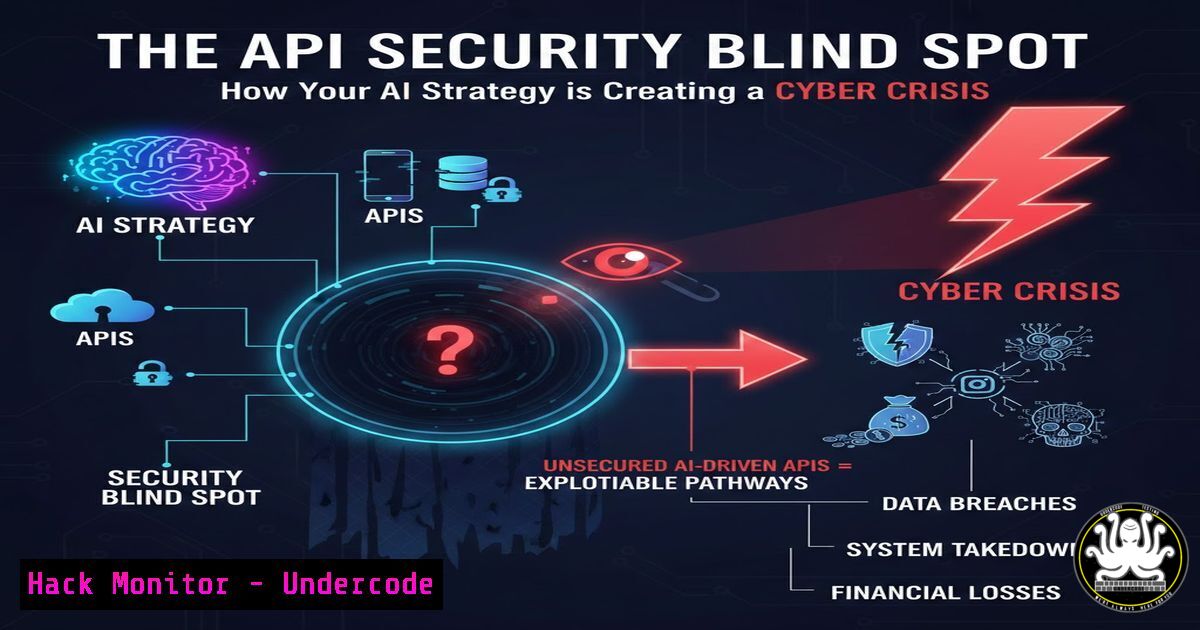
The integration of Artificial Intelligence into core business operations is accelerating, but a critical vulnerability lies hidden in the data pipelines that power these systems. An API-first AI strategy, while efficient, amplifies pre-existing security flaws, transforming data integration points into potent attack vectors. This article dissects the convergence of API governance and AI security, revealing how neglected integration practices are creating unprecedented risks.
Learning Objectives:
- Understand the critical link between API governance and AI model integrity.
- Identify and mitigate risks associated with point-to-point integrations and shadow IT in AI deployments.
- Implement technical controls for API security, including permission mapping and human-in-the-loop safeguards.
You Should Know:
- The Foundation: Why API Governance Precedes AI Success
The belief that “I will apply AI and everything will be solved” is a dangerous fallacy. AI models are fundamentally dependent on the data they consume, and APIs are the primary conduits for this data. Point-to-point integrations, often developed without centralized governance, create a tangled web of undocumented data touchpoints. When AI is layered atop this fragile foundation, it inherits every existing vulnerability, from broken object-level authorization to inconsistent data validation.
Step‑by‑step guide explaining what this does and how to use it.
Step 1: Inventory All API Endpoints. You cannot secure what you do not know. Use a combination of network traffic analysis and API gateway logs to discover all active endpoints.
Linux Command (using `curl` and `jq` to analyze an API gateway export):
 Extract and count unique API endpoints from a log file
cat api_gateway_logs.json | jq -r '.requestUri' | sort | uniq -c | sort -nr
Step 2: Categorize by Data Sensitivity. Tag each endpoint based on the data it handles (e.g., public, internal, confidential, PII). This classification is crucial for applying appropriate security controls later.
Step 3: Enforce a Single Source of Truth. Mandate that for each data entity (e.g., customer, product), only one officially governed API is the authoritative source for AI training and inference.
- The Hallucination Catalyst: How Poor Data Context Derails AI Agents
AI agents hallucinate or fail not just due to model limitations, but because the data fed via APIs lacks necessary context and integrity. An API response missing a `data_last_updated` timestamp or providing conflicting information from different endpoints can lead an AI to make incorrect inferences or generate flawed outputs. This data corruption at the API level is then amplified by the AI’s scale and autonomy.
Step‑by‑step guide explaining what this does and how to use it.
Step 1: Implement Schema Validation. Enforce strict JSON schema validation at the API gateway for all requests and responses. This ensures data structure consistency.
Tool Configuration Example (OpenAPI Schema Snippet):
components:
schemas:
Customer:
type: object
required:
- id
- name
- email
properties:
id:
type: integer
format: int64
name:
type: string
email:
type: string
format: email
data_version:
type: string  Critical for context
Step 2: Mandate Contextual Data Fields. Require all APIs serving AI systems to include metadata fields like data_source, timestamp, and `data_version` in their responses.
Step 3: Log Data Anomalies. Configure your API management platform to alert on schema violations or missing contextual fields, treating them as potential security events.
- Combating Shadow IT: The Menace of Unauthorized MCP Servers
The discussion highlights the specific risk of “shadow MCP servers” (Model Context Protocol). These are unauthorized, self-hosted servers that AI agents might be configured to use, creating unmonitored and unsecured backchannels for data exfiltration or prompt injection. An employee spinning up a local MCP server to connect a chatbot to an internal database is creating a massive shadow IT risk.
Step‑by‑step guide explaining what this does and how to use it.
Step 1: Network Segmentation and Egress Filtering. Restrict outbound traffic from AI inference environments. Only allow connections to explicitly approved, centralized API gateways and MCP servers.
Windows Command (Example using PowerShell to check firewall rules for a subnet):
Get-NetFirewallRule | Where-Object { $_.RemoteAddress -eq "192.168.1.0/24" } | Format-Table Name, Enabled, Direction, Action
Step 2: Agent Configuration Governance. Maintain version-controlled, approved configuration files for AI agents and tools that define permitted MCP servers. Automate deployments to prevent manual overrides.
Step 3: Active Discovery and Scanning. Use network scanning tools like Nmap to periodically discover servers listening on common MCP ports within your environment.
Linux Command:
nmap -sV -p 8080,8081,3000 10.0.1.0/24 --open
- From “Vibing Code” to Verified Code: Securing the Prompt Engineering Workflow
The rise of “vibing code”—where users with minimal coding experience prompt AI to generate and execute scripts—poses a significant threat. An untrained employee might run a generated Python script that hardcodes API keys or connects to a malicious package repository, bypassing all standard SDLC security checks.
Step‑by‑step guide explaining what this does and how to use it.
Step 1: Implement Human-in-the-Loop (HITL) Controls. For any AI-generated code or script that interacts with APIs or data sources, require mandatory human review and approval in a sandboxed environment before execution.
Step 2: Use Secret Management Tools. Never allow hardcoded credentials. Enforce the use of tools like HashiCorp Vault or AWS Secrets Manager.
Example Code (Python using environment variables):
import os
import requests
 INCORRECT: API_KEY = "sk_123456"
 CORRECT:
API_KEY = os.environ.get('API_SECRET_KEY')
headers = {'Authorization': f'Bearer {API_KEY}'}
response = requests.get('https://api.yourservice.com/data', headers=headers)
Step 3: Static Code Analysis for AI-Generated Code. Integrate SAST tools into the prompt engineering workflow. Scan all AI-generated code for common vulnerabilities before it is even considered for use.
- The Technical Core: Strict Permission Mapping and OAuth Scopes
The principle of least privilege is non-negotiable. An AI agent should not have blanket access to all data. The permissions must be meticulously mapped to its specific function. Using broad, legacy API keys is a recipe for disaster.
Step‑by‑step guide explaining what this does and how to use it.
Step 1: Adopt OAuth 2.0 and Use Scope-Based Access. Instead of API keys, use OAuth 2.0 access tokens with finely-grained scopes. For example, a reporting AI agent should have a scope like `read:customers` not full admin:all.
Step 2: Implement Token Binding. Ensure that access tokens are cryptographically bound to the client AI application to prevent token theft and reuse.
Step 3: Regular Permission Audits. Use your API management platform’s analytics to review which tokens and services are accessing which endpoints and flag over-privileged entities.
Linux Command (using `jq` to parse audit logs):
 Find top consumers of a high-privilege endpoint
cat audit_log.json | jq -r 'select(.requestUri == "/api/v1/admin/users") | .clientId' | sort | uniq -c
What Undercode Say:
- AI Exacerbates, Doesn’t Create, Core Flaws. The primary takeaway is that AI acts as a threat multiplier. It ruthlessly exploits existing weaknesses in your API governance and data management strategies. A fragile API ecosystem will collapse under the weight of AI, not because of it.
- Governance is the New Security Perimeter. In the AI era, the battle for security is won or lost at the governance layer. Controlling how data is accessed, defined, and shared via APIs is more critical than any single network firewall. Discipline in integration practices, permission mapping, and eliminating shadow IT is the definitive control.
The conversation between Staveley and Filipe T. correctly shifts the focus from a purely model-centric security view to a data-pipeline-centric one. The analysis underscores that securing the AI model itself is only half the battle; if the APIs feeding it are compromised, poorly governed, or lack context, the entire AI initiative is built on a foundation of sand. The technical controls—schema validation, OAuth scopes, egress filtering—are the tangible manifestations of this necessary strategic shift. Organizations must invest in API Security Posture Management (ASPM) and treat their data integration layer with the same severity as their core network infrastructure.
Prediction:
Within the next 18-24 months, we will witness a major publicly disclosed breach originating not from a direct AI model hack, but from the exploitation of a poorly secured API endpoint that served as the data source for a critical AI agent. This event will force a massive industry-wide reevaluation of “API First” strategies, leading to the emergence of “Governance First” as the mandatory prerequisite for any enterprise AI deployment. Regulatory bodies will begin drafting specific guidelines for API hygiene in AI systems, making documented data lineage and access controls a compliance requirement.
🎯Let’s Practice For Free:
IT/Security Reporter URL:
Reported By: Confidencestaveley Ai – Hackers Feeds
Extra Hub: Undercode MoN
Basic Verification: Pass ✅


