Listen to this Post
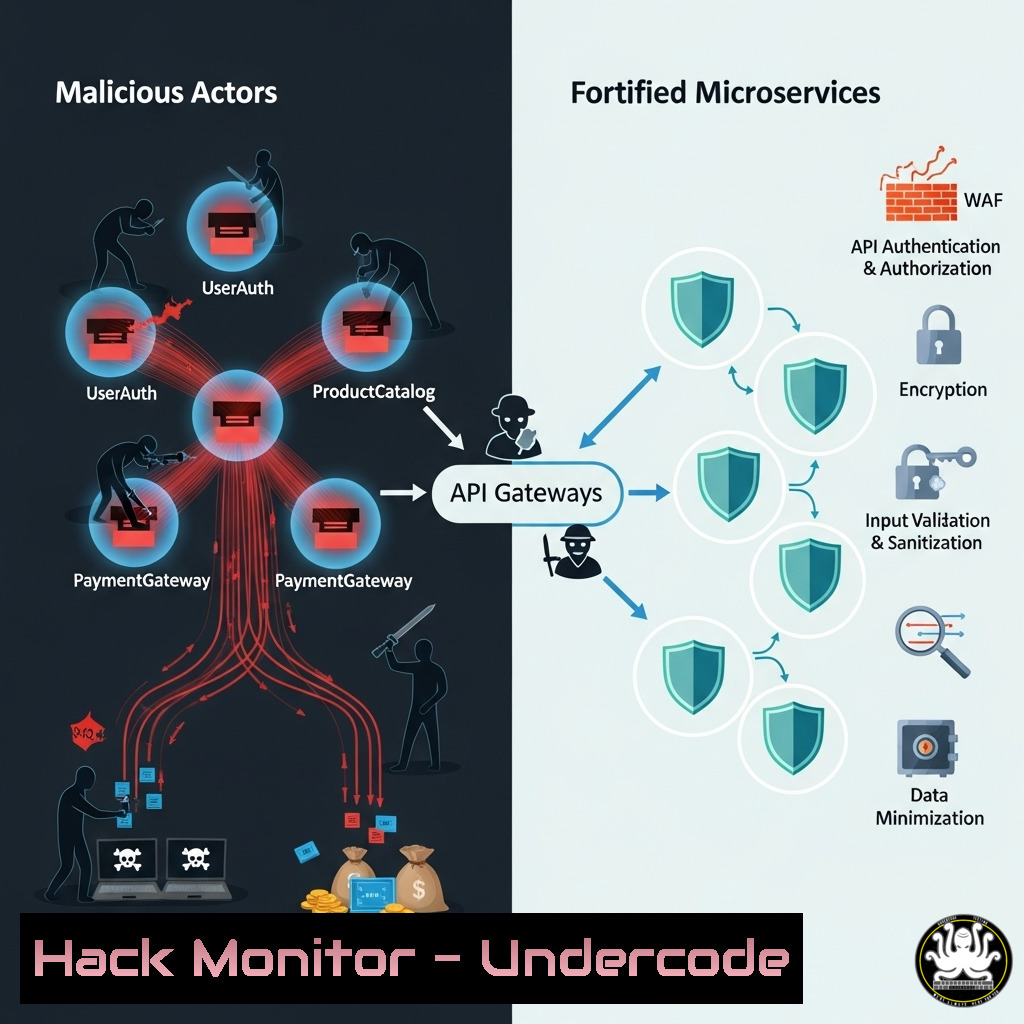
Introduction:
Application Programming Interfaces (APIs) are the fundamental connectors powering modern web applications, mobile apps, and microservices architectures. This increased reliance has made them a prime target for cybercriminals, leading to a surge in sophisticated API-specific attacks that traditional security measures often miss.
Learning Objectives:
- Understand the most critical and prevalent API security vulnerabilities.
- Learn practical commands and techniques to test for and exploit these vulnerabilities.
- Implement verified hardening techniques to protect API endpoints across different environments.
You Should Know:
1. Testing for Broken Object Level Authorization (BOLA)
`curl -X GET http://vulnerable-api.com/api/users/123 -H “Authorization: Bearer
`curl -X GET http://vulnerable-api.com/api/users/456 -H “Authorization: Bearer
Step-by-step guide:
Broken Object Level Authorization (BOLA) is a top API vulnerability where an attacker can access objects they are not authorized for by simply changing an object ID in a request. To test for it, authenticate to an API endpoint that returns a specific object (e.g., /api/users/123). Capture the request and the authentication token (like a JWT). Then, manually change the object ID in the URL (e.g., from `123` to 456) and replay the request using the same token. If the API returns the sensitive data of user 456, it is vulnerable to BOLA.
2. Exploiting Excessive Data Exposure with jq
`curl -s http://vulnerable-api.com/api/profile/me | jq .`
Step-by-step guide:
APIs often return more data than the frontend requires, a flaw known as Excessive Data Exposure. Attackers can intercept these responses to harvest sensitive data. Use `curl` to call a profile API endpoint. Pipe the output (|) to jq ., a command-line JSON processor, to beautifully format and easily read the entire JSON response. Look for hidden fields not displayed in the UI, such as "userRole": "admin", "billingInfo", or internal database IDs, which can be used for further attacks.
3. Automated API Vulnerability Scanning with OWASP ZAP
`docker run -v $(pwd):/zap/wrk/:rw -t owasp/zap2docker-stable zap-api-scan.py -t http://target-api.com/openapi.json -f openapi -r zap_report.html`
Step-by-step guide:
The OWASP ZAP (Zed Attack Proxy) docker container is a powerful tool for automated security testing. This command runs the ZAP container, mounts the current directory ($(pwd)) to save the report, and targets an API’s OpenAPI/Swagger specification file (-t). The `-f openapi` flag tells ZAP the format, and `-r` specifies the output HTML report file. This scan will automatically test for a wide range of API vulnerabilities like those in the OWASP Top 10.
4. Hardening nginx to Protect API Endpoints
`sudo nano /etc/nginx/sites-available/your-api`
Add configuration:
location /api/ {
limit_req zone=one burst=10 nodelay;
client_max_body_size 1M;
add_header X-Content-Type-Options nosniff;
add_header X-Frame-Options DENY;
add_header X-XSS-Protection "1; mode=block";
}
Step-by-step guide:
Web servers like nginx are the first line of defense. This configuration hardens your API endpoint. `limit_req` implements rate limiting to mitigate brute force and DDoS attacks (zone=one defines the shared memory zone). `client_max_body_size` restricts the size of client requests to prevent large payload attacks. The security headers (X-Content-Type-Options, X-Frame-Options, X-XSS-Protection) instruct browsers to adopt additional security measures, protecting against content sniffing, clickjacking, and cross-site scripting.
5. Validating and Securing JWT Tokens
Example Node.js validation snippet:
const jwt = require('jsonwebtoken');
const publicKey = fs.readFileSync('./public.key');

jwt.verify(token, publicKey, { algorithms: ['RS256'] }, (err, decoded) => {
if (err) {
// Token is invalid or expired
return res.sendStatus(403);
}
req.user = decoded;
});
Step-by-step guide:
JWTs are standard for API authentication but are often misconfigured. Always validate the signature on the server-side using a strong asymmetric algorithm like RS256 (which uses a private/public key pair). This code snippet reads the public key and uses the `jwt.verify()` method to check the token’s signature and expiration. Crucially, the `algorithms` option is explicitly set to reject tokens signed with weak algorithms like `HS256` or, worse, none, which is a critical security flaw.
- Auditing AWS S3 Bucket Permissions for Data Leakage
`aws s3api get-bucket-policy –bucket my-app-api-bucket –profile prod-profile`
`aws s3api get-bucket-acl –bucket my-app-api-bucket –profile prod-profile`
Step-by-step guide:
Misconfigured cloud storage buckets are a common source of API data breaches. These AWS CLI commands audit your S3 bucket configuration. The first command retrieves the bucket’s IAM policy, and the second gets its Access Control List (ACL). You must check that these policies do not allow anonymous ("Principal": "") read/write access. Ensure access is restricted to specific, authorized IAM roles or users only. Never use `”Effect”: “Allow”` with `”Principal”: “”` on a sensitive bucket.
- Leveraging CSP to Mitigate XSS in API-Driven Apps
Header: `Content-Security-Policy: default-src ‘self’; script-src ‘self’ https://trusted.cdn.com; object-src ‘none’;`
Step-by-step guide:
Even if your API escapes output, a Content Security Policy (CSP) provides a crucial last line of defense against XSS. This header tells the browser to only execute scripts loaded from the application’s own domain ('self') or a explicitly trusted CDN (https://trusted.cdn.com`). It also blocks dangerous plugins (object-src ‘none’`). By implementing a strict CSP, you can effectively neutralize the impact of many XSS vulnerabilities that might otherwise steal API tokens or session cookies from your client-side application.
What Undercode Say:
- APIs are the new perimeter. Traditional network firewalls are blind to the business logic flaws within API requests, requiring a shift towards specialized API security testing and runtime protection.
- Automation is non-negotiable. The scale and pace of modern development demand that security testing (SAST, DAST, API scanning) is fully integrated into the CI/CD pipeline, not a manual gate.
The provided LinkedIn post, while not containing technical content itself, underscores a critical cultural point: security is everyone’s responsibility, from the artist to the architect. The technical deep dive above provides the necessary tools, but a true defense-in-depth strategy requires a cultural shift where developers are empowered with security knowledge and tools are automated to provide guardrails, not gates. The most elegant code is both functional and secure.
Prediction:
The API attack surface will continue to expand exponentially with the growth of IoT, AI microservices, and serverless architectures. We will see a rise in AI-driven API attacks, where machine learning is used to automatically discover endpoints, fuzz for novel business logic flaws, and mimic legitimate traffic at scale. The future of API security lies in behavioral analysis and anomaly detection powered by AI fighting fire with fire, identifying sophisticated attacks that bypass traditional signature-based defenses.
🎯Let’s Practice For Free:
IT/Security Reporter URL:
Reported By: Christine Raibaldi – Hackers Feeds
Extra Hub: Undercode MoN
Basic Verification: Pass ✅


