Listen to this Post
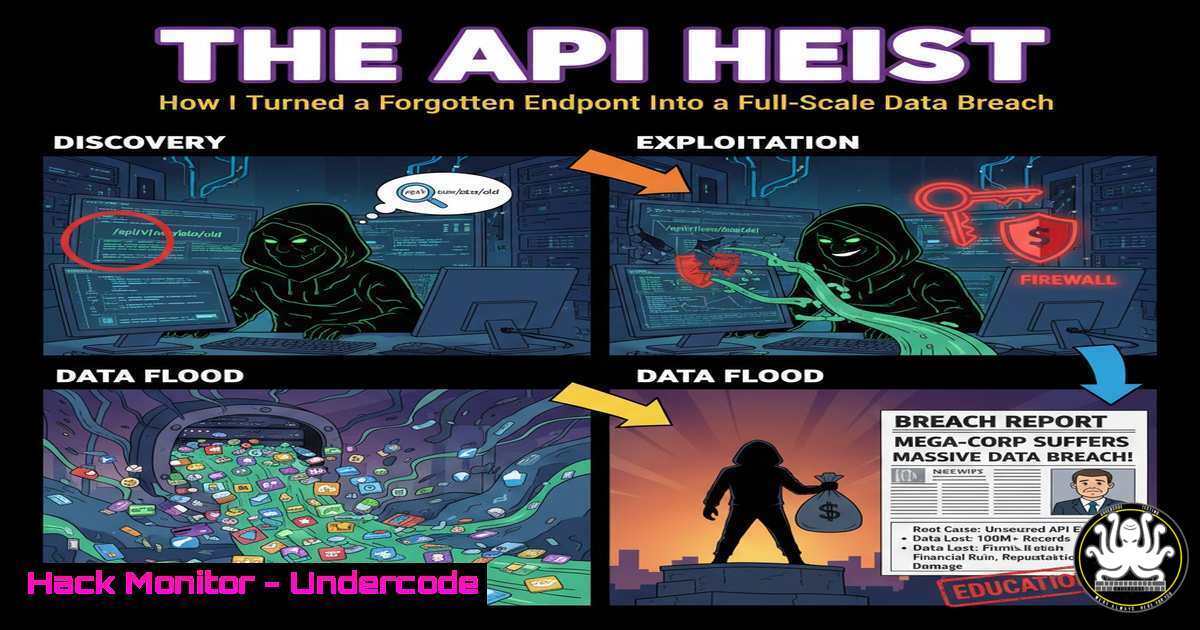
Introduction:
In today’s API-driven digital landscape, forgotten endpoints represent one of the most critical yet overlooked security vulnerabilities. This technical walkthrough demonstrates how seemingly minor API exposure can escalate into catastrophic data breaches, highlighting the urgent need for comprehensive API security protocols across development and production environments.
Learning Objectives:
- Understand API enumeration techniques and endpoint discovery methodologies
- Master authorization bypass techniques and privilege escalation vectors
- Implement comprehensive API security hardening across cloud environments
You Should Know:
- The Art of API Discovery and Endpoint Enumeration
Modern applications expose hundreds of API endpoints, many of which remain undocumented and unprotected. The initial reconnaissance phase involves systematically mapping the entire API surface to identify hidden endpoints.
Step-by-step guide:
- Begin with subdomain enumeration using tools like Amass or Subfinder:
amass enum -d target.com -active
subfinder -d target.com -all
- Use API-specific discovery tools like Arjun or Param Miner to identify hidden parameters and endpoints
- Implement directory brute-forcing with customized wordlists:
ffuf -w api-wordlist.txt -u https://target.com/FUZZ -mc 200
- Analyze JavaScript files for exposed API routes and endpoints using tools like LinkFinder
- Monitor network traffic through mobile applications to identify API calls
2. Exploiting Broken Object Level Authorization (BOLA)
BOLA vulnerabilities remain the most common API security flaw, allowing attackers to access resources beyond their authorization scope by manipulating object identifiers.
Step-by-step guide:
- Identify endpoints containing predictable object IDs (user IDs, order numbers, document references)
- Test horizontal privilege escalation by modifying ID parameters in requests:
GET /api/v1/users/12345/orders → GET /api/v1/users/67890/orders
POST /api/documents/upload?user_id=123 → POST /api/documents/upload?user_id=456
- Use Burp Suite’s Autorize extension to automate BOLA testing across all endpoints
- Test mass assignment vulnerabilities by adding privilege parameters:
{"username":"attacker","email":"[email protected]","is_admin":true} - Implement systematic testing across all HTTP methods (GET, POST, PUT, DELETE, PATCH)
3. JWT Manipulation and Token-Based Vulnerabilities
JSON Web Tokens often contain critical security misconfigurations that enable privilege escalation and unauthorized access.
Step-by-step guide:
- Decode JWT tokens using jwt.io or command-line tools:
echo "JWT_TOKEN" | jwt decode -
- Test for “none” algorithm vulnerabilities by modifying the algorithm header
- Attempt signature verification bypass through algorithm confusion attacks
- Brute-force weak JWT secrets using hashcat:
hashcat -m 16500 jwt.txt rockyou.txt
- Check for expired token acceptance and missing signature validation
- Exploit kid (key ID) header injections to point to malicious verification keys
4. GraphQL Attack Vectors and Introspection Exploitation
GraphQL APIs introduce unique attack surfaces through introspection queries and nested query vulnerabilities.
Step-by-step guide:
- Discover GraphQL endpoints through common paths (/graphql, /query, /api)
- Use introspection queries to map the entire schema:
{__schema{types{name,fields{name,args{name,type{name}}}} - Identify mutation operations for potential data manipulation
- Execute resource-intensive nested queries to cause Denial of Service:
query { posts { comments { user { posts { comments { ... } } } } } - Test for injection vulnerabilities in GraphQL arguments and variables
- Bypass rate limiting through query batching and aliasing
5. Cloud Configuration Exploitation and Storage Access
Misconfigured cloud storage and serverless functions frequently expose sensitive data through API integrations.
Step-by-step guide:
- Identify cloud storage references in API responses (S3 buckets, Blob storage URLs)
- Test for direct object reference vulnerabilities in storage endpoints:
GET /api/files/cloud-storage/private-key.pem
- Attempt bucket enumeration using AWS CLI and specialized tools:
aws s3 ls s3://target-bucket/ --no-sign-request
- Exploit pre-signed URL generation flaws to access unauthorized files
- Test serverless function permissions through API gateway endpoints
- Scan for exposed cloud metadata services and instance role credentials
- API Rate Limit Bypass and Automation Defense Evasion
Traditional rate limiting implementations often fail to account for distributed attacks and protocol-level bypass techniques.
Step-by-step guide:
- Map rate limiting thresholds through incremental request testing
- Implement IP rotation using proxy lists and Tor networks:
curl --proxy socks5://127.0.0.1:9050 https://api.target.com/v1/data
- Use header manipulation to bypass IP-based limits:
X-Forwarded-For: 1.1.1.1
X-Real-IP: 2.2.2.2
- Distribute attacks across multiple API endpoints and methods
- Leverage request timing variations to avoid detection thresholds
- Exploit authentication endpoint rate limit weaknesses for credential stuffing
7. Comprehensive API Security Hardening and Monitoring
Proactive API security requires layered defense mechanisms and continuous monitoring to detect exploitation attempts.
Step-by-step guide:
- Implement API schema validation and strict input sanitization:
from marshmallow import Schema, fields, validate
class UserSchema(Schema):
id = fields.Int(required=True, validate=validate.Range(min=1))
role = fields.Str(validate=validate.OneOf(['user','admin']))
- Deploy Web Application Firewalls (WAF) with API-specific rulesets
- Configure comprehensive logging and monitoring:
Log all API requests with context
logger -t api-security "UNAUTHORIZED_ACCESS: $USER_ATTEMPT $ENDPOINT $IP"
- Implement distributed rate limiting using Redis:
redis.incr(api_key)
redis.expire(api_key, time_window)
- Conduct regular API security assessments and penetration testing
- Establish API inventory management and lifecycle governance processes
What Undercode Say:
- API Security Requires Continuous Vigilance: The dynamic nature of modern applications means new endpoints and vulnerabilities emerge constantly, demanding ongoing security assessment beyond initial development phases.
- Default-Deny Approach Outperforms Blacklisting: Implementing strict schema validation and default-deny policies prevents unknown attack vectors more effectively than reactive security measures.
- Identity-Focused Defense is Critical: With traditional perimeter security dissolving, robust authentication and authorization mechanisms form the foundation of API protection strategies.
- Automated Testing Cannot Replace Human Analysis: While automated scanners identify common vulnerabilities, sophisticated authorization flaws require manual security testing and business logic analysis.
The evolving API landscape demonstrates that security cannot be an afterthought. As organizations accelerate digital transformation through microservices and API-first architectures, the attack surface expands exponentially. The most effective security strategies implement defense in depth, combining automated scanning with manual testing, strict access controls with comprehensive monitoring, and developer education with operational security practices. Future breaches will increasingly target the API layer, making current investments in API security infrastructure critical for long-term organizational resilience.
Prediction:
The API security landscape will witness a significant evolution toward AI-powered attack and defense systems. Machine learning algorithms will automate vulnerability discovery at scale, while defensive AI will analyze API traffic patterns to detect sophisticated attacks in real-time. The proliferation of GraphQL and real-time APIs will introduce new attack vectors, and regulatory frameworks will mandate stricter API security controls. Organizations that fail to implement comprehensive API security programs will face increasing breach incidents, regulatory penalties, and erosion of customer trust in the coming 24-36 months.
🎯Let’s Practice For Free:
IT/Security Reporter URL:
Reported By: Somtochukwu Okoma – Hackers Feeds
Extra Hub: Undercode MoN
Basic Verification: Pass ✅


