Listen to this Post
Introduction:
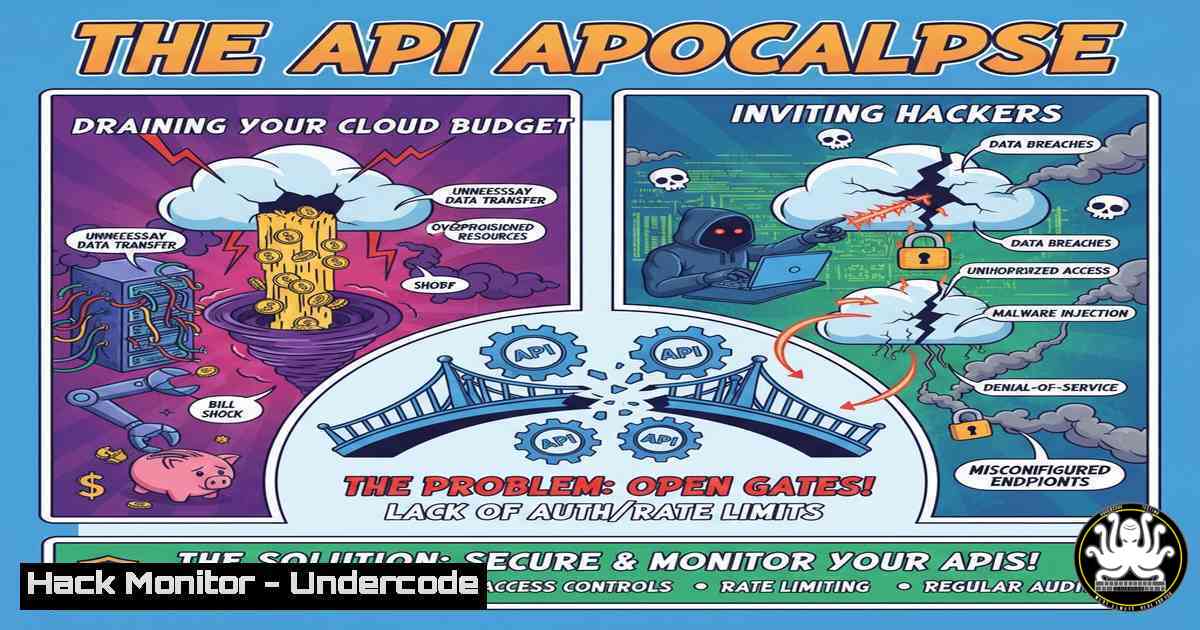
In the era of cloud-native applications, APIs have become the backbone of digital services, but misconfigured endpoints are leading to massive data breaches and inflated cloud costs. This article delves into the technical pitfalls of API security, focusing on exploitation techniques and hardening measures for DevOps and security teams. We’ll explore practical steps to identify vulnerabilities, implement safeguards, and leverage AI for proactive defense.
Learning Objectives:
- Identify and remediate common API security misconfigurations in cloud environments.
- Implement tools and commands to audit API endpoints and secure cloud storage.
- Integrate AI-driven monitoring and automation into your DevOps pipeline for continuous security.
You Should Know:
1. Identifying Exposed API Endpoints
Start by mapping all API endpoints accessible from the internet. Use open-source tools like Nmap and OWASP Amass to discover endpoints, then check for misconfigurations such as unnecessary HTTP methods or debug modes enabled.
Step-by-step guide:
- On Linux, install Nmap and run a scan: `sudo nmap -sV –script http-methods
` to enumerate HTTP methods. - Use OWASP Amass for passive enumeration: `amass enum -passive -d example.com` to find subdomains and APIs.
- For Windows, use PowerShell with Invoke-RestMethod to test endpoints: `Invoke-RestMethod -Uri “https://api.example.com/endpoint” -Method Options` to inspect HTTP headers.
- Analyze responses for sensitive data leakage or excessive permissions. Tools like Postman can automate these tests with collections.
2. Testing for API Injection Vulnerabilities
APIs are susceptible to SQL injection, NoSQL injection, and command injection if input validation is weak. Use automated scanners and manual testing to exploit these vulnerabilities.
Step-by-step guide:
- Set up a test environment with Docker: `docker run -d –name vulnerable-api vulnapi/latest` to practice safely.
- Use SQLmap for SQL injection testing: `sqlmap -u “https://api.example.com/users?id=1” –dbs` to extract databases.
- For NoSQL injection in MongoDB-based APIs, craft payloads like `{“$ne”: null}` in login fields to bypass authentication.
- Implement input validation in your code. For Node.js, use validator library:
const validator = require('validator'); validator.isAlphanumeric(input);.
3. Securing Cloud Storage (S3, Blob) Access
Misconfigured cloud storage buckets are a prime target. Ensure proper IAM policies and encryption are enforced to prevent unauthorized access.
Step-by-step guide:
- For AWS S3, use the AWS CLI to audit bucket policies: `aws s3api get-bucket-policy –bucket my-bucket` and check for public access.
- Enable server-side encryption:
aws s3api put-bucket-encryption --bucket my-bucket --server-side-encryption-configuration '{"Rules": [{"ApplyServerSideEncryptionByDefault": {"SSEAlgorithm": "AES256"}}]}'. - In Azure Blob Storage, use Azure PowerShell: `Get-AzStorageContainer -Name mycontainer | Set-AzStorageContainerAcl -Permission Off` to remove public access.
- Regularly scan with tools like CloudSploit or Prowler for compliance checks.
4. Implementing Rate Limiting and Authentication
Prevent brute-force attacks and API abuse by enforcing rate limiting and robust authentication like OAuth 2.0 or API keys.
Step-by-step guide:
- Configure rate limiting in Nginx for APIs: Add to nginx.conf: `limit_req_zone $binary_remote_addr zone=api:10m rate=10r/s;` and apply to location blocks.
- Use API gateways like AWS API Gateway: Set up usage plans and API keys via AWS Console or CLI:
aws apigateway create-usage-plan --name "MyPlan". - Implement JWT authentication in your API code. For Python Flask:
import jwt; encoded = jwt.encode({'user': 'admin'}, 'secret', algorithm='HS256'). - Test with tools like Burp Suite to ensure tokens are validated properly and not leaked.
- Using AI for Anomaly Detection in API Traffic
Leverage machine learning models to detect anomalous patterns in API logs, such as spikes from DDoS attacks or data exfiltration.
Step-by-step guide:
- Collect logs using ELK Stack: Install Elasticsearch, Logstash, and Kibana on Linux:
sudo apt-get install elasticsearch logstash kibana. - Train a simple anomaly detection model with Python scikit-learn: Use Isolation Forest on request counts:
from sklearn.ensemble import IsolationForest; clf = IsolationForest(contamination=0.01); clf.fit(log_data). - Integrate with cloud services like AWS GuardDuty or Azure Sentinel for automated alerts.
- Set up dashboards in Kibana to visualize traffic and flag deviations in real-time.
6. Automating Security Scans with CI/CD Pipelines
Incorporate security testing into your DevOps workflow to catch vulnerabilities before deployment.
Step-by-step guide:
- In GitHub Actions, add a step for OWASP ZAP scan:
</li>
<li>name: OWASP ZAP Scan
uses: zaproxy/[email protected]
with:
target: 'https://api.example.com'
- For Jenkins, use the Dockerized version of Checkmarx:
docker run checkmarx/cxscan scan -v /path/to/code. - Include SAST and DAST tools like SonarQube and Burp Suite Professional in pipeline stages.
- Fail the build on critical vulnerabilities to enforce security gates.
7. Incident Response for API Breaches
Have a playbook ready to contain and investigate API breaches, including log analysis and forensic steps.
Step-by-step guide:
- Isolate affected systems by updating security groups in AWS:
aws ec2 revoke-security-group-ingress --group-id sg-123 --protocol tcp --port 443 --cidr 0.0.0.0/0. - Capture network traffic with tcpdump on Linux: `sudo tcpdump -i eth0 -w capture.pcap port 443` for HTTPS analysis.
- Use Windows Event Viewer to audit logs: `eventvwr.msc` and filter for Event ID 4625 (failed logins).
- Restore from backups and rotate credentials immediately. Conduct a post-mortem with tools like TheHive or Splunk.
What Undercode Say:
- API Security is a Continuous Process: Regular auditing and automation are non-negotiable in cloud environments, as attackers constantly evolve tactics to exploit misconfigurations.
- Human Error Remains the Weakest Link: Despite advanced tools, most breaches stem from simple oversights like exposed debug endpoints or weak IAM roles, emphasizing the need for training and vigilance.
Analysis: The convergence of cloud adoption and API-driven architectures has created a vast attack surface that organizations often underestimate. While technical solutions exist, their effectiveness depends on integration into DevOps cultures and proactive monitoring. The rise of AI in security offers promise, but it also requires skilled personnel to interpret alerts and respond swiftly. Ultimately, a layered defense strategy combining configuration hardening, automated testing, and incident preparedness is essential to mitigate risks.
Prediction:
As APIs continue to proliferate with IoT and microservices, we anticipate a surge in sophisticated attacks targeting authentication flaws and cloud integrations. Businesses that fail to adopt zero-trust principles and AI-enhanced security operations will face not only financial losses from breaches but also regulatory penalties and reputational damage. Conversely, those investing in comprehensive API security frameworks will gain a competitive edge through customer trust and operational resilience.
▶️ Related Video (80% Match):
🎯Let’s Practice For Free:
IT/Security Reporter URL:
Reported By: Syedm3 Llms – Hackers Feeds
Extra Hub: Undercode MoN
Basic Verification: Pass ✅


