Listen to this Post
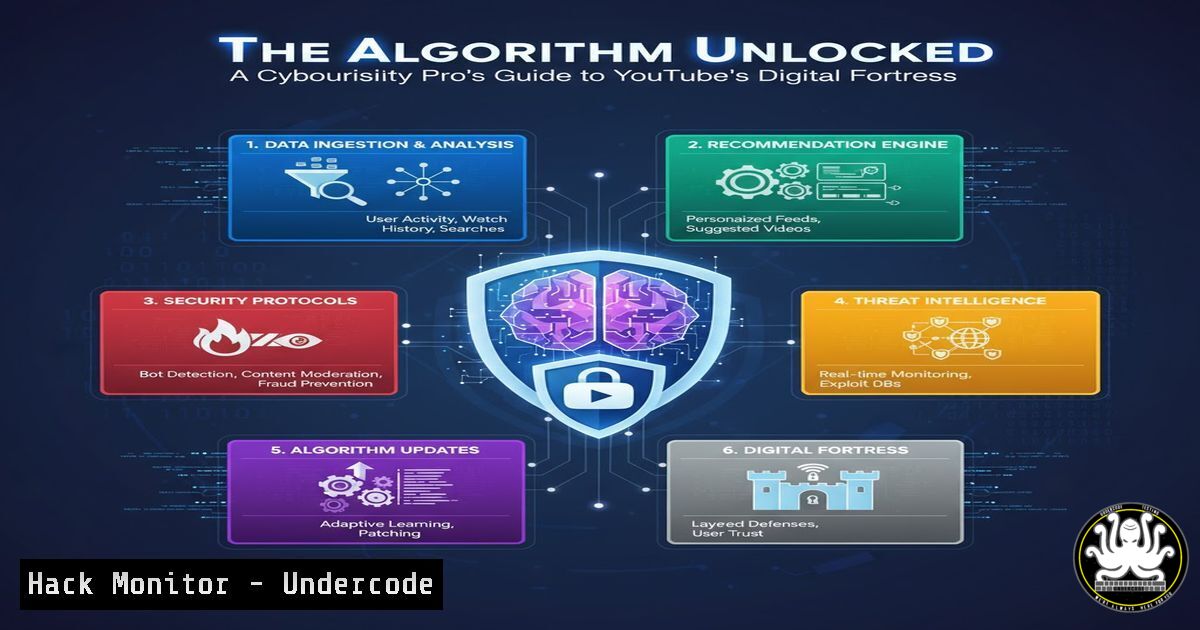
Introduction:
In the digital landscape, YouTube’s algorithm operates as a sophisticated gatekeeper, a system whose immense data-processing capabilities share operational parallels with modern cybersecurity infrastructures. Understanding this algorithm is not merely a content strategy; it’s an exercise in reverse-engineering a complex, AI-driven system to build trust and ensure digital resilience. This article deconstructs the platform from a technical standpoint, providing the command-level tools to secure your digital presence and optimize your strategic approach.
Learning Objectives:
- Decipher the core data and AI principles that power the YouTube recommendation engine.
- Implement technical strategies for content hardening and audience trust-building.
- Leverage cybersecurity tools and methodologies to analyze and protect your channel’s performance.
You Should Know:
1. Network Traffic Analysis for Performance Monitoring
Understanding your audience’s origin and behavior is fundamental. Using command-line tools to monitor network traffic can reveal how content is being distributed and consumed.
`tcpdump -i any -w youtube_traffic.pcap host www.youtube.com`
Step-by-step guide:
This command uses tcpdump, a powerful network packet analyzer.
– Step 1: Run the command with sudo privileges (sudo prefix may be required). It specifies the interface (-i any), an output file (-w youtube_traffic.pcap), and filters traffic to and from YouTube’s servers.
– Step 2: Reproduce the activity you wish to analyze (e.g., uploading a video, loading your analytics page).
– Step 3: Stop the capture (Ctrl+C). The packet capture file can be analyzed in-depth with tools like Wireshark to inspect HTTP requests, response times, and data transfer volumes, giving you a raw view of your channel’s data exchange.
2. API Integration for Data Aggregation
Automating data collection from YouTube’s API is crucial for real-time analytics and threat detection against content theft.
`curl -H “Authorization: Bearer YOUR_ACCESS_TOKEN” “https://youtubeanalytics.googleapis.com/v2/reports?metrics=views,comments,likes,dislikes,estimatedMinutesWatched”`
Step-by-step guide:
This `curl` command fetches a custom report from the YouTube Analytics API.
– Step 1: Replace `YOUR_ACCESS_TOKEN` with a valid OAuth 2.0 token obtained from the Google Cloud Console.
– Step 2: Execute the command in your terminal. It requests key performance metrics (views, comments, etc.) for your channel.
– Step 3: The returned JSON data can be piped into a file (> analytics_data.json) and parsed with tools like `jq` for automated monitoring and alerting on significant metric changes.
3. Content Integrity and DMCA Protection
Protecting your content from unauthorized redistribution is a direct cybersecurity concern. While platform-level tools exist, command-line utilities can help monitor for leaks.
`ffmpeg -i your_video.mp4 -ss 00:00:05 -vframes 1 thumbnail.png`
Step-by-step guide:
This `ffmpeg` command generates a unique thumbnail from your video.
– Step 1: Ensure `ffmpeg` is installed on your system. Replace `your_video.mp4` with your source file.
– Step 2: The `-ss` flag seeks to a specific timestamp (5 seconds in). The `-vframes 1` flag extracts a single frame.
– Step 3: Use this unique thumbnail image with reverse image search APIs or services to scan the web for unauthorized copies of your content, acting as a digital fingerprint.
4. Audience Engagement and Bot Detection
Analyzing engagement patterns can help distinguish genuine human interaction from bot activity, which is vital for accurate analytics.
`!/bin/bash
Simple script to analyze comment sentiment using a local dictionary
grep -oi “awesome|great|excellent|bad|boring|spam” comments.txt | sort | uniq -c | sort -rn<h2 style="color: yellow;">Step-by-step guide:</h2>comments.txt
This Bash script performs a basic sentiment and keyword frequency analysis.
- Step 1: Export comments from your YouTube Studio into a text file,.chmod +x analyze_comments.sh
- Step 2: Save the script as `analyze_comments.sh` and make it executable ()../analyze_comments.sh`). It will count occurrences of positive/negative keywords, helping to identify patterns that might indicate inorganic engagement or coordinated spam attacks.
- Step 3: Run the script (
5. System Hardening for Secure Content Creation
The device used for content creation is a critical asset. Hardening it against intrusion is non-negotiable.
On Linux:
`sudo fail2ban-client set sshd banip 192.168.1.100`
Step-by-step guide:
This command bans a specific IP address from accessing the SSH service on your server or editing workstation.
– Step 1: Ensure `fail2ban` is installed and configured to monitor SSH logs.
– Step 2: Replace `192.168.1.100` with the actual malicious IP address found in your logs (/var/log/auth.log).
– Step 3: This proactively blocks brute-force attacks, securing your raw footage and editing projects stored on the system.
On Windows:
`Get-NetFirewallRule -DisplayGroup “Remote Desktop” | Set-NetFirewallRule -Enabled True -Profile Any`
Step-by-step guide:
This PowerShell command enables the Windows Firewall for Remote Desktop connections.
– Step 1: Open Windows PowerShell as Administrator.
– Step 2: Execute the command. It finds all firewall rules for Remote Desktop and ensures they are enabled for all profiles (Domain, Private, Public).
– Step 3: This mitigates the risk of unauthorized remote access to your editing workstation, a common attack vector.
6. Cloud Storage Configuration for Digital Assets
Misconfigured cloud storage is a leading cause of data breaches. Ensure your video assets are stored securely.
AWS S3 Bucket Hardening Command:
`aws s3api put-bucket-acl –bucket YOUR_BUCKET_NAME –acl private`
Step-by-step guide:
This AWS CLI command sets a bucket’s Access Control List (ACL) to ‘private’.
– Step 1: Install and configure the AWS CLI with your credentials (aws configure).
– Step 2: Replace `YOUR_BUCKET_NAME` with the name of your S3 bucket storing video files, thumbnails, or project files.
– Step 3: Execute the command. This ensures that by default, no objects in the bucket are publicly accessible, preventing accidental exposure of unreleased content.
7. Vulnerability Scanning for Third-Party Plugins
Many creators use browser plugins and third-party tools for analytics and management. These can be attack vectors.
`npm audit –production`
Step-by-step guide:
This command scans a Node.js project (like a custom dashboard or tool) for known vulnerabilities.
– Step 1: Navigate to the directory of your project that uses `npm` (Node Package Manager).
– Step 2: Run npm audit --production. The `–production` flag ignores devDependencies, focusing on your live environment.
– Step 3: Review the output. It will list vulnerabilities by severity (Critical, High, Moderate). Use `npm audit fix` to automatically address patchable issues, securing your toolchain from known exploits.
What Undercode Say:
- Trust is the Ultimate Security Layer: In the digital realm, an audience’s sustained attention is a form of earned trust, which functions as a robust defense against churn and negative engagement, much like encryption protects data.
- Data is the New Attack Surface: The extensive analytics provided by the platform are not just metrics; they are a log file for your digital business. Failure to monitor and analyze this data is equivalent to ignoring security logs on a critical server, leaving you vulnerable to strategic missteps and unseen threats.
The paradigm of content creation has irrevocably shifted towards a model that mirrors cybersecurity. The YouTube algorithm is not a mysterious black box but a complex, data-driven system that rewards clarity, consistency, and genuine connection—the same principles that underpin a secure digital infrastructure. Success requires a proactive, analytical, and defensive posture. By adopting the tools and mindset of a security professional, creators can move from being passive users of a platform to active architects of a resilient and trustworthy digital presence, effectively “hardening” their channel against the volatility of digital attention markets.
Prediction:
The convergence of AI-driven content recommendation and cybersecurity principles will intensify. Future platform algorithms will not only optimize for engagement but also for authenticity and security, potentially incorporating behavioral biometrics to verify genuine human viewership and deploying advanced AI to detect and de-rank sophisticated disinformation campaigns and coordinated manipulation networks. Creators who understand these underlying systems will be best positioned to adapt, building “zero-trust” content strategies that prioritize verifiable audience relationships over volatile, exploit-prone virality.
🎯Let’s Practice For Free:
IT/Security Reporter URL:
Reported By: Warikoo Long – Hackers Feeds
Extra Hub: Undercode MoN
Basic Verification: Pass ✅


