Listen to this Post
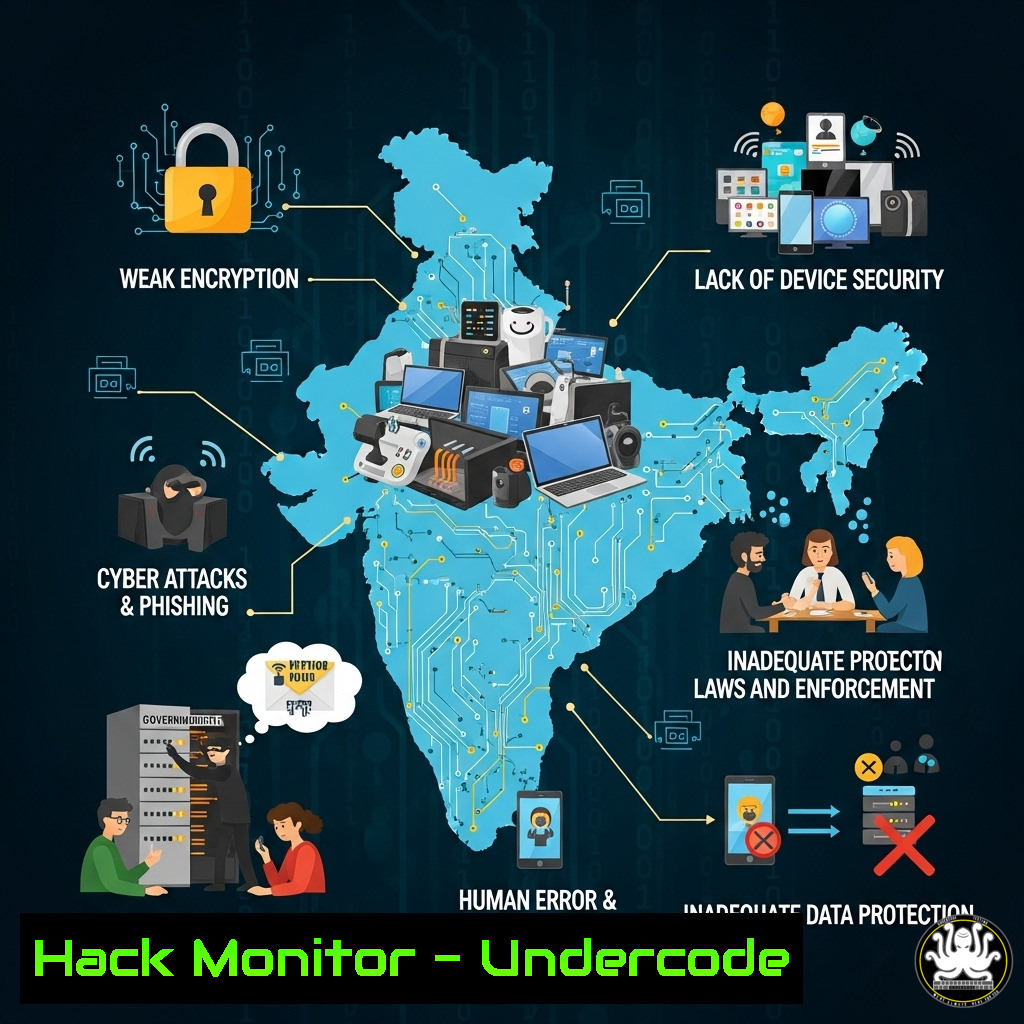
Introduction:
Recent discussions on professional networks have highlighted profound concerns regarding the security of India’s vast citizen databases. The concentration of sensitive personal information across numerous unlinked platforms creates a complex attack surface ripe for exploitation, raising critical questions about national data sovereignty and individual privacy.
Learning Objectives:
- Understand the architecture and common vulnerabilities of large-scale national identity databases.
- Learn essential commands for probing and securing database infrastructures.
- Develop a methodology for ethical security assessment of public-facing data systems.
You Should Know:
1. Reconnaissance with Nmap and WHOIS
`nmap -sV -O ` | `whois `
Before any assessment, information gathering is paramount. Nmap performs service and OS detection, while WHOIS queries reveal domain registration details. Run `nmap -sV -O 192.0.2.1` to fingerprint services on the target system. Follow with `whois example.gov.in` to identify the owning organization and contact points. This passive reconnaissance lays the groundwork for understanding the target’s digital footprint.
2. SQL Injection Testing with Sqlmap
`sqlmap -u “http://test.com/form?id=1” –dbs –batch`
SQL injection remains a top vector for database compromise. This sqlmap command tests the parameter `id` for vulnerabilities and attempts to enumerate available databases. Use `sqlmap -u “http://target.site/user.php?id=1” –dbs –batch` on a legally authorized target. A successful result lists database names, confirming a critical flaw that could expose the entire backend.
3. Securing Database Connections with SSL/TLS
`openssl s_client -connect : -servername `
Verify the encryption of database connections to prevent eavesdropping. For a PostgreSQL server, run openssl s_client -connect db.example.com:5432 -servername db.example.com. Inspect the output for a valid certificate chain and strong cryptographic protocols (TLS 1.2+). Weak or missing encryption exposes all data in transit.
4. Hardening PostgreSQL Configuration
`ALTER SYSTEM SET ssl = on;` | `ALTER SYSTEM SET password_encryption = ‘scram-sha-256’;`
Default database configurations are often insecure. Connect to your PostgreSQL instance (psql -U admin -d postgres) and execute these commands to enforce SSL connections and strong password hashing. This mitigates the risk of credential theft and man-in-the-middle attacks against database administration traffic.
5. Windows Server Audit Policy for Database Access
`auditpol /set /subcategory:”Logon” /success:enable /failure:enable`
On Windows servers hosting databases, enable detailed auditing. Run this command in an elevated Command Prompt to log all successful and failed logon attempts. Correlating these logs with database access times can help detect unauthorized access attempts and credential stuffing attacks against critical infrastructure.
6. Linux Access Control with Fail2ban
`fail2ban-client set banip `
Protect SSH and web administration portals from brute-force attacks. After installing Fail2ban (sudo apt install fail2ban), use this command to manually block a suspicious IP address. For example, `fail2ban-client set sshd banip 203.0.113.5` immediately blocks the IP from accessing the SSH service, hardening your front-line defenses.
7. Vulnerability Scanning with OpenVAS
`omp -u -w -X ‘‘`
OpenVAS provides enterprise-grade vulnerability scanning. Authenticate and launch a scan against a target subnet: omp -u admin -w password -X '<create_task><name>Scan</name><target><hosts>192.0.2.0/24</hosts></target></create_task>'. Regularly schedule such scans to identify missing patches, misconfigurations, and known vulnerabilities in your database and application servers.
What Undercode Say:
- The concentration of sensitive citizen data in multiple siloed systems creates a “honey pot” effect that is inherently attractive to advanced persistent threats (APTs).
- The perceived lack of interoperability between systems does not equate to security through obscurity; it often results in inconsistent security postures and overlooked vulnerabilities.
The fundamental issue is not a single flaw but a systemic failure to implement a unified security architecture. While linking databases could offer efficiencies, it must be predicated on a zero-trust security model, not convenience. The current situation suggests a proliferation of entry points without a corresponding investment in holistic defense-in-depth strategies, making national critical infrastructure a high-value target for both state and non-state actors.
Prediction:
The continued fragmentation of critical citizen data across numerous platforms will lead to a catastrophic consolidation breach within the next 18-24 months. Rather than a single exploited vulnerability, we predict a campaign of “death by a thousand cuts,” where attackers leverage lesser-known flaws across multiple systems to assemble complete citizen profiles. This will necessitate a complete overhaul toward a decentralized identity model with citizen-controlled access keys, moving away from centralized vulnerable databases.
🎯Let’s Practice For Free:
IT/Security Reporter URL:
Reported By: Abhinavkakku How – Hackers Feeds
Extra Hub: Undercode MoN
Basic Verification: Pass ✅


