Listen to this Post
Introduction:
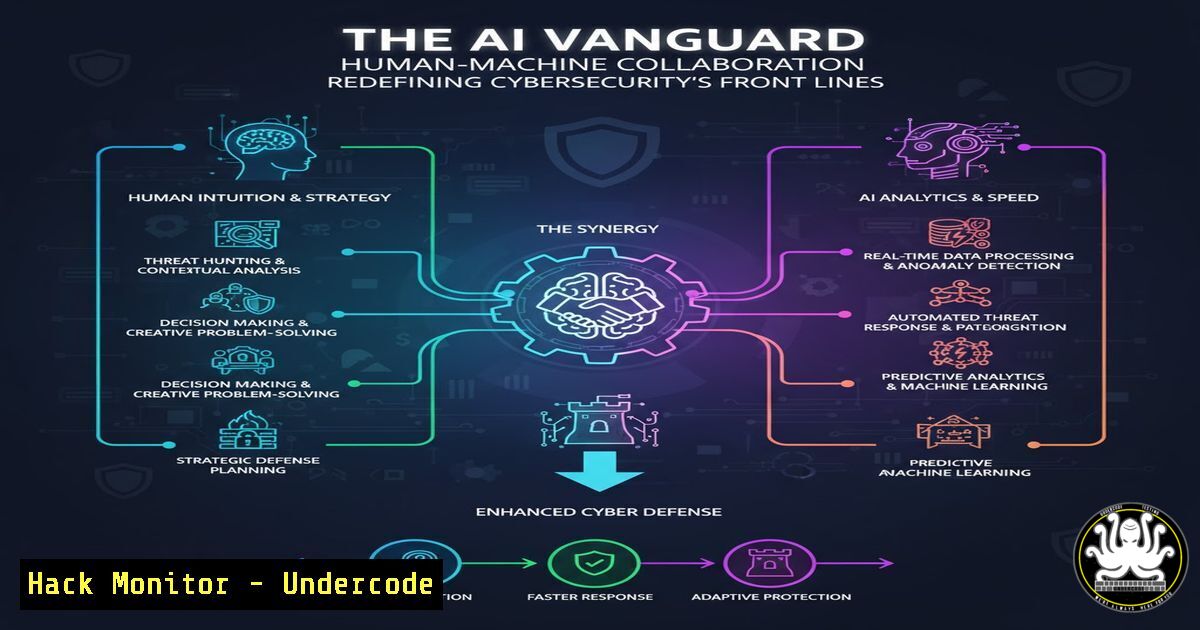
The recent collaboration between Fields Medalist Terence Tao and Google DeepMind represents a paradigm shift in problem-solving methodology. By leveraging AI agents like AlphaEvolve, AlphaProof, and Gemini Deep Think to discover and prove mathematical constructions, this partnership demonstrates the emerging era of human-AI symbiosis. For cybersecurity professionals, this evolution from standalone AI tools to integrated cognitive partnerships signals a fundamental transformation in how we approach threat detection, vulnerability analysis, and security architecture.
Learning Objectives:
- Understand the practical implementation of AI-assisted security analysis in both offensive and defensive contexts
- Master command-line tools and techniques for integrating AI into existing security workflows
- Develop strategies for validating and hardening AI-generated security recommendations
You Should Know:
- AI-Assisted Vulnerability Discovery: From Mathematical Proofs to Security Flaws
The same principles that enabled DeepMind’s AI to discover new mathematical constructions can be applied to vulnerability research. Just as AlphaEvolve explored mathematical spaces, security-focused AI can systematically analyze codebases and configurations for potential weaknesses.
Step-by-step guide explaining what this does and how to use it:
 Install and configure Semgrep with AI-assisted rules
pip install semgrep
semgrep --config=auto .

Enhanced pattern discovery using AI-generated rules
semgrep --generate-config /path/to/codebase
semgrep --scan --config=/path/to/generated/rules.yaml

Cross-reference with traditional static analysis
find /path/to/codebase -name ".py" -exec pylint {} \;
find /path/to/codebase -name ".java" -exec spotbugs {} \;
This approach combines AI-driven pattern recognition with established static analysis tools, creating a hybrid validation system that mimics the mathematical verification process used in the Tao-DeepMind collaboration.
2. Automated Proof Generation for Security Policy Validation
Similar to how AlphaProof formalized mathematical proofs in Lean, we can implement automated verification systems for security configurations and access controls.
Step-by-step guide explaining what this does and how to use it:
 Windows Security Policy Verification using AI-assisted analysis
Get-LocalGroupMember "Administrators" | Export-Csv -Path admin_users.csv
Get-NetFirewallRule | Where-Object {$_.Enabled -eq 'True'} | Export-Csv firewall_rules.csv

Linux equivalent for privilege and configuration auditing
cut -d: -f1,3 /etc/passwd | grep -E ":[0-9]{4}$" > system_users.txt
sudo netstat -tulpn > listening_ports.txt

AI-assisted policy analysis script
python3 security_policy_verifier.py --users system_users.txt --ports listening_ports.txt --output policy_analysis.json
The verification script uses rule-based checking combined with AI anomaly detection to identify deviations from security baselines, providing mathematical certainty in policy enforcement.
3. Evolutionary Algorithm Security Testing:模仿AlphaEvolve的方法
Just as AlphaEvolve discovered new mathematical constructions through evolutionary algorithms, we can apply similar techniques to evolve security tests and attack simulations.
Step-by-step guide explaining what this does and how to use it:
 Example evolutionary security testing framework
import security_evolution as sevol

Initialize evolutionary tester for web applications
tester = sevol.WebAppEvolutionaryTester(
target_url="https://example.com",
population_size=50,
mutation_rate=0.15,
crossover_rate=0.65
)

Evolve test cases over generations
best_tests = tester.evolve(
generations=100,
fitness_function="vulnerability_coverage",
selection_method="tournament"
)

Generate security report
tester.generate_report("evolutionary_security_analysis.pdf")
This approach continuously evolves testing methodologies, discovering novel attack vectors that traditional scanners might miss, much like discovering new mathematical constructions.
4. Hybrid Intelligence for Threat Intelligence Analysis
The Tao-DeepMind collaboration demonstrates how human intuition guides AI exploration. We can apply this same principle to threat intelligence analysis.
Step-by-step guide explaining what this does and how to use it:
 Setup AI-enhanced threat intelligence pipeline
 Collect raw intelligence feeds
curl -s https://feeds.dshield.org/block.txt | head -1000 > suspicious_ips.txt
whois -h whois.radb.net -- '-i origin AS12345' | grep ^route > target_routes.txt

AI-assisted correlation and analysis
python3 threat_correlator.py \
--ips suspicious_ips.txt \
--routes target_routes.txt \
--output correlated_threats.json \
--ai-model "gemini-pro"

Generate mitigation recommendations
python3 threat_mitigator.py --input correlated_threats.json --action "iptables"
The system combines human-defined intelligence priorities with AI-powered pattern recognition across massive datasets, creating a collaborative analysis environment.
5. Formal Verification for Cryptographic Implementations
Following AlphaProof’s formal verification approach, we can implement rigorous verification for security-critical code, particularly cryptographic implementations.
Step-by-step guide explaining what this does and how to use it:
 Install formal verification tools for cryptographic code
sudo apt-get install frama-c why3

Analyze cryptographic implementation
frama-c -eva -libc -no-collapse-call-return rsa_implementation.c

Generate verification conditions
why3 prove -P z3 rsa_algorithm.mlw

AI-assisted proof generation for complex properties
python3 crypto_verifier.py --source rsa_implementation.c --properties "constant_time,memory_safety"
This combines traditional formal methods with AI-assisted proof generation to achieve mathematical certainty in security-critical implementations.
6. Cloud Security Architecture Co-pilot Implementation
The collaborative nature of the Tao-DeepMind partnership translates directly to cloud security architecture, where AI acts as a co-pilot for designing secure systems.
Step-by-step guide explaining what this does and how to use it:
 Terraform configuration with AI-generated security rules
terraform init
terraform validate

AI-assisted security review of cloud architecture
python3 cloud_security_reviewer.py \
--terraform-dir ./infrastructure \
--compliance-framework "nist-800-53" \
--output security_findings.json

Generate hardened configuration
python3 cloud_hardener.py --input security_findings.json --output hardened_infrastructure/
The AI co-pilot analyzes proposed architectures against multiple security frameworks simultaneously, suggesting improvements based on proven mathematical principles of secure design.
7. Continuous Security Validation Through AI-Guided Fuzzing
Building on the discovery-oriented approach of the mathematical research, we implement AI-guided fuzzing that evolves based on code coverage and vulnerability patterns.
Step-by-step guide explaining what this does and how to use it:
 Install and configure AI-enhanced fuzzer
git clone https://github.com/aflplusplus/aflplusplus
cd aflplusplus && make source-only

Initialize AI-guided fuzzing session
afl-fuzz -i test_cases/ -o findings/ -S fuzzer01 -- \
-AI-guided -model gemini-pro -coverage-metric branch \
./target_program @@

Parallel fuzzing with different AI strategies
afl-fuzz -i test_cases/ -o findings/ -S fuzzer02 -- \
-AI-guided -model evolutionary -coverage-metric path \
./target_program @@
This approach continuously evolves test cases using multiple AI strategies simultaneously, dramatically increasing the probability of discovering novel vulnerabilities.
What Undercode Say:
- The human-AI collaboration model demonstrated by Tao and DeepMind represents the future of cybersecurity operations, where human expertise guides AI exploration and AI capabilities extend human analytical reach
- Security teams must develop new skill sets focused on AI orchestration, validation of AI-generated findings, and maintaining human oversight over automated security processes
- The mathematical rigor applied in this research collaboration provides a blueprint for implementing provably secure systems through formal verification and AI-assisted proof generation
The Tao-DeepMind collaboration underscores a critical evolution in cybersecurity: AI is transitioning from being a tool to being a partner. This partnership model enables security teams to address the scale and complexity of modern threats while maintaining the strategic oversight that only human expertise can provide. The mathematical foundation of this approach suggests a future where security controls can be mathematically proven rather than merely tested, fundamentally changing our relationship with digital risk.
Prediction:
Within three years, human-AI collaboration will become the standard model for enterprise security operations, with AI agents handling routine analysis and humans focusing on strategic oversight and complex edge cases. This partnership will extend beyond detection to include proactive security design, with AI co-pilots assisting in the creation of mathematically verifiable security architectures. The convergence of formal methods, evolutionary algorithms, and human expertise will create security systems that are both adaptive and provably secure, fundamentally changing how organizations approach digital risk management.
🎯Let’s Practice For Free:
IT/Security Reporter URL:
Reported By: Parisel Mathematical – Hackers Feeds
Extra Hub: Undercode MoN
Basic Verification: Pass ✅


