
Listen to this Post
Introduction:
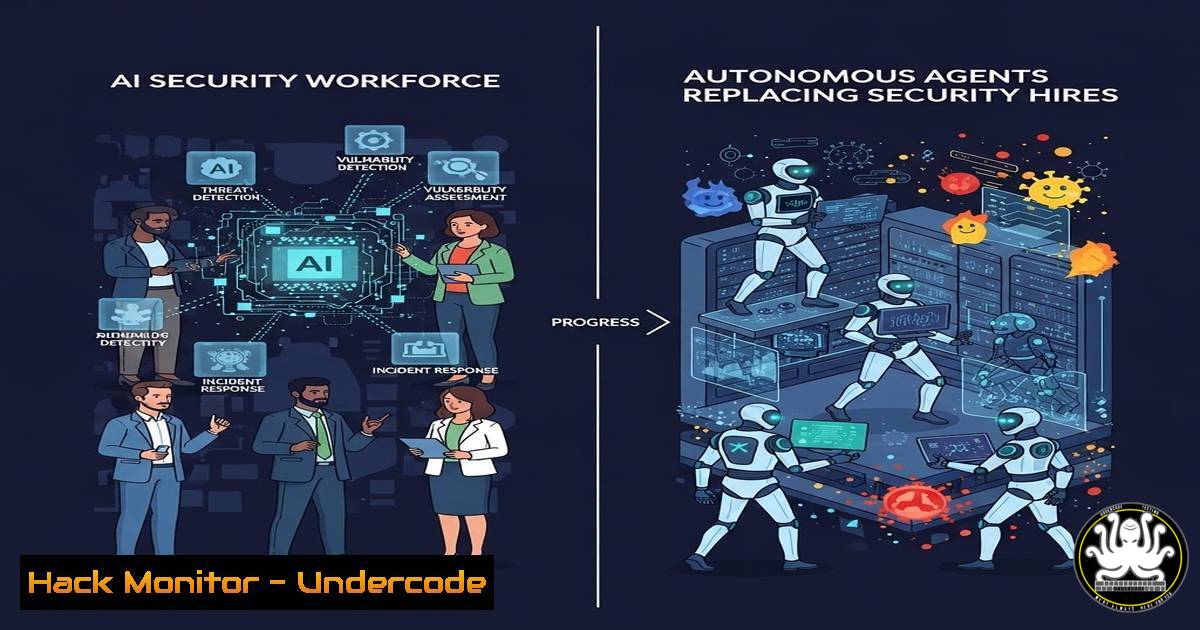
The product security landscape is undergoing a seismic shift from a technology constraint to a labor crisis. While tools for scanning and testing abound, the bottleneck is now the human expertise required to triage, validate, and remediate findings. This article explores the emergence of fully autonomous AI agents, like those from Nullify, that perform core security engineering tasks, and what this means for the future of security teams.
Learning Objectives:
- Understand the core “knowledge work” tasks in product security that are primed for AI automation.
- Learn the manual processes for vulnerability triage and validation that AI aims to supersede.
- Explore how security engineers can transition from operational tasks to strategic “intuition work.”
You Should Know:
1. From Alerts to Action: Automating Vulnerability Triage
The first inundation point for any security team is the raw output of SAST, DAST, and SCA scanners. Triage involves deduplication, risk assessment, and prioritization—a repetitive but critical knowledge work.
Step‑by‑step guide explaining what this does and how to use it.
Manual Process:
- Aggregate: Pull reports from tools like
trivy,semgrep, or commercial scanners into a central spreadsheet or SIEM. - Deduplicate: Manually compare CVE IDs, library names, and code snippets to group identical findings.
Example Linux command to cross-reference: `grep -r “CVE-2023-12345” ./scan-reports/`
3. Prioritize: Apply a framework like CVSS, contextualize with asset criticality, and mark false positives.
AI-Agent Automation:
An AI workforce is trained to ingest all tool outputs, cluster identical vulnerabilities across different scanners’ nomenclature, and assign a business-contextual priority score autonomously, mimicking the steps a senior engineer would take.
- Beyond the Scanner: Autonomous Exploit Discovery & Validation
A vulnerability is only theoretical until proven exploitable. Validation is a high-skill task requiring deep system knowledge.
Step‑by‑step guide explaining what this does and how to use it.
Manual Process:
- Environment Mapping: For a cloud misconfiguration (e.g., S3 bucket policy), manually check AWS CLI: `aws s3api get-bucket-policy –bucket my-bucket-name`
2. Proof-of-Concept (PoC) Creation: For a code vulnerability, write a small script to demonstrate impact.
Example for a command injection finding: `python3 -c “import subprocess; subprocess.call(input(‘Test cmd: ‘), shell=True)”`
3. Confirmation: Determine if the PoC succeeds in a staging environment without causing damage.
AI-Agent Automation:
Agents autonomously navigate staging environments, craft and execute safe PoCs for high-priority vulnerabilities, and return validated, exploitable findings with evidence, effectively acting as an internal penetration tester.
- The Remediation Mandate: Generating Fixes & Pull Requests
The final labor-intensive step is translating a validated finding into a fixed codebase or configuration.
Step‑by‑step guide explaining what this does and how to use it.
Manual Process:
- Root Cause Analysis: Trace the vulnerable code path or misconfigured service.
- Fix Development: Write the patched code or corrected Terraform/YAML.
Example: Updating a `Dockerfile` from `FROM node:14` to `FROM node:18-slim`
3. Pull Request & Deployment: Create a PR, link the security ticket, and shepherd it through CI/CD.
AI-Agent Automation:
Agents generate context-aware fixes, create the pull requests directly in GitHub or GitLab, and populate them with the vulnerability evidence and suggested fix rationale, requiring only human approval before merge.
- Tool Orchestration at Scale: The AI as a Force Multiplier
Security engineers spend significant time managing tools, not just their outputs.
Step‑by‑step guide explaining what this does and how to use it.
Manual Process:
- Schedule Scans: Configure cron jobs or pipeline triggers.
Example cron: `0 2 /usr/bin/trivy image –exit-code 1 my-registry/my-app:latest`
2. Manage Credentials: Securely handle API keys for different security tools. - Parse & Distribute: Run scripts to reformat JSON outputs for different stakeholders.
AI-Agent Automation:
The AI workforce becomes the operator—scheduling scans, managing the toolchain’s service accounts, and handling data transformation internally, presenting only finished analysis.
- Shifting Left, Right, and Up: The Human’s New Role
With AI handling knowledge work, human engineers must ascend to higher-value activities.
Step‑by‑step guide explaining what this does and how to use it.
New Human “Intuition Work” Focus:
- Strategy & Architecture: Designing secure-by-design systems and defining security policies for the AI to enforce.
- Complex Threat Modeling: Analyzing novel attack vectors on new business features.
- AI Oversight & Training: Curating datasets, reviewing AI decisions for edge cases, and fine-tuning the autonomous workforce’s objectives. This involves auditing AI-generated fixes and validations.
What Undercode Say:
- Labor is the New Attack Surface: The scarcity of security talent has become the primary vulnerability for organizations. AI agents directly target this constraint, not by replacing humans, but by amplifying their capacity.
- From Operators to Strategists: The highest ROI for a human security engineer is no longer in processing tickets but in defining the security paradigm and managing the AI systems that execute it. Their role evolves to that of a supervisor, architect, and teacher.
Prediction:
The launch of autonomous security workforces marks the beginning of the “AI Era” of cybersecurity defense, mirroring the AI-powered offensive tools already in use by threat actors. Within 3-5 years, not having an AI workforce will be as consequential as not having a SIEM today. Security teams will shrink in raw headcount but grow in strategic impact, composed of senior engineers who manage fleets of specialized AI agents. The battleground will shift from finding vulnerabilities to the speed and intelligence of autonomous remediation, with the most mature AI security programs achieving near-real-time patch deployment for critical flaws, fundamentally changing the window of exposure.
▶️ Related Video (78% Match):
🎯Let’s Practice For Free:
IT/Security Reporter URL:
Reported By: Shan Kulkarni – Hackers Feeds
Extra Hub: Undercode MoN
Basic Verification: Pass ✅


