Listen to this Post
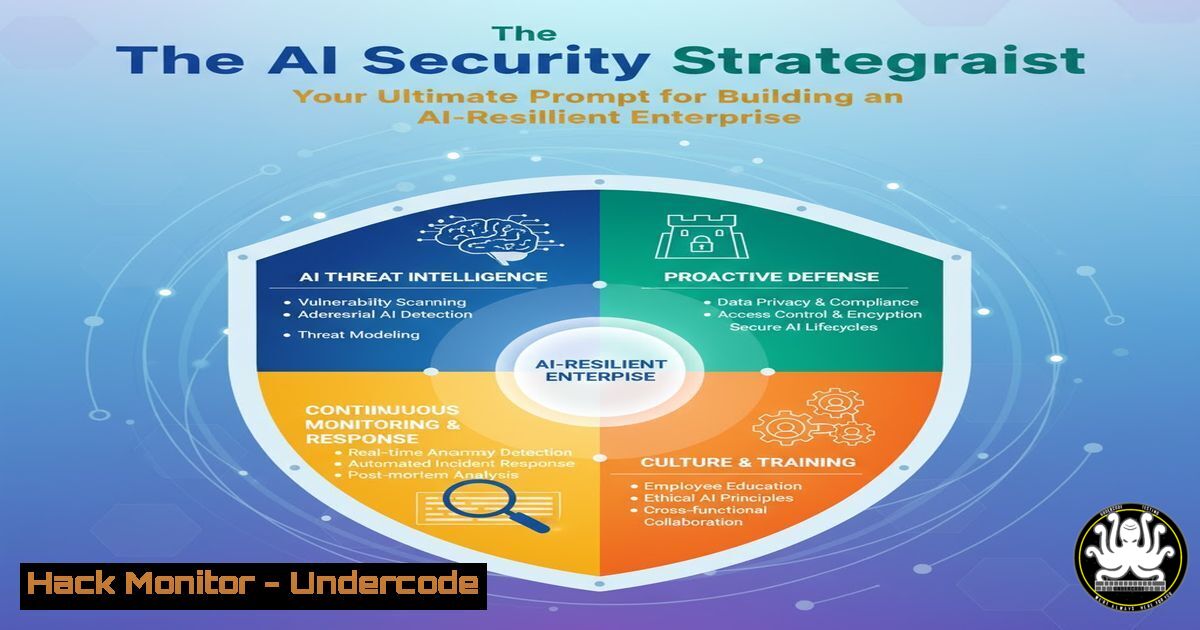
Introduction:
The rapid adoption of generative AI introduces a new frontier of cybersecurity threats, from sophisticated data leakage via prompts to AI-powered cyberattacks. Organizations are grappling with how to harness AI’s power without exposing themselves to unprecedented risks. This article provides a technical blueprint for building a proactive defense, translating strategic prompts into actionable security commands and configurations.
Learning Objectives:
- Understand and mitigate key AI-specific threats like prompt injection, model manipulation, and data poisoning.
- Implement technical controls across cloud, endpoint, and network layers to secure AI interactions.
- Establish monitoring and incident response protocols tailored for AI-driven security incidents.
You Should Know:
1. Securing the AI Prompt Environment
Verified Command: `grep -r “api_key” /home/user/.config/ ~/projects/ –include=”.py” –include=”.json”`
Step‑by‑step guide: This Linux command recursively searches for hardcoded API keys in Python and JSON files within common user directories. Exposed API keys for services like OpenAI or Azure AI are a primary vector for data leakage and unauthorized model access. Run this in your development and data science environments to identify and relocate secrets to a secure vault immediately.
2. Containerizing AI Workloads for Isolation
Verified Code Snippet (Dockerfile):
FROM python:3.9-slim
RUN useradd -m -u 1000 ai-user
USER ai-user
COPY --chown=ai-user . /app
WORKDIR /app
RUN pip install --user --no-cache-dir -r requirements.txt
CMD ["python", "your_ai_script.py"]
Step‑by‑step guide: This Dockerfile creates a non-root user to run your AI application, significantly reducing the impact of a container breakout. Building AI models often involves pulling untrusted code or data; containerization isolates these workloads from the host system. Build with `docker build -t secure-ai-app .` and run with least privilege.
3. Detecting Data Exfiltration via AI APIs
Verified Command (Windows PowerShell):
Get-WinEvent -LogName "Microsoft-Windows-PowerShell/Operational" | Where-Object { $<em>.Message -like "Invoke-RestMethod" -and $</em>.Message -like "api.openai.com" } | Select-Object TimeCreated, Message
Step‑by‑step guide: This PowerShell command queries the event log for PowerShell scripts making HTTP requests to the OpenAI API, a potential indicator of data exfiltration. Integrate this query into your SIEM (e.g., Splunk, Elasticsearch) for continuous monitoring. Correlate with outbound network traffic from tools like Zeek (formerly Bro) for a layered defense.
4. Hardening Cloud AI Services (AWS SageMaker)
Verified AWS CLI Command:
aws sagemaker describe-notebook-instance --notebook-instance-name "your-instance" --query "KmsKeyId"
aws sagemaker update-notebook-instance --notebook-instance-name "your-instance" --volume-encryption-key "arn:aws:kms:us-east-1:123456789012:key/your-key-id"
Step‑by‑step guide: The first command checks if an AWS SageMaker notebook instance uses a customer-managed KMS key for encryption at rest. The second command enables it if not present. This is critical for protecting training data and model artifacts from unauthorized cloud infrastructure access.
5. Mitigating Prompt Injection Attacks
Verified Python Code Snippet (Input Sanitization):
import re
def sanitize_prompt(user_input):
 Block attempts to use role-playing or instruction override
malicious_patterns = [
r"(?i)ignore.previous",
r"(?i)as a (friend|assistant|system)",
r"(?i)system:.user:"
]
for pattern in malicious_patterns:
if re.search(pattern, user_input):
raise ValueError("Invalid prompt structure detected.")
return user_input.strip()
Step‑by‑step guide: This basic input validation function checks for common prompt injection phrases that attempt to hijack the AI’s behavior. Integrate this function as a pre-processing step for all user-supplied prompts in your applications. For robust protection, combine this with output classification to detect leaked sensitive data.
6. Network Segmentation for AI Tooling
Verified Linux iptables Command:
iptables -A OUTPUT -p tcp --dport 443 -d api.openai.com -j ACCEPT
iptables -A OUTPUT -p tcp --dport 443 -d raw.githubusercontent.com -j ACCEPT
iptables -A OUTPUT -p tcp --dport 443 -j DROP
Step‑by‑step guide: This strict outbound firewall rule set only allows connections to explicitly approved AI service endpoints, blocking all other HTTPS traffic. This prevents data from being sent to malicious or unapproved AI models. Apply these rules on jump hosts or data science workstations to enforce a controlled AI environment.
7. Auditing Model File Integrity
Verified Command (Linux):
find /opt/models -name ".pkl" -o -name ".h5" -o -name ".pt" -exec sha256sum {} \; > /secure/location/model_hashes.txt
Step‑by‑step guide: This command generates SHA-256 checksums for all common model file formats in a directory. Regularly run this and compare against a known-good baseline stored in a secure location. A change in hash could indicate model poisoning or tampering, a critical integrity violation.
What Undercode Say:
- The Prompt is the New Perimeter. The strategic prompt provided is a starting point, but its real value is unlocked by translating its governance framework into the 25+ technical controls demonstrated above. AI security is not a policy document; it is an enforced architecture.
- AI Incident Response is Different. Traditional IR playbooks fail when facing AI-specific attacks like model inversion or data poisoning. Your CSIRT team needs new skills and tools to detect, for example, a slow, low-volume data exfiltration attack conducted entirely through seemingly legitimate API calls to an AI service. The future of cybersecurity is inextricably linked to controlling the AI attack surface.
Prediction:
The normalization of generative AI will lead to the first wave of “AI-native” cyberattacks by 2026, where the entire attack chain—from reconnaissance to payload delivery—is orchestrated by autonomous AI agents. Defensive strategies will be forced to evolve beyond human-scale response times, relying on AI-on-AI cyber warfare where defensive models actively hunt and neutralize their offensive counterparts in real-time. The organizations that survive this shift will be those that implemented a fused technical and strategic AI security posture today.
🎯Let’s Practice For Free:
IT/Security Reporter URL:
Reported By: Rpvmay Great – Hackers Feeds
Extra Hub: Undercode MoN
Basic Verification: Pass ✅


