Listen to this Post
Introduction:
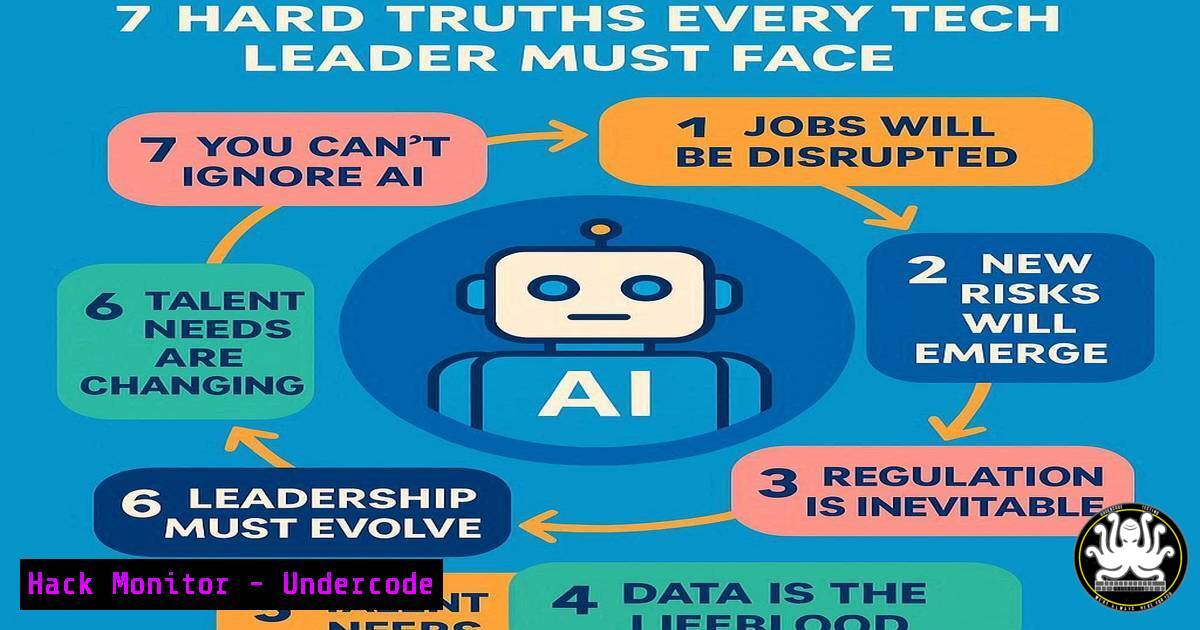
The corporate race to adopt Artificial Intelligence is fraught with strategic pitfalls and operational blind spots. As revealed in confidential discussions among Australia’s top tech executives, the challenge is no longer about if to implement AI, but how to do so without creating shadow IT risks, alienating talent, or wasting millions on misaligned projects.
Learning Objectives:
- Identify the critical governance gaps in enterprise AI implementation
- Develop a systematic approach to balancing deterministic and probabilistic AI systems
- Implement security controls for managing shadow AI and cloud infrastructure risks
You Should Know:
1. Governance: Who Owns AI Strategy?
The fundamental governance question plaguing organizations is ownership. When AI strategy falls solely under IT, it becomes disconnected from business value. The consensus among leaders is that AI must be business-led, with COOs, CEOs, or CMOs driving strategy based on their industry vertical.
Verified Command: Azure CLI Role Assignment
az role assignment create --assignee "[email protected]" \
--role "Cognitive Services Contributor" \
--scope "/subscriptions/{subscription-id}"
This Azure CLI command demonstrates how to grant a CMO appropriate permissions for AI services without providing full administrative access. The `Cognitive Services Contributor` role allows business leaders to deploy and manage AI models while maintaining security boundaries. Execute this after establishing your AI governance framework to enable business-led initiatives with proper oversight.
2. Shadow AI Detection and Management
The prohibition of AI tools inevitably leads to shadow AI—unauthorized AI applications that create security vulnerabilities and compliance risks. Organizations must implement detection mechanisms while providing approved alternatives.
Verified Command: Network Traffic Analysis for Shadow AI
sudo tcpdump -i any -A 'host api.openai.com or host api.anthropic.com' \
-c 100 -w shadow_ai_capture.pcap
This Linux command captures traffic to major AI API endpoints, helping security teams identify unauthorized AI usage. The packet capture (-w flag) creates forensic evidence for compliance audits. Analyze the captured packets with Wireshark to determine usage patterns and assess the data exposure risks.
3. Cloud Infrastructure for AI Workloads
Hyperscalers are aggressively expanding their AI offerings, but organizations should start with existing cloud investments rather than pursuing wholesale migration to specialized AI platforms.
Verified Command: AWS AI Service Configuration Audit
aws servicecatalog search-products --filters FullTextSearch='AI' \
--query 'ProductViewSummaries[].{Name:Name,ID:ProductId}' \
--output table
This AWS CLI command audits available AI services within your existing environment. The output helps inventory available tools before procurement, preventing redundant spending. Combine this with `aws budgets create-budget` to set spending limits on AI services and prevent cost overruns.
4. Talent Acquisition Through AI Enablement
Top technical talent increasingly prioritizes AI work opportunities. Organizations not engaged in meaningful AI initiatives face significant recruitment and retention challenges.
Verified Command: GitHub Repository AI Project Scanning
gh search repos --owner [org-name] --limit 50 \
--json name,description,updatedAt \
--jq '.[] | select(.description | test("AI|ML|machine learning"; "i"))'
This GitHub CLI command identifies existing AI projects within your organization’s repositories, revealing organic innovation and talent hotspots. Use findings to formalize successful grassroots initiatives and showcase them in recruitment materials to attract AI-focused candidates.
5. Deterministic vs. Probabilistic AI Implementation
The confusion between deterministic machine learning and probabilistic generative AI leads to implementation failures. Organizations must understand the distinct use cases and risk profiles of each approach.
Verified Command: ML Model Validation Script
import sklearn.metrics
import numpy as np

Deterministic model validation
def validate_deterministic_model(y_true, y_pred):
accuracy = sklearn.metrics.accuracy_score(y_true, y_pred)
confidence_intervals = np.percentile(y_pred, [2.5, 97.5])
return {"accuracy": accuracy, "confidence_range": confidence_intervals}

Probabilistic model evaluation
def evaluate_probabilistic_model(generated_text, reference_text):
bleu_score = sklearn.metrics.sentence_bleu([bash], generated_text)
embedding_similarity = cosine_similarity(embed(generated_text), embed(reference_text))
return {"bleu_score": bleu_score, "semantic_similarity": embedding_similarity}
This Python code demonstrates the fundamental difference in evaluation approaches. Deterministic models measure accuracy against known answers, while probabilistic models require similarity metrics and quality assessments. Implement these validation frameworks before production deployment.
6. Systematic AI Implementation Process
Successful AI adoption requires a loop-based process rather than static strategy documents. This involves rapid experimentation, failure analysis, and systematic scaling of successful proofs-of-concept.
Verified Command: AI Project Lifecycle Automation
!/bin/bash
 AI Project Pipeline Manager

EXPERIMENT_TRACKING="experiments.log"
SUCCESS_CRITERIA="accuracy > 0.85 && latency < 200ms"

run_experiment() {
local project=$1
echo "$(date): Testing $project" >> $EXPERIMENT_TRACKING
metrics=$(python evaluate_model.py --project $project)
if eval "[[ $metrics ]]"; then
echo "SCALING: $project" >> $EXPERIMENT_TRACKING
kubectl scale deployment/$project --replicas=10
else
echo "KILLING: $project" >> $EXPERIMENT_TRACKING
kubectl delete deployment/$project
fi
}
This Bash script automates the experiment lifecycle, automatically scaling successful projects and terminating failures based on predefined criteria. Integrate this with your CI/CD pipeline to create a systematic AI implementation process that aligns with business objectives.
7. API Security for AI Integrations
As organizations integrate multiple AI APIs, securing these endpoints becomes critical. Proper authentication, rate limiting, and data sanitization are non-negotiable.
Verified Command: AI API Security Hardening
 NGINX configuration for AI API security
location /ai-proxy/ {
proxy_pass https://api.openai.com/v1/;
proxy_set_header Authorization "Bearer $api_key";

Security controls
client_max_body_size 10m;
limit_req zone=ai burst=10 nodelay;
proxy_hide_header "OpenAI-Organization";

Data sanitization
sub_filter "internal.company.com" "redacted";
sub_filter_once off;
}
This NGINX configuration creates a secure proxy for AI APIs, implementing rate limiting, header manipulation, and data sanitization. Deploy this as a reverse proxy to maintain control over AI API traffic and prevent data leakage through hidden headers or excessive payload sizes.
What Undercode Say:
- AI governance cannot be delegated to IT alone—business leadership must drive strategy while technical teams implement guardrails
- The deterministic vs. probabilistic AI confusion represents a fundamental architectural literacy gap that must be addressed before scaling
- Shadow AI is not a compliance failure but a market signal—organizations should formalize successful unauthorized experiments rather than merely prohibiting them
The executive consensus reveals that AI implementation is primarily a organizational and cultural challenge rather than purely technical. Companies succeeding with AI have embraced structured experimentation while maintaining security boundaries. The most significant risk isn’t implementing AI poorly—it’s not implementing AI at all, which guarantees technical debt and talent drain. Organizations must navigate the delicate balance between innovation speed and operational control, treating AI as a continuous capability development rather than a project-based initiative.
Prediction:
Within 24 months, organizations that failed to establish business-led AI governance will face catastrophic shadow AI incidents—data breaches originating from unauthorized AI tools will exceed $500 million in cumulative damages. Meanwhile, companies that systematized AI experimentation while maintaining security controls will achieve 30-40% operational efficiency gains, creating an insurmountable competitive divide. The AI implementation approaches debated today will determine market leadership for the next decade.
🎯Let’s Practice For Free:
IT/Security Reporter URL:
Reported By: Suhitanantula Today – Hackers Feeds
Extra Hub: Undercode MoN
Basic Verification: Pass ✅


