Listen to this Post
Introduction:
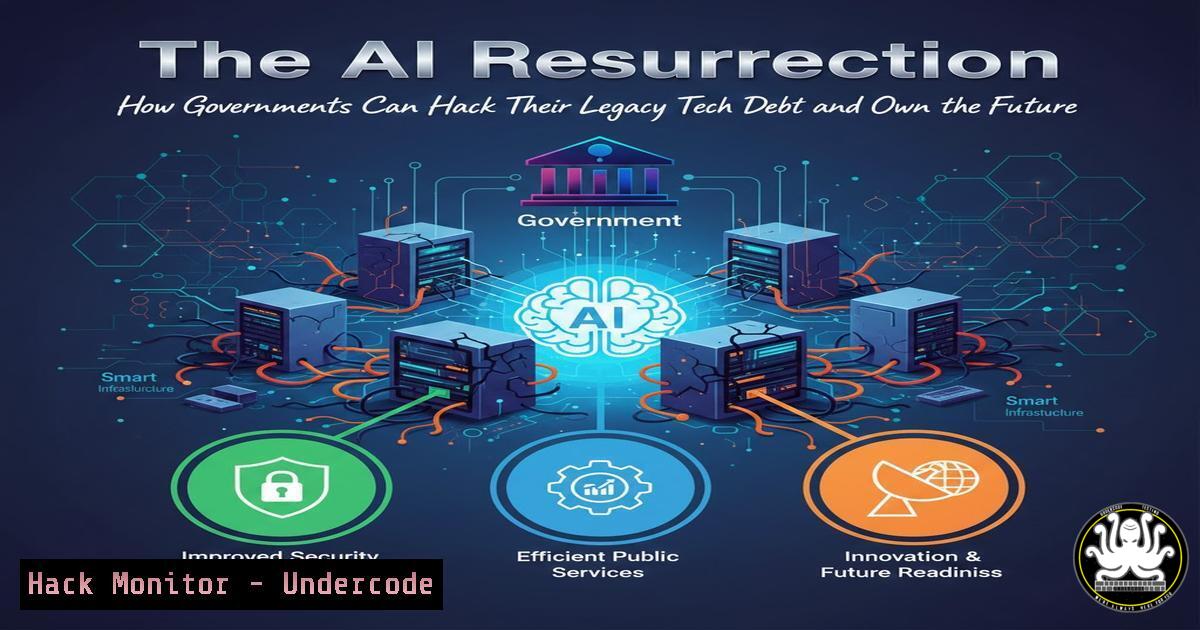
The public sector’s IT landscape is a digital archaeology site, where invaluable “ancient” custom applications quietly power critical operations on shoestring budgets. Historically, the cost and complexity of modernizing these systems or building new ones forced reliance on generic SaaS solutions. However, the advent of AI-driven software development is fundamentally altering this calculus, slashing build and maintenance costs and creating a pivotal window for governments to reclaim digital sovereignty, secure their foundations, and close the innovation gap with the private sector.
Learning Objectives:
- Understand how AI-assisted development tools reduce the cost and skill barrier for maintaining and building custom software.
- Learn the technical steps to securely modernize legacy systems and establish robust data governance.
- Implement practical security hardening for AI-integrated development environments and the applications they produce.
You Should Know:
1. Adopting AI-Assisted Development Workflows
The core shift is integrating AI tools like GitHub Copilot, Amazon CodeWhisperer, or open-source alternatives (e.g., Tabnine) into the development lifecycle. These tools act as force multipliers for small teams, automating boilerplate code, suggesting complex functions, and translating natural language comments into code snippets.
Step‑by‑step guide:
- Tool Evaluation & Security Review: Before adoption, conduct a security review. For cloud-based AI tools, ensure compliance with data residency and sovereignty policies. For on-premise options, verify infrastructure requirements.
- Integrate into Your IDE: Install the chosen plugin in your team’s Integrated Development Environment (e.g., VS Code, JetBrains Suite). For VS Code with GitHub Copilot:
Navigate to Extensions (Ctrl+Shift+X)
Search for "GitHub Copilot"
Install and authenticate via your GitHub account
3. Develop with Guardrails: Use AI for:
Documentation: “Generate a docstring for this function.”
Test Creation: “Create a unit test for this API endpoint.”
Code Explanation: “Explain what this complex regular expression does.”
4. Mandate Human Review: Establish a policy that all AI-generated code must undergo rigorous peer review and security scanning before commit.
2. Securing Your AI-Powered Toolchain
Introducing AI tools expands your attack surface. These tools, their APIs, and the code they generate require specific security postures.
Step‑by‑step guide:
- API Key & Authentication Hardening: Store AI service API keys in a secrets manager (e.g., HashiCorp Vault, AWS Secrets Manager). Never hardcode them. Rotate keys quarterly.
Example: Using AWS CLI to store a secret (Linux/macOS)
aws secretsmanager create-secret --name prod/ai-tool-api-key --secret-string "YOUR_API_KEY"
- Network Security for AI Services: If using cloud-based AI, configure egress firewall rules to only allow traffic to the sanctioned AI service endpoints. Use allowlists.
- Static Application Security Testing (SAST): Integrate SAST tools like Semgrep or CodeQL directly into your CI/CD pipeline to scan all code, including AI-generated suggestions, for vulnerabilities like SQL injection or cross-site scripting (XSS).
Example GitHub Actions snippet for Semgrep</li>
</ol>

- name: Semgrep SAST
uses: returntocorp/semgrep-action@v1
with:
config: p/security-audit
3. The Legacy Modernization Pathway: Containerization & APIs
The “ancient” custom software often runs on deprecated OSes. The strategy is not to rewrite it entirely but to containerize it and expose its functions via secure APIs.
Step‑by‑step guide:
- Inventory & Analyze: Use tools like `ldd` on Linux or Dependency Walker on Windows to map the legacy application’s dependencies.
- Create a Dockerfile: Package the application and its exact runtime environment into a container. This freezes its dependencies and makes it portable.
Example Dockerfile for a legacy Python 2.7 app
FROM ubuntu:18.04  Specific old OS
RUN apt-get update && apt-get install -y python2.7
COPY ./legacy_app /app
WORKDIR /app
CMD ["python2.7", "main.py"]
3. Build and Run Securely:
docker build -t legacy-app:secured .
docker run -d --restart unless-stopped --network internal-net -p 127.0.0.1:8080:8080 legacy-app:secured
4. Create a Secure API Facade: Use a modern framework (e.g., FastAPI, Express.js) to build a new API that interacts with the containerized legacy app. This new layer handles authentication, logging, and input validation.
4. Foundational Work: Data Governance as Code
Clean, documented data is fuel for AI and modern apps. Implement “Data Governance as Code” using version-controlled schemas and validation pipelines.
Step‑by‑step guide:
- Schema Definition: Define your data models using a standardized language like JSON Schema or Protobuf. Store these definitions in a Git repository.
- Automated Validation: Use a tool like Great Expectations or an ETL framework (e.g., Apache Airflow with validation tasks) to run data quality checks automatically.
Example Great Expectations snippet for validating a dataset
expectation_suite = ExpectationSuite(
expectation_suite_name="citizen_data_validations"
)
expectation_suite.add_expectation(
ExpectColumnValuesToNotBeNull(column="citizen_id")
)
- Documentation Generation: Automatically generate data catalogs (e.g., using DataHub or Amundsen) from your schema definitions and validation results.
5. API Security Hardening for New Services
Modern custom-built services will expose APIs. These must be secured by design.
Step‑by‑step guide:
- Implement Zero-Trust Authentication: Use OAuth 2.0/OpenID Connect with short-lived JWT tokens. Never use API keys alone for user-level access.
- Enforce Rate Limiting & Throttling: Protect against abuse and DDoS attacks. Use API gateway features (e.g., AWS WAF, NGINX rate limiting).
NGINX rate limiting example http { limit_req_zone $binary_remote_addr zone=api:10m rate=10r/s; server { location /api/ { limit_req zone=api burst=20 nodelay; proxy_pass http://backend; } } } - Continuous Penetration Testing: Integrate automated API security testing tools like OWASP ZAP or StackHawk into your CI/CD pipeline to find vulnerabilities like broken object-level authorization (BOLA).
6. Cloud-Native Hardening for Deployed Solutions
When deploying modernized or new applications, leverage cloud security best practices.
Step‑by‑step guide:
- Principle of Least Privilege for IAM: Use role-based access control (RBAC). For AWS, apply policies like:
{ "Version": "2012-10-17", "Statement": [{ "Effect": "Allow", "Action": ["s3:GetObject"], "Resource": ["arn:aws:s3:::specific-bucket/"] }] } - Encrypt Everything at Rest & in Transit: Enable default encryption for S3, EBS, RDS. Enforce TLS 1.2+ for all traffic.
- Infrastructure as Code (IaC) Security: Scan your Terraform or CloudFormation templates with tools like Checkov or tfsec before deployment to misconfigurations.
Scan Terraform plans with Checkov
checkov -d /path/to/terraform/code
What Undercode Say:
- Key Takeaway 1: AI is not just a feature; it’s a strategic economic lever that dramatically lowers the barrier to entry for custom, secure, and sovereign software development, enabling public sector teams to become builders again.
- Key Takeaway 2: The technical pathway to modernization is clear: containerize legacy assets, govern data with code, secure every layer of the new AI-assisted toolchain, and deploy on hardened, cloud-native principles. The missing piece has been cost and bandwidth—AI directly addresses this.
The analysis centers on a shifting power dynamic. For decades, cost structures dictated outsourcing digital capability, leading to vendor lock-in and generic solutions. AI-driven development inverts this, making bespoke creation and maintenance economically viable. This isn’t merely about new tools; it’s a chance to rebuild institutional knowledge, secure critical data and processes by design, and create public technology that is as adaptable and resilient as the private sector’s. The “foundational work” of clean data and documented processes, once a cost-prohibitive chore, is now the essential, automatable bedrock for AI-assisted innovation. The window is open, but it will close as the private sector accelerates further.
Prediction:
Governments that strategically invest in small, skilled teams empowered by AI-assisted development will experience a “sovereignty surge” within 3-5 years. They will not only close the digital services gap but will begin to export secure, privacy-centric GovTech solutions as open-source projects, setting new global standards for public sector technology. Conversely, organizations that delay will find themselves trapped in even more costly and restrictive cycles of vendor dependency, unable to adapt to citizen expectations or emerging threats, widening the gap from a chasm to an abyss.
▶️ Related Video (78% Match):
🎯Let’s Practice For Free:
IT/Security Reporter URL:
Reported By: Russell Hoy – Hackers Feeds
Extra Hub: Undercode MoN
Basic Verification: Pass ✅🔐JOIN OUR CYBER WORLD [ CVE News • HackMonitor • UndercodeNews ]
📢 Follow UndercodeTesting & Stay Tuned:


