Listen to this Post
Introduction:
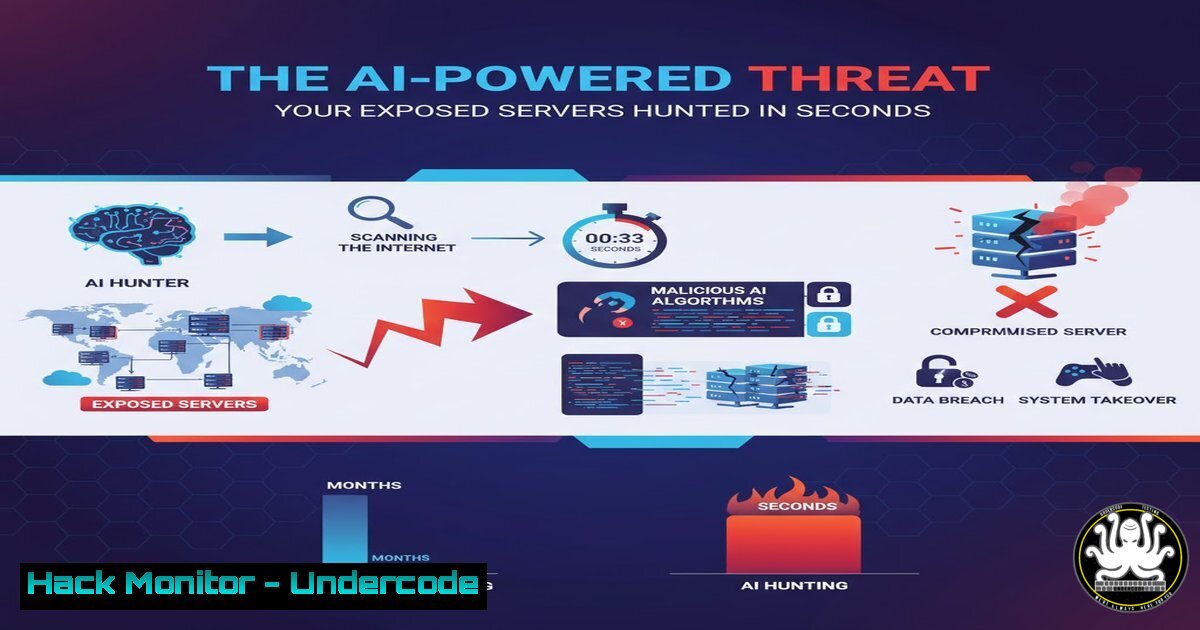
The advent of artificial intelligence has fundamentally reshaped the cybersecurity battlefield, automating the reconnaissance and vulnerability identification phases that were once labor-intensive for attackers. Every internet-facing asset—from forgotten domains to unpatched web servers—is now a high-value target for AI-driven systems that operate with relentless speed and precision. This new reality demands a proactive and hardened defense posture, where asset visibility and continuous security are no longer best practices but absolute necessities for survival.
Learning Objectives:
- Understand how AI is weaponized for automated asset discovery and vulnerability exploitation.
- Learn practical steps to discover, inventory, and secure all internet-facing assets.
- Implement hardening techniques for common services like SSH, web servers, and DNS to reduce the attack surface.
You Should Know:
1. The New Reality of AI-Powered Reconnaissance
The “age of AI” that Andy Jenkinson describes means that cybercerniminals are no longer manually scanning IP ranges. They deploy bots and AI tools that can continuously crawl the entire internet, cataloging every available service, its version, and potential misconfigurations within moments of it coming online. This automation has compressed the time between asset exposure and exploitation from months to seconds.
Step-by-Step Guide: Discovering Your Own Attack Surface
Before attackers can find your vulnerabilities, you must find them first. This process, called external attack surface management, begins with self-discovery.
Step 1: Enumerate Your Domains and IP Ranges. Start by listing all your registered domains and public IP address blocks. Use tools like `amass` or `subfinder` to discover subdomains you may have forgotten.
Linux/macOS Command (using Amass):
 Perform passive subdomain enumeration
amass enum -passive -d yourcompany.com -o domains.txt
What it does: This command passively queries various sources (like certificate transparency logs and DNS) to find subdomains associated with `yourcompany.com` without sending direct traffic to your target.
Step 2: Port Scan Your Discovered Assets. Once you have a list of domains and IPs, scan them to find open ports and running services.
Linux/macOS Command (using Nmap):
 Perform a comprehensive scan of the top 1000 ports
nmap -sS -sV -O -iL domains_ips.txt -oA network_scan
What it does: This `nmap` command performs a SYN scan (-sS), attempts service version detection (-sV), and OS fingerprinting (-O) on all targets listed in the `domains_ips.txt` file. The output (-oA) provides a detailed inventory of what is exposed.
- Prioritizing and Patching: The Race Against Automated Exploitation
An unpatched vulnerability is a “flashing beacon” for AI systems. These tools are instantly updated with the latest Common Vulnerabilities and Exposures (CVEs) and can weaponize them against any system matching the fingerprint.
Step-by-Step Guide: Implementing a Aggressive Patching Strategy
Step 1: Vulnerability Scanning. Use a scanner to cross-reference your service versions with known vulnerabilities.
Tool Example: Nessus, OpenVAS, or `nmap` NSE scripts.
Linux/macOS Command (using Nmap NSE):
 Check for common vulnerabilities using nmap scripts
nmap -sV --script vuln target_ip -oN vulnerability_scan.txt
What it does: This runs a suite of vulnerability detection scripts against the target_ip, highlighting potential security issues based on the service versions found.
Step 2: Establish a Patch Management Policy. For critical internet-facing systems, a 48-hour patching SLA for high-severity vulnerabilities is no longer extreme; it’s essential. Automate where possible, especially for operating system updates.
Linux Command (Ubuntu/Debian):
 Schedule automatic security updates
sudo dpkg-reconfigure -plow unattended-upgrades
Windows Command (PowerShell as Administrator):
 Install the PSWindowsUpdate module and install all updates
Install-Module PSWindowsUpdate -Force
Get-WindowsUpdate -AcceptAll -Install -AutoReboot
- Hardening Internet-Facing Services: Treating Every System as Critical
Default configurations are a primary source of compromise. Hardening involves systematically reducing the available options for an attacker.
Step-by-Step Guide: Basic Hardening for a Web Server (NGINX)
Step 1: Remove Server Tokens. Prevent the server from broadcasting its version information.
Action: In the `nginx.conf` file, add the line: `server_tokens off;`
Step 2: Implement Security Headers. Headers like HTTP Strict Transport Security (HSTS) and Content Security Policy (CSP) can mitigate common web attacks.
Action: Add to your server block in the NGINX configuration.
add_header Strict-Transport-Security "max-age=63072000; includeSubDomains; preload";
add_header X-Frame-Options DENY;
add_header X-Content-Type-Options nosniff;
4. Securing Administrative Gateways: SSH and RDP
SSH and Remote Desktop Protocol (RDP) are prime targets for brute-force attacks. AI can make these attacks more efficient by focusing on known weak credentials.
Step-by-Step Guide: Hardening SSH Access
Step 1: Disable Password Authentication. Enforce key-based authentication, which is cryptographically stronger.
Action: Edit `/etc/ssh/sshd_config` and set:
PasswordAuthentication no
ChallengeResponseAuthentication no
PubkeyAuthentication yes
Step 2: Implement a Fail2Ban Jail. Automatically block IPs that exhibit malicious scanning behavior.
Action: Create a jail for SSH in /etc/fail2ban/jail.local:
[bash]
enabled = true
port = ssh
filter = sshd
logpath = /var/log/auth.log
maxretry = 3
bantime = 3600
5. DNS Security: The Forgotten Domain
As an expert in DNS vulnerabilities, Jenkinson highlights that a compromised DNS record can lead to full domain takeover, enabling phishing, email interception, and service disruption.
Step-by-Step Guide: Auditing Your DNS Configuration
Step 1: Check for DNSSEC Adoption. DNSSEC adds a layer of cryptographic authentication to DNS responses, preventing poisoning attacks.
Command: Use `dig` to check for DNSSEC records:
dig +dnssec DNSKEY yourcompany.com
Step 2: Audit for Dangling DNS Records. Ensure all your DNS records (especially CNAMEs) point to active, owned resources. Records pointing to deleted cloud resources (S3 buckets, Azure apps) can be claimed by an attacker.
What Undercode Say:
- Obscurity is Oblivion. Relying on the fact that attackers won’t find your forgotten asset is a catastrophic strategy. AI has made 100% visibility a non-negotiable requirement for the defender.
- Defense Must Be Proactive and Automated. The speed of AI-driven attacks means human-scale response is insufficient. Defensive measures like automated patching, system hardening, and continuous monitoring must be baked into the operational lifecycle of every internet-facing system.
The core analysis is that the strategic advantage has shifted decisively to the offense. The cost and effort for attackers to perform comprehensive, continuous reconnaissance have plummeted, while the defensive mandate has expanded to include the security of every single digital asset, no matter how minor it may seem. Jenkinson’s post is not a warning of a future problem; it is a description of the current operational environment. The “predictable outcome of neglect” is the most critical concept—organizations can no longer claim to be surprised by breaches resulting from known, unaddressed exposures.
Prediction:
In the next 12-24 months, we will see a dramatic rise in fully automated “breach chains,” where AI systems will not only find vulnerabilities but also sequentially exploit them without human intervention. For example, a system will find an exposed server, identify a specific software version with a known RCE (Remote Code Execution) flaw, deploy the exploit, elevate privileges, and exfiltrate data—all within minutes. This will force the widespread adoption of AI-powered defense systems that can autonomously detect, isolate, and patch vulnerable systems in real-time, leading to an AI-vs-AI cyber arms race. The survival of digital enterprises will depend on their ability to integrate and trust these automated defensive systems.
🎯Let’s Practice For Free:
IT/Security Reporter URL:
Reported By: Andy Jenkinson – Hackers Feeds
Extra Hub: Undercode MoN
Basic Verification: Pass ✅


