Listen to this Post
Introduction:
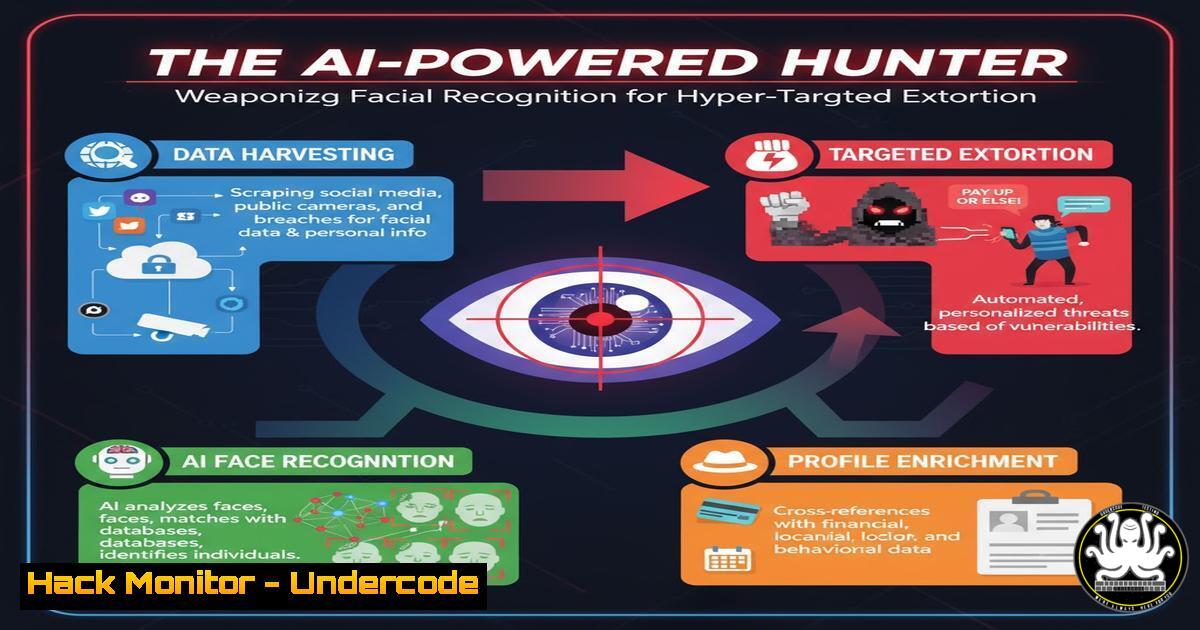
The convergence of artificial intelligence and cybersecurity is no longer a future concept; it is the present battlefield. A provocative vision of ransomware operatives using AI-powered glasses for real-time facial recognition and target identification underscores a paradigm shift from broad-spectrum attacks to hyper-personalized cyber-physical threats. This article deconstructs this emerging attack vector, exploring the underlying technologies and providing critical mitigation strategies for individuals and organizations.
Learning Objectives:
- Understand the components and feasibility of AI-driven reconnaissance and extortion attacks.
- Learn practical commands and tools to audit and harden your digital footprint against OSINT (Open-Source Intelligence) gathering.
- Implement technical controls to mitigate the risks associated with facial recognition and data aggregation platforms.
You Should Know:
1. The Anatomy of an AI-Powered Hunter-Killer Attack
The scenario described is not science fiction but an extrapolation of existing, commoditized technologies. The attack chain can be broken down into:
1. Data Collection: AI-powered glasses with integrated cameras capture video feed in real-time.
2. Facial Recognition: The feed is processed locally or via a secure channel to a C2 (Command and Control) server running a facial recognition API (e.g., AWS Rekognition, Azure Face API, or an open-source alternative like DeepFace).
3. OSINT Correlation: The identified face is cross-referenced against a vast database of scraped public information from LinkedIn, social media, data brokers, and leaked corporate directories to determine employment, marital status, and estimated wealth.
4. Target Prioritization & Engagement: High-value targets are flagged, and the operator receives real-time alerts with a dossier, enabling immediate social engineering or preparation for a digital attack.
Step-by-Step Guide to Simulate the Reconnaissance Phase (Ethical Use Only):
An attacker can build a target list without ever stepping outside. Here is how they might use a publicly available photo and OSINT tools.
Step 1: Obtain a Target Image.
This could be a corporate headshot, a photo from a conference website, or a social media profile picture.
Step 2: Perform a Reverse Image Search.
Use tools like pinterest.com, Google Lens, or Yandex Images to find other instances of the image online, revealing associated accounts and identities.
Command-Line Alternative (Using `curl` and `tesseract` for automation):
 Download an image from a known source (for demonstration, always ensure you have permission)
curl -o target_image.jpg "https://example.com/photo.jpg"

If the image contains text (like a name tag), use OCR to extract it
tesseract target_image.jpg output_text
cat output_text.txt
Step 3: Scrape LinkedIn and Social Media.
Tools like `linkedin2username` or Sherlock can find associated social media profiles.
 Using Sherlock to find username across platforms (Install via: pip install sherlock-project)
sherlock "John.Doe"
Step 4: Query Data Broker Lookup Services.
While full records are paid, initial lookups can be automated with tools like Holehe to check for email account associations.
 Check if an email is associated with various online platforms
holehe --no-color [email protected]
- Building Your Digital Fortress: Locking Down Public Data
The most effective defense is to minimize the attacker’s available data. This involves a proactive approach to data hygiene.
Step-by-Step Guide to Reducing Your Attack Surface:
Step 1: Audit Your Public Footprint.
Regularly Google your own name, email addresses, and usernames. Perform reverse image searches on your profile pictures.
Step 2: Harden Social Media Privacy Settings.
LinkedIn: Go to `Settings & Privacy` > `Visibility` > Edit your public profile. Disable public visibility. Under Data Privacy, limit data collection and advertising.
Facebook/Instagram: Set all profiles to “Private” and review tags and past posts.
Step 3: Opt-Out of Data Brokers.
This is a manual but critical process. Start with major brokers like:
Spokeo
Whitepages
Intelius
PeopleFinder
Each site has a unique opt-out procedure, often requiring email verification and a link confirmation.
3. Technical Hardening: Defending Against Facial Recognition
While complete anonymity is difficult, you can increase the cost and complexity for an adversary.
Step-by-Step Guide to Technical Countermeasures:
Step 1: Use VPNs and Privacy-Focused Browsers.
A reputable VPN (e.g., Mullvad, ProtonVPN) masks your IP address. Browsers like Brave or Firefox with strict privacy settings block trackers that correlate your online activity.
Step 2: Advocate for and Implement Corporate Policy.
Organizations should:
Limit High-Resolution Public Photos: Use group shots or avatars for public-facing team pages.
Implement DMARC, DKIM, and SPF Records: This prevents email spoofing, a common follow-up to targeted reconnaissance.
Conduct Phishing Simulations: Regularly test employees with hyper-realistic, targeted phishing campaigns.
4. The Cloud API Security Gap
The facial recognition in our scenario relies on cloud APIs. Securing these services is paramount for developers to prevent their misuse by attackers.
Step-by-Step Guide to Secure API Implementation:
Step 1: Implement Strict Rate Limiting.
Prevent automated scraping by limiting the number of API requests per API key or IP address.
Example using Express.js middleware:
const rateLimit = require("express-rate-limit");
const faceApiLimiter = rateLimit({
windowMs: 15  60  1000, // 15 minutes
max: 10, // limit each IP to 10 requests per windowMs
message: "Too many face recognition requests from this IP"
});
app.use("/api/face-recognize", faceApiLimiter);
Step 2: Use API Keys and Strong Authentication.
Never leave APIs open. Use API keys, OAuth 2.0, or similar authentication mechanisms. Rotate keys regularly.
Step 3: Monitor for Anomalous Activity.
Use logging and monitoring tools (e.g., AWS CloudTrail, Azure Monitor) to detect unusual patterns, such as a single key making thousands of requests from a new geographic location.
5. The Defender’s Mindset: Assume Compromise and Prepare
As the original post states, “build for compromise and stay ready.” This is the core of a resilient security posture.
Step-by-Step Guide to Building a Resilient Posture:
Step 1: Segment Your Network.
Ensure that a breach in one segment (e.g., the guest Wi-Fi) does not provide access to critical systems (e.g., finance or R&D servers).
Step 2: Enforce the Principle of Least Privilege (PoLP).
Users and applications should only have the access levels absolutely necessary to perform their functions. Use the following commands to audit privileges.
Linux: Check `sudo` privileges with `sudo -l` and review group memberships with `groups` and id.
Windows (PowerShell): Audit local group membership, especially for Administrator accounts.
Get-LocalGroupMember -Group "Administrators"
Get-LocalGroupMember -Group "Remote Desktop Users"
Step 3: Have an Incident Response (IR) Plan.
Document and practice your response to a security incident. This includes communication plans, isolation procedures, and recovery steps.
What Undercode Say:
- The distinction between cyber and physical security is dissolving. The next wave of attacks will leverage AI to bridge this gap, creating personalized, real-world consequences from digital reconnaissance.
- Defense can no longer be passive. A proactive, continuous effort to manage one’s digital footprint is as critical as any firewall or antivirus software. Privacy is the new perimeter.
The vision of AI-powered hunters is a stark reminder that technology is a dual-use tool. The same AI that powers life-saving medical diagnostics can be twisted for malicious extortion. The defense lies not in a single silver bullet but in a layered strategy combining technical controls, stringent data hygiene, and a cultural shift towards security awareness. The time to build these defenses was yesterday; the next best time is now.
Prediction:
By 2030, we will see the first major publicized case of a “cyber-physical bounty” attack, where criminals use real-time AI-driven facial recognition in a crowded, high-net-worth environment (like a financial district or an exclusive airport lounge) to identify and immediately compromise targets. This will force a massive industry shift towards privacy-enhancing technologies (PETs), stricter regulations on biometric data, and the widespread adoption of “digital invisibility” as a service for at-risk executives and individuals. The arms race between AI-powered offense and AI-augmented defense will define the next decade of cybersecurity.
🎯Let’s Practice For Free:
IT/Security Reporter URL:
Reported By: Theonejvo The – Hackers Feeds
Extra Hub: Undercode MoN
Basic Verification: Pass ✅


