Listen to this Post
Introduction:
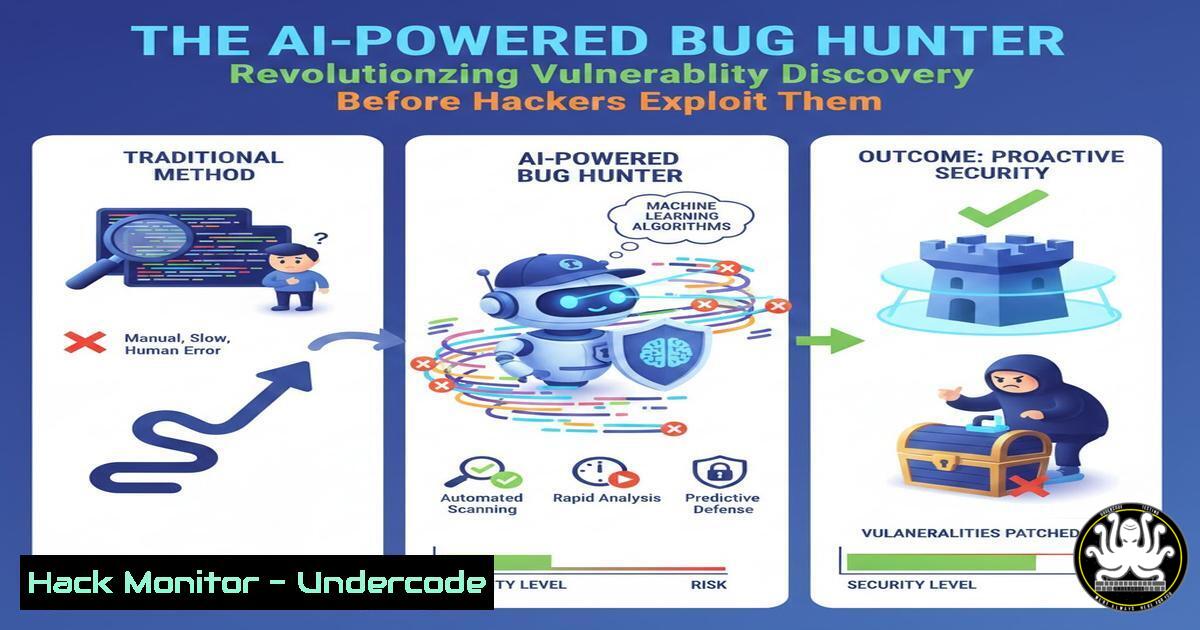
The cybersecurity landscape is shifting from reactive patching to proactive, intelligent hunting. Artificial intelligence is now being integrated directly into crowdsourced security platforms, fundamentally changing how vulnerabilities are discovered and remediated. This new paradigm leverages machine learning to augment human expertise, accelerating the race to find flaws before malicious actors can weaponize them.
Learning Objectives:
- Understand how AI is being integrated into bug bounty platforms like Bugcrowd to assist human researchers.
- Learn the practical methodologies for leveraging AI tools in your own vulnerability discovery workflows.
- Identify the new classes of vulnerabilities and attack surfaces that AI-powered tooling can effectively target.
You Should Know:
1. The New Arsenal: AI-Powered Reconnaissance and Analysis
The initial phase of any bug bounty hunt—reconnaissance—has been dramatically accelerated by AI. Instead of manually sifting through subdomains and endpoints, hunters can now deploy intelligent agents that continuously map and classify attack surfaces.
Step‑by‑step guide explaining what this does and how to use it.
Subdomain Enumeration with AI-Assisted Tools: Tools like `amass` and `subfinder` can be integrated with custom AI models to predict and discover obscure subdomains.
 Basic amass enumeration
amass enum -d target.com -passive -o subdomains.txt

Using AI-enhanced wordlists with gobuster for brute-forcing
git clone https://github.com/assetnote/ai-wordlists.git
gobuster dns -d target.com -w ai-wordlists/superlist.txt -o ai_subdomains.txt -t 50
Endpoint Discovery and Prioritization: After gathering subdomains, AI can help prioritize which endpoints to test first based on historical vulnerability data and functional context.
 Crawl a target and filter outputs for analysis
katana -u https://target.com -o crawled_urls.txt
 Use a simple Python script with a risk-scoring model (conceptual) to prioritize
python3 prioritize_urls.py crawled_urls.txt > high_risk_urls.txt
2. Intelligent Fuzzing: Beyond Simple Payloads
Traditional fuzzing involves blasting a target with random data. AI-powered fuzzing, however, uses models trained on known vulnerability patterns to generate intelligent, context-aware payloads that are more likely to trigger anomalous behavior.
Step‑by‑step guide explaining what this does and how to use it.
Setting up a Smart Fuzzer: Tools like `ffuf` can be supercharged with AI-generated wordlists.
 Standard fuzzing
ffuf -w common_wordlists.txt -u https://target.com/FUZZ

Using an AI-refined wordlist for API endpoints
ffuf -w ai-api-wordlist.txt -u https://target.com/api/v1/FUZZ -mc 200,403
API Fuzzing with Schemas: AI can parse OpenAPI (Swagger) specifications to understand an API’s structure and generate semantically valid but malicious inputs for every endpoint.
 Use a tool like 'schemathesis' which uses the API schema for intelligent testing
schemathesis run https://api.target.com/schema.yaml --checks all
3. Automated Code Analysis and Pattern Recognition
Static Application Security Testing (SAST) is being transformed by AI’s ability to recognize complex code vulnerability patterns that traditional scanners miss, including business logic flaws.
Step‑by‑step guide explaining what this does and how to use it.
Leveraging AI-Augmented Code Scanners: While fully automated AI code review is nascent, you can use tools that hint at this future.
 Using 'semgrep' with custom rules, which can be generated using AI analysis of past bugs
semgrep --config=p/ci python
 Using 'codeql' which uses semantic analysis to find variants of vulnerabilities
codeql database create /tmp/codeql-db -l python
codeql database analyze /tmp/codeql-db --format=sarif-latest --output=results.sarif codeql/python-queries:codeql-suites/python-security-and-quality.qls
4. Bypassing Modern Defenses with Adversarial AI
Just as AI helps defenders, it can be used by attackers to create payloads that evade Web Application Firewalls (WAFs) and other security controls. Understanding this is key to defending against it.
Step‑by‑step guide explaining what this does and how to use it.
Crafting Obfuscated Payloads: Simple obfuscation can be automated, but AI can generate highly complex, novel obfuscations.
 A simple example of encoding a payload to bypass naive filters
echo "cat /etc/passwd" | base64
 Y2F0IC9ldGMvcGFzc3dkCg==
 Then use in a command injection context: `echo Y2F0IC9ldGMvcGFzc3dkCg== | base64 -d | bash`
Adversarial SQLi Example: AI can be trained to generate SQL injection strings that don’t contain obvious keywords like `UNION` or `SELECT` but achieve the same result.
5. The Human-in-the-Loop: Triaging and Validation
The most effective current use of AI in bug bounties is in triage. Platforms use ML models to classify incoming submissions, weed out duplicates, and validate low-hanging false positives, allowing human triagers to focus on complex, high-impact vulnerabilities.
Step‑by‑step guide explaining what this does and how to use it.
Writing AI-Friendly Bug Reports: To interact effectively with these systems, your reports must be clear and structured.
Clear and concise (e.g., “SQL Injection in /api/user Endpoint via `id` parameter”).
Steps to Reproduce: Numbered, unambiguous steps with clear payloads and HTTP requests/responses.
Impact: A clear explanation of the business and technical impact. This data trains the AI on what constitutes a valid, high-severity finding.
6. Cloud Misconfiguration Hunter
AI excels at analyzing vast, complex environments like cloud infrastructure (AWS, Azure, GCP) to detect misconfigurations that violate security best practices and could lead to data breaches.
Step‑by‑step guide explaining what this does and how to use it.
Using `scoutsuite` for Cloud Security Posture Management: This tool automates the auditing process.
 Install and run Scout Suite against an AWS environment
pip install scoutsuite
scout aws --access-keys-id AKIA... --secret-access-key ...
The tool generates a comprehensive HTML report, but an AI layer can be added to prioritize findings based on exploitability and potential impact, reducing alert fatigue.
7. Building Your Own AI Bug Hunting Assistant
While platform-level AI is powerful, you can build custom scripts and workflows to augment your own process using publicly available ML models and APIs.
Step‑by‑step guide explaining what this does and how to use it.
A Simple Python Script for Log Analysis: Use a library like `transformers` to classify logs.
 Example: Using a sentiment analysis model to find error logs that indicate potential security issues (conceptual)
from transformers import pipeline

classifier = pipeline("text-classification", model="j-hartmann/emotion-english-distilroberta-base")
log_entries = ["User login successful", "ERROR: SQL syntax error near '1'", "Password change failed"]

for log in log_entries:
result = classifier(log)
if result[bash]['label'] in ['anger', 'fear']:  These might correlate with security errors
print(f"Security-relevant log: {log} -> {result[bash]}")
What Undercode Say:
- The democratization of advanced vulnerability discovery is imminent. AI is lowering the barrier to entry, allowing less experienced researchers to find valid bugs and forcing veterans to specialize in complex, logic-based attacks that AI cannot yet comprehend.
- The defender’s advantage is shifting from obscurity to intelligence. Relying on “security through obscurity” is a failing strategy. The only sustainable defense is a robust, continuously monitored security posture that can adapt as fast as the AI-powered offensive tools.
Analysis:
The integration of AI into bug bounty platforms is not a futuristic concept; it is a present-day reality that is creating a seismic shift in the economics of cybersecurity. For ethical hackers, it represents a powerful force multiplier, automating the tedious aspects of reconnaissance and fuzzing and freeing up cognitive resources for deep, creative problem-solving. For organizations, it means that the volume and sophistication of attacks will increase, making robust vulnerability management programs non-negotiable. The key takeaway is that the human element remains irreplaceable—AI is a tool that augments, not replaces, the intuition, experience, and creativity of a skilled security researcher. The future belongs to those who can most effectively partner with these new intelligent systems.
Prediction:
Within the next 18-24 months, we will see the first fully autonomous AI agent that can discover, exploit, and write a comprehensive report for a critical, novel vulnerability in a production system. This will trigger an arms race, leading to the development of defensive AI systems capable of predicting attack paths and auto-remediating vulnerabilities in real-time, fundamentally moving the industry towards a model of “self-healing” infrastructure. Bug bounty platforms will evolve into continuous, AI-driven penetration testing environments, blurring the lines between traditional security assessments and ongoing crowdsourced defense.
🎯Let’s Practice For Free:
IT/Security Reporter URL:
Reported By: Mohammed Ashraf – Hackers Feeds
Extra Hub: Undercode MoN
Basic Verification: Pass ✅


