
Listen to this Post
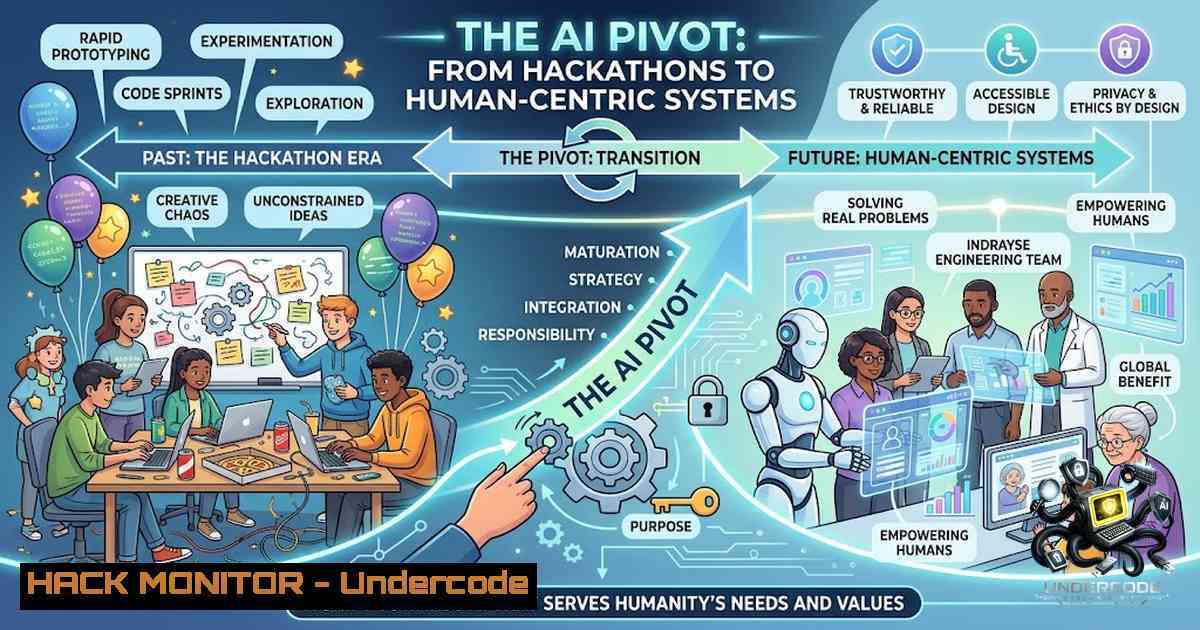
Introduction:
The artificial intelligence landscape is undergoing a critical transition, moving away from the glamour of standalone model launches and experimental hackathons toward the gritty reality of enterprise integration and strategic leadership. This shift, highlighted by technologist Mansi More’s decision to prioritize a content strategy event over a Gemini x Exa hackathon, underscores a growing industry consensus: the future of AI depends less on raw computational power and more on the systems, communication, and human-centric frameworks that make it useful. For security professionals and IT leaders, this evolution demands a parallel pivot—from securing isolated proof-of-concepts to hardening complex, interconnected production systems where AI APIs, cloud infrastructure, and data pipelines are the new attack surface.
Learning Objectives & Secrets:
- Objective 1: Understanding the Strategic Shift. Learn to identify and articulate the transition from AI experimentation to enterprise-grade implementation, recognizing that successful AI adoption is now a multidisciplinary challenge involving leadership, storytelling, and risk management.
- Objective 2 Secret Tips: Master the art of the “Security-First Conversation.” When discussing AI strategy, frame every technical feature (like model access or data retrieval) in terms of its security and compliance implications to gain executive buy-in and ensure safe deployment.
- Objective 3 Secret Tips: Leverage the “Content as Infrastructure” mindset. In cybersecurity, clear communication and documentation of AI systems are not luxuries but critical components of a robust security posture. Automating threat intelligence reporting and incident response communication can be a force multiplier.
You Should Know
1. Hardening the AI API Gateway
The shift to enterprise AI often involves deploying applications via APIs (like Gemini or Exa). These endpoints become prime targets for injection attacks, data exfiltration, and denial-of-service. The first step is securing the gateway that routes all traffic to these AI services.
- Step 1: Implement Strict Authentication. Move beyond simple API keys. Use OAuth 2.0 with short-lived tokens and implement mutual TLS (mTLS) for service-to-service communication to ensure both the client and server are verified.
- Step 2: Enforce Rate Limiting and Quotas. AI APIs are costly. Unrestricted access can lead to financial drain and resource exhaustion. Configure your API gateway to limit requests per user and implement a circuit breaker pattern.
- Step 3: Deploy a Web Application Firewall (WAF) with AI-Specific Rules. Configure your WAF to inspect payloads for prompt injection attempts. For example, block requests containing patterns like `ignore previous instructions` or
system:. While no WAF catches everything, this adds a crucial layer.
2. Building a Secure Retrieval-Augmented Generation (RAG) Pipeline
Mansi More’s event focused on content creation, a domain increasingly powered by RAG. For enterprises, RAG involves connecting LLMs to internal databases. A poorly secured RAG pipeline is a direct route to a data leak.
- Step 1: Sanitize Data at Ingestion. Before any document enters a vector database for retrieval, it must be sanitized. Run it through a data loss prevention (DLP) tool to scan for PII, secrets, or classified information. Remove or redact this data at the source. A simple Linux command to scan for potential secrets in a text file is:
Scan for common secret patterns using grep grep -E 'AKIA[0-9A-Z]{16}|--BEGIN RSA PRIVATE KEY--|sk-[a-zA-Z0-9]{20,}' sensitive_document.txt - Step 2: Implement “Need-to-Know” Retrieval. When a user queries the system, do not let the vector database retrieve every relevant document blindly. Implement role-based access control (RBAC) at the retrieval level. The user’s context and permissions should be injected into the query to filter results before they are passed to the LLM.
- Step 3: Audit and Log All Queries and Retrieved Chunks. This is critical for forensic investigations. Your logging strategy should capture the user, the prompt, the documents retrieved, and the final response. This helps identify if sensitive data was exposed and how it was accessed.
3. Securing the Cloud Environment for AI Workloads
The hackathon referenced was for “Gemini x Exa,” highlighting the cloud-centric nature of AI. Securing this environment requires moving beyond basic IAM roles to a zero-trust model for AI workloads.
- Step 1: Use Workload Identity. Avoid storing long-lived service account keys in your application code or environment variables. Use workload identity federation where your application running on, say, Google Kubernetes Engine (GKE) can authenticate to other cloud services using a token that has a short lifespan. For local development, use the default application credentials or a short-lived token from the gcloud CLI:
Generate a short-lived access token (valid for 1 hour)
gcloud auth print-access-token
- Step 2: Enforce Network Segmentation. AI model endpoints and the data they access should be in private subnets. Use VPC Service Controls or Private Service Connect to prevent data from leaving your controlled network. Configure firewall rules to block all inbound traffic and only allow specific outbound connections to necessary APIs.
- Step 3: Implement Continuous Vulnerability Scanning. Model weights, containers, and base images can have vulnerabilities. Scan your container images in your CI/CD pipeline using tools like Trivy or Grype. This prevents vulnerable code from ever reaching the production environment.
4. Exa Search and Data Exfiltration Prevention
The “Exa” component of the hackathon likely involves search. Integrating a powerful search API into your applications creates a new risk of data exfiltration or unauthorized information retrieval.
- Step 1: Control Search Context. When connecting to an external search API, explicitly define the permitted search domains or data sources. This is done by setting parameters like `source=web` or
data_source_ids=.... An attacker might try to manipulate these, so treat user input for searches as an untrusted parameter. - Step 2: Implement Input Validation for Search Queries. Sanitize all search queries to prevent command injection (if the API calls internal systems) or SQL injection (if the search index is a database). Ensure you are using parameterized queries or safe API methods. For REST APIs, validate the `query` parameter against a regex of allowed characters.
- Step 3: Monitor for Abnormal Query Patterns. A sudden spike in queries, especially those containing employee names, project codenames, or document IDs, can indicate an insider threat or a compromised account. Set up alerting for these activities in your SIEM.
5. Automating Compliance and Monitoring for AI Pipelines
As AI moves into production, demonstrating compliance with regulations (like GDPR, HIPAA) becomes non-1egotiable. This process must be automated.
- Step 1: Implement Policy-as-Code. Define rules for your AI system’s behavior (e.g., “cannot process user data without explicit consent,” “must log all model predictions”). Use tools like Open Policy Agent (OPA) to enforce these policies across your API gateway, data pipelines, and model serving layer.
- Step 2: Harden the Model Serving Environment. Deploy your models on a hardened Linux server. For instance, a simple but crucial step is to disable unnecessary services and network ports.
Linux - Check for open ports and listening services
sudo ss -tulpn
Linux - Disable a service (e.g., if port 22 is externally exposed but not needed)
sudo systemctl disable ssh
- Step 3: Build a “Human-in-the-Loop” Control for Critical Decisions. For sensitive AI outputs (e.g., granting system access, making financial decisions), implement a manual approval queue. This mitigates the risk of a successful adversarial attack bypassing automated security controls.
What Undercode Say:
- Key Takeaway 1: The core of enterprise AI security is not about the model itself but about the entire ecosystem around it—from the API gateway to the vector database and the logging infrastructure. Securing the “system” is vastly more critical than securing the “brain.”
- Key Takeaway 2: The conversation highlighted by Mansi More is a call to action for CISOs and security architects. We must evolve from being gatekeepers of technology to strategic advisors who can communicate risk and build resilient systems that foster innovation safely. Our role is to enable the business, not to stifle it.
Prediction:
- +1: This strategic shift will lead to the emergence of new “AI Security Architect” roles, dedicated solely to defining, implementing, and auditing the security of AI systems throughout their lifecycle, creating a high-demand specialization.
- -1: The rapid adoption of enterprise AI will outpace the development of security frameworks and standards, leading to a significant increase in data breaches and compliance fines in the next 18-24 months as organizations struggle to secure complex pipelines.
- +1: The focus on content and storytelling within the AI community will drive better documentation and incident response processes for AI-related security incidents, improving overall readiness and reducing response times.
▶️ Related Video (92% Match):
🎯Let’s Practice For Free:
🎓 Live Courses & Certifications:
Join Undercode Academy for Verified Certifications
🚀 Request a Custom Project:
Secure, high-velocity infrastructure and disruptive technological engineering. Contact our engineering team for high-tier development and proprietary systems:
[email protected]
💎 Smart Architecture | 🛡️ Secure by Design | ⭐ Trusted by Thousands
IT/Security Reporter URL:
Reported By: https://lnkd.in/p/eZqri-vW – Hackers Feeds
Extra Hub: Undercode MoN
Basic Verification: Pass ✅


