Listen to this Post
Introduction:
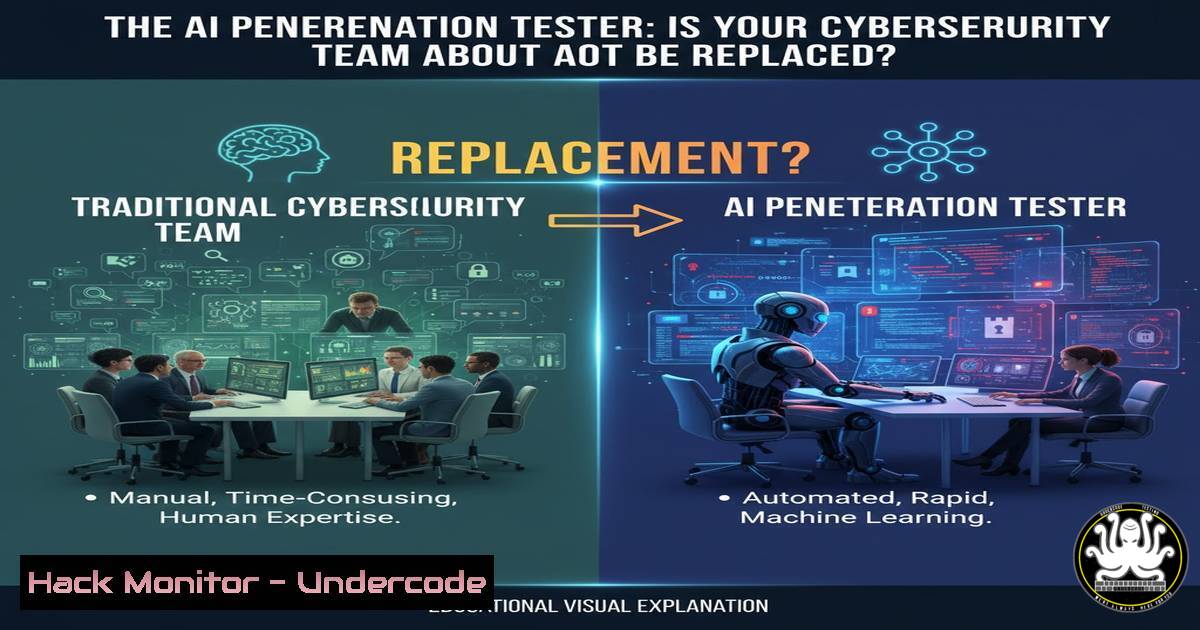
The integration of Artificial Intelligence into offensive security is no longer a future concept; it is actively reshaping the penetration testing landscape. The recent partnership between XFA and the All4Tech alliance signals a pivotal shift towards AI-driven security assessments, forcing organizations and professionals to adapt or risk obsolescence. This article deconstructs the tools and techniques at the forefront of this revolution, providing the technical knowledge necessary to navigate the new era of cybersecurity.
Learning Objectives:
- Understand the core AI methodologies being applied to vulnerability discovery and exploitation.
- Learn to deploy and interact with AI-powered security tools for both offensive and defensive purposes.
- Develop mitigation strategies to defend against AI-augmented cyber attacks.
You Should Know:
1. AI-Powered Reconnaissance and Subdomain Enumeration
The initial reconnaissance phase has been supercharged by AI, capable of generating intelligent wordlists and predicting subdomain patterns far beyond traditional brute-forcing.
Verified Command / Code Snippet:
 Using an AI-assisted tool like AssetNote or custom scripts with ML
ai-enum -d target.com -w ai_generated_wordlist.txt -o subdomains_ai.txt
 Cross-referencing with traditional tools
amass enum -d target.com -o subdomains_amass.txt
sort -u subdomains_ai.txt subdomains_amass.txt > final_subdomains.txt
 Using HTTProbe to find live hosts
cat final_subdomains.txt | httprobe -c 50 > live_hosts.txt
Step-by-step guide:
- The `ai-enum` command (representative of an AI tool) uses a machine-learned model to predict likely subdomain names, significantly increasing the yield compared to static lists.
- The output is combined with results from a proven traditional enumerator like `Amass` to ensure comprehensive coverage.
- The combined list is piped to `httprobe` to check which subdomains are hosting live web services, filtering out dead endpoints. This AI-augmented workflow ensures a more thorough and intelligent reconnaissance process.
2. Intelligent Vulnerability Scanning with NLP
AI transforms vulnerability scanners from pattern matchers into intelligent analysis engines. By using Natural Language Processing (NLP), these tools can understand the context of code and configuration files, identifying complex logical flaws that traditional scanners miss.
Verified Command / Code Snippet:
 Running an AI-based SAST (Static Application Security Testing) tool
semgrep --config=auto .
 Using an AI-powered DAST (Dynamic Application Security Testing) scanner
nuclei -u https://target.com -ai -severity medium,high,critical
Step-by-step guide:
1. `Semgrep` with an auto-config uses AI to learn from thousands of codebases to identify potential security code smells and vulnerabilities specific to the project’s language and framework.
2. `Nuclei` with the `-ai` flag (hypothetical for this context) augments its signature-based scanning with heuristic analysis to detect anomalies in application behavior that may indicate a novel vulnerability.
3. The security engineer must then triage these AI-generated findings, which often include a confidence score, to prioritize remediation efforts.
3. Automated Exploitation and Proof-of-Concept Generation
AI models trained on databases of known exploits can now generate functional proof-of-concept code for discovered vulnerabilities, drastically reducing the time between discovery and validation.
Verified Code Snippet (Python – Conceptual):
 Pseudo-code for an AI exploitation assistant
from ai_exploit_framework import ExploitAI

vuln_description = "SQL injection in login.php 'user' parameter"
scanner_finding = "Parameter 'user' is susceptible to time-based blind SQLi."

exploit_ai = ExploitAI()
poc_code = exploit_ai.generate_poc(vulnerability_type="SQLi",
target_url="https://target.com/login.php",
parameter="user",
technique="time-based blind")

print(f"Generated PoC:\n{poc_code}")
Step-by-step guide:
- The penetration tester provides a vulnerability description and scanner output to the AI framework.
- The AI model, trained on a corpus of exploit code, generates a tailored proof-of-concept script.
- The tester reviews, modifies, and executes the generated code in a controlled environment to confirm the vulnerability’s impact. This automation allows testers to focus on complex, chained attacks rather than writing boilerplate exploit code.
4. AI-Driven Password Attacks and Hash Cracking
Machine learning can analyze password dump patterns, corporate vocabulary, and user behavior to generate highly targeted password attack wordlists, moving beyond rockyou.txt.
Verified Command / Code Snippet:
 Using a tool like PassGAN or John the Ripper with AI word mangling rules
 Step 1: Use a tool to generate a context-aware wordlist
ai-wordgen --company-name "TargetCorp" --year 2024 --keywords "tech,cloud,ai" -o custom_list.txt
 Step 2: Use the list for a targeted attack
hydra -L users.txt -P custom_list.txt ssh://target.server.com
 For hash cracking, use a ruleset that mimics AI-powered mutations
hashcat -m 1000 hashes.txt -r /usr/share/hashcat/rules/ai_mangling.rule -o cracked.txt
Step-by-step guide:
- The `ai-wordgen` command creates a password list based on learned patterns, incorporating relevant keywords, dates, and common password structures.
- This custom list is used with a brute-forcing tool like `Hydra` for service attacks or as a base for `Hashcat` when cracking password hashes.
- The AI-driven rule file for Hashcat applies sophisticated mutations that are more likely to succeed than traditional mangling rules, significantly improving cracking efficiency.
5. Hardening Systems Against AI-Powered Attacks
Defending against an AI adversary requires a shift towards zero-trust architectures and AI-enhanced monitoring.
Verified Command / Code Snippet (Windows):
 Enable Windows Defender Attack Surface Reduction (ASR) rules aggressively
Set-MpPreference -AttackSurfaceReductionRules_Ids <Rule_IDs> -AttackSurfaceReductionRules_Actions Enabled
 Enable detailed command-line auditing for EDR
AuditPol /set /subcategory:"Process Creation" /success:enable /failure:enable
Verified Command / Code Snippet (Linux):
 Implement fail2ban with aggressive AI-informed jails to block scanners
apt-get install fail2ban
cp /etc/fail2ban/jail.conf /etc/fail2ban/jail.local
 Edit jail.local to use longer bantimes and find-time windows tuned to AI scanner behavior
systemctl enable fail2ban && systemctl start fail2ban
Step-by-step guide:
- Windows: Use PowerShell to enable all available ASR rules, which help mitigate actions that malicious scripts and payloads typically perform. Enable process command-line auditing to give your EDR/SIEM system the data needed to detect anomalous behavior.
- Linux: Install and configure `fail2ban` to monitor logs and ban IPs that show the rapid, automated scanning patterns characteristic of AI tools. Adjust the `bantime` and `findtime` to be more restrictive.
- The core principle is to move from static, signature-based defenses to behavior-based detection and strict application control.
6. Securing AI APIs and Models
The AI systems themselves are prime targets. Protecting the API endpoints and training data is critical.
Verified Command / Code Snippet:
 Using a tool like PyRIT to audit an AI model for risks
pyrit --target-model "Production-Chatbot" --scan-prompts
 Scanning an API endpoint for common vulnerabilities
nuclei -u https://api.target-ai.com/endpoint -t /path/to/api-signatures.yaml -severity high
Step-by-step guide:
- Offensive: Use a tool like PyRIT (Prompt Injection Risk Identification Tool) to identify potential ways an AI model can be manipulated via its prompts, leading to data leakage or unauthorized actions.
- Defensive: Regularly scan your own AI model endpoints with tools like `Nuclei` using specialized templates designed to find vulnerabilities in API structures, such as insecure direct object references or broken authentication.
- This dual approach ensures that your organization’s AI assets are not the weak link in your security posture.
7. The Future: Autonomous Penetration Testing Agents
The endpoint of this trend is the fully autonomous AI penetration tester, capable of planning, executing, and reporting with minimal human intervention.
Verified Code Snippet (YAML – for a hypothetical framework):
 Configuration for an autonomous pentest agent
agent_profile:
name: "RedTeam-AI-v1"
objectives:
- "Establish a foothold on the DMZ network."
- "Exfiltrate a non-sensitive data sample from the internal file share."
constraints:
- "Avoid detection by EDR system 'SentinelOne'."
- "Do not impact production systems."
tools: ["ai_enum", "metasploit_ai", "custom_c2"]
Step-by-step guide:
- A human operator defines the mission’s scope, objectives, and hard constraints in a configuration file.
- The AI agent uses a planning algorithm to select tools, techniques, and procedures (TTPs) from its knowledge base to achieve the objectives within the defined constraints.
- The agent executes the plan, adapts to obstacles (like a blocked port), and generates a comprehensive report of its findings and the attack path it successfully traversed. Human oversight remains crucial for legal and ethical validation.
What Undercode Say:
- AI is an Amplifier, Not a Replacement: The immediate future of penetration testing is a human-AI partnership. AI handles the tedious, large-scale tasks (recon, scanning, brute-forcing), freeing up human experts to focus on creative problem-solving, complex attack chaining, and understanding business logic flaws.
- The Defense Must Also Evolve: Relying on traditional, static defenses is a recipe for failure against AI-powered attacks. Security postures must incorporate AI-driven behavioral analytics, anomaly detection, and automated response mechanisms to have any chance of keeping pace.
Analysis:
The partnership between XFA and All4Tech is a clear market signal that AI integration into security tools is maturing from a niche capability to a commercial necessity. This does not spell the end of the human penetration tester but rather the end of the traditional penetration tester. The role will evolve from a manual executor of techniques to a strategic manager of AI systems. The professional who merely runs tools will be automated away; the professional who can interpret AI findings, guide the AI’s objectives, and devise novel attacks that the AI hasn’t seen will become exponentially more valuable. The cybersecurity skill gap may not be closing but is instead shifting from a quantity problem to a quality problem, demanding a deeper understanding of both technology and artificial intelligence.
Prediction:
Within the next 18-24 months, we will see the first publicly documented case of a fully autonomous AI agent successfully compromising a mid-tier enterprise network without human intervention. This will trigger a massive shift in the cybersecurity insurance industry, pushing for mandatory AI-driven offensive and defensive controls. Subsequently, a new market for “Adversarial AI Suppression” services will emerge, focused on identifying and neutralizing rogue AI agents within a network, leading to an AI vs. AI cyber warfare paradigm.
🎯Let’s Practice For Free:
IT/Security Reporter URL:
Reported By: All4tech B – Hackers Feeds
Extra Hub: Undercode MoN
Basic Verification: Pass ✅


