Listen to this Post
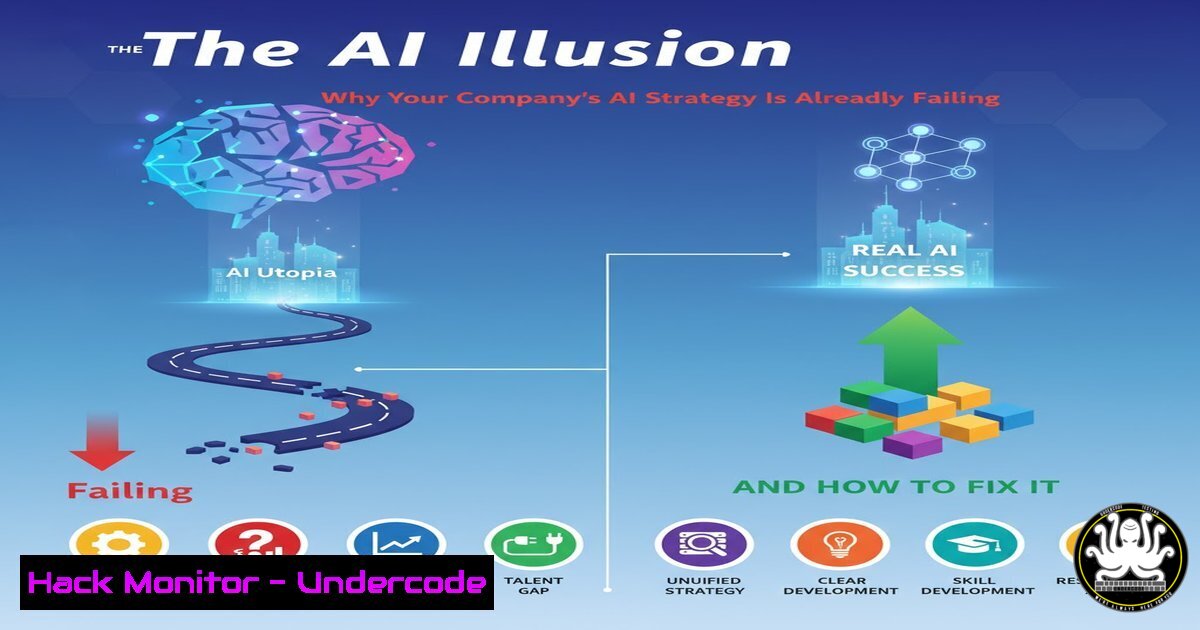
Introduction:
The corporate race to integrate Artificial Intelligence has created a dangerous gap between technological potential and practical implementation. While organizations scramble to deploy AI solutions, most fail to understand that AI serves as a strategic enhancer rather than a standalone product. This disconnect between expectation and reality leaves companies vulnerable to operational failures and security gaps in their AI deployments.
Learning Objectives:
- Distinguish between AI as a strategic concept versus a plug-and-play product
- Implement proper prompt engineering and context-building techniques for security applications
- Build and train specialized AI models using Deep Reinforcement Learning and NLP frameworks
You Should Know:
1. The Strategic AI Implementation Framework
The fundamental failure in most AI deployments stems from treating artificial intelligence as a finished product rather than a continuous strategic process. Organizations that succeed with AI integration understand it requires ongoing context refinement and specialized training tailored to their specific operational needs, particularly in cybersecurity applications.
Step‑by‑step guide:
- Conduct a capability gap analysis: Identify specific security processes that would benefit from AI enhancement (threat detection, log analysis, vulnerability assessment)
- Develop a data strategy: Curate relevant datasets including threat intelligence feeds, historical incident data, and operational context
- Implement phased deployment: Start with non-critical systems and gradually expand to sensitive operations
- Establish continuous feedback loops: Create mechanisms for human oversight and model retraining
Example implementation for security log analysis:
 Basic AI security log analyzer framework
import pandas as pd
from sklearn.ensemble import IsolationForest
from transformers import pipeline

class SecurityLogAnalyzer:
def <strong>init</strong>(self):
self.anomaly_detector = IsolationForest(contamination=0.1)
self.nlp_analyzer = pipeline("text-classification",
model="distilbert-base-uncased-finetuned-sst-2-english")

def train_security_model(self, log_data):
 Feature engineering from log entries
features = self.extract_log_features(log_data)
self.anomaly_detector.fit(features)

def analyze_real_time(self, log_entry):
anomaly_score = self.anomaly_detector.predict([bash])
sentiment_analysis = self.nlp_analyzer(log_entry['message'])
return {'anomaly': anomaly_score, 'context': sentiment_analysis}
2. Advanced Prompt Engineering for Security Operations
Most security teams fail to leverage AI’s potential because they use vague, underspecified prompts that generate generic responses. Effective AI interaction requires structured context building and domain-specific terminology that guides the model toward security-focused analysis and actionable insights.
Step‑by‑step guide:
- Define the security context explicitly: Specify the threat model, asset criticality, and compliance requirements
- Structure prompts with clear role definition: “Act as a CISO analyzing potential GDPR violations in this log data”
- Implement chain-of-thought prompting: Break complex security analysis into sequential reasoning steps
- Incorporate guardrails and validation criteria: Define acceptable response formats and verification steps
Example security analysis prompts:
BASIC PROMPT (INEFFECTIVE):
"Analyze these logs"

ADVANCED PROMPT (SECURITY-FOCUSED):
"As a senior security analyst with 10 years of experience in financial sector threat intelligence, analyze the following Windows security logs for indicators of lateral movement. Focus on:
1. Authentication patterns between 02:00-04:00 UTC
2. Service account privilege escalation attempts
3. Network connections to known malicious IP ranges
Format findings as MITRE ATT&CK techniques with confidence scores and recommend immediate containment actions."
- Building Custom AI Models with Deep RL and NLP
Off-the-shelf AI models provide limited value for specialized security operations because they lack domain-specific context. Organizations serious about AI implementation must invest in building custom models using Deep Reinforcement Learning and Natural Language Processing concepts tailored to their unique threat landscape and operational requirements.
Step‑by‑step guide:
- Collect and label specialized security datasets: Curate examples of normal vs. malicious activity
- Implement Deep RL for adaptive threat response: Train models that learn from security analyst feedback
- Fine-tune NLP models on security documentation: Adapt language models to understand technical security content
- Develop fallback mechanisms: Create rules-based systems for scenarios where AI confidence is low
Linux environment setup for security AI development:
 Install required dependencies for security AI development
sudo apt-get update
sudo apt-get install python3-pip git build-essential cmake
pip3 install torch torchvision torchaudio --extra-index-url https://download.pytorch.org/whl/cu113
pip3 install transformers datasets scikit-learn pandas numpy

Clone security AI frameworks
git clone https://github.com/huggingface/transformers.git
git clone https://github.com/microsoft/CyberBattleSim

Set up specialized security NLP model
python3 -c "
from transformers import AutoTokenizer, AutoModelForSequenceClassification
tokenizer = AutoTokenizer.from_pretrained('microsoft/CodeBERT-base')
model = AutoModelForSequenceClassification.from_pretrained('microsoft/CodeBERT-base', num_labels=2)
model.save_pretrained('./security_code_analyzer')
"
4. Enterprise AI Security Hardening
Deploying AI systems introduces new attack surfaces and security vulnerabilities that most organizations overlook. From model poisoning to prompt injection attacks, AI implementations require specialized security controls and monitoring that go beyond traditional IT security practices.
Step‑by‑step guide:
- Implement model integrity verification: Use cryptographic hashing to detect unauthorized model modifications
- Establish input sanitization pipelines: Validate and clean all data inputs to prevent injection attacks
- Deploy AI-specific monitoring: Track model drift, confidence scores, and anomalous output patterns
- Conduct regular red team exercises: Test AI systems against adversarial attacks and evasion techniques
Windows PowerShell commands for AI model security:
 Verify model integrity using SHA256 hashing
Get-FileHash -Path "C:\AI_Models\threat_detector.pt" -Algorithm SHA256

Monitor AI service network connections
Get-NetTCPConnection | Where-Object {$_.OwningProcess -eq (Get-Process -Name "python").Id}

Set up audit logging for AI model access
auditpol /set /subcategory:"Other Object Access Events" /success:enable /failure:enable

Configure constrained endpoints for AI API access
New-NetFirewallRule -DisplayName "AI_Model_API" -Direction Inbound -Protocol TCP -LocalPort 8000 -Action Allow -Profile Domain
5. Operationalizing AI in Security Teams
The transition from AI experimentation to production deployment represents the most significant challenge for security organizations. Successful operationalization requires changes to team structure, workflow integration, and performance metrics that account for AI-assisted operations rather than purely human-driven processes.
Step‑by‑step guide:
- Redesign security workflows: Integrate AI tools into existing SOC processes and incident response playbooks
- Develop AI proficiency training: Upskill security analysts in prompt engineering and model interpretation
- Establish new KPIs: Measure AI-assisted detection rates and false positive reduction
- Create feedback mechanisms: Implement structured processes for improving AI performance based on analyst input
Integration with SIEM systems:
 Example integration with Splunk for AI-enhanced alerting
import splunklib.client as client
import json

class AIModelSIEMIntegration:
def <strong>init</strong>(self, siem_config):
self.service = client.connect(siem_config)
self.ai_models = self.load_security_models()

def enhance_alerts_with_ai(self, search_query):
 Retrieve recent security events
jobs = self.service.jobs
search_query = f"search {search_query} | head 1000"
job = jobs.create(search_query)

while not job.is_done():
time.sleep(0.5)

results = job.results()
ai_analysis = self.ai_models.analyze_collective_threat(results)
return self.prioritize_alerts(ai_analysis)
6. Measuring AI ROI in Security Context
Organizations struggle to quantify the value of AI investments in security operations because they apply traditional IT metrics to fundamentally different capabilities. Effective measurement requires tracking detection accuracy improvements, response time reductions, and analyst productivity gains specific to AI-enhanced workflows.
Step‑by‑step guide:
- Establish baseline metrics: Measure current detection times, false positive rates, and analyst workload before AI implementation
- Track AI-specific improvements: Monitor mean time to detection (MTTD) reduction and alert fatigue decrease
- Calculate operational efficiency: Measure the reduction in manual analysis time and increased incident throughput
- Evaluate threat coverage: Assess improvement in detecting previously unknown attack patterns
7. Future-Proofing Your AI Security Strategy
The AI security landscape evolves rapidly, requiring organizations to build adaptable frameworks rather than static implementations. Maintaining long-term effectiveness demands continuous model retraining, emerging threat adaptation, and architectural flexibility to incorporate new AI advancements.
Step‑by‑step guide:
- Implement continuous learning pipelines: Set up automated model retraining with new threat intelligence
- Monitor AI research advancements: Track developments in adversarial machine learning and defensive AI
- Develop migration strategies: Plan for model architecture updates and technology refresh cycles
- Establish AI governance committees: Create cross-functional teams to oversee AI security and ethics
What Undercode Say:
- AI implementation failure stems from strategic misunderstanding, not technical limitations
- Organizations must invest in custom model development rather than relying on generic AI products
- The human-AI partnership requires structured workflows and continuous feedback mechanisms
- Security-specific AI applications demand specialized prompt engineering and context building
- Long-term AI success depends on treating it as an evolving capability rather than a one-time project
The fundamental insight from industry practitioners reveals that successful AI integration requires a philosophical shift in how organizations approach technology adoption. Companies that treat AI as a magic bullet inevitably waste resources and create security gaps, while those who approach it as a strategic enhancer capable of amplifying human expertise achieve sustainable advantages. The current market hype cycle has obscured this fundamental truth, leading to widespread implementation failures that could have been avoided through proper expectation setting and strategic planning.
Prediction:
Within the next 18-24 months, we will witness a significant market correction as organizations realize that off-the-shelf AI solutions cannot address specialized security requirements without substantial customization and contextual training. This realization will drive increased investment in custom model development and prompt engineering expertise, creating a new specialization within cybersecurity roles. Meanwhile, companies that failed to develop genuine AI strategies will face operational disruptions and security incidents caused by over-reliance on inadequately trained models, leading to increased regulatory scrutiny and insurance requirements for AI system governance.
🎯Let’s Practice For Free:
IT/Security Reporter URL:
Reported By: Joas Antonio – Hackers Feeds
Extra Hub: Undercode MoN
Basic Verification: Pass ✅


