Listen to this Post
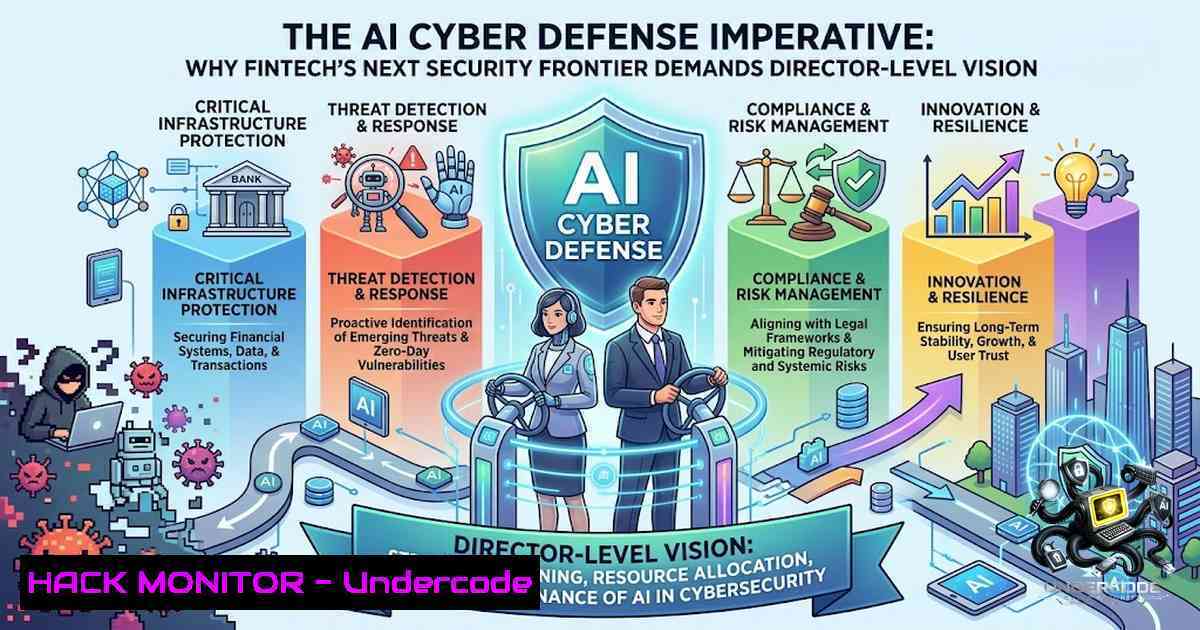
Introduction:
The financial services sector is undergoing a fundamental transformation as artificial intelligence reshapes both the attack surface and the defensive capabilities available to security teams. According to the Thales 2026 Data Threat Report for Financial Services, the industry is being reshaped by AI and agentic technologies faster than its security operating model can keep pace. With 66% of financial services organisations now reporting that AI already initiates security functions without human intervention—compared to 53% across all industries—the gap between AI adoption and AI governance has become the defining cybersecurity challenge of our time. As Fiserv expands its AI & Cybersecurity team with a Director-level role focused on AI-powered cyber defense, this article explores the technical architecture, implementation strategies, and operational realities of building enterprise-grade AI security platforms in the FinTech ecosystem.
Learning Objectives:
- Understand the core components of AI-driven cybersecurity platforms, including threat detection, anomaly identification, and identity and access risk analysis
- Master the technical implementation of multi-agent security architectures and cloud-1ative AI security platforms
- Learn practical command-line techniques for securing AI workloads, monitoring model integrity, and responding to AI-specific threats
You Should Know:
1. Architecting AI-Powered Cyber Defense Platforms
The Director, AI – Cyber Security role at Fiserv encompasses designing and scaling AI-driven cybersecurity platforms that strengthen enterprise defense capabilities. This involves architecting and implementing multi-agent systems that can detect, prevent, and respond to cyber threats in real time. The technical stack typically includes Google Cloud’s Vertex AI for model deployment, integrated with enterprise cybersecurity platforms and services. Modern AI security platforms must address several critical capabilities: threat detection through machine learning models, anomaly identification using statistical techniques, identity and access risk analysis, security operations automation, incident response orchestration, and cyber threat intelligence aggregation.
To operationalize these capabilities, security teams must deploy models that can process security event and telemetry data at scale. The AI-E-DiD (Artificial Intelligence-Enhanced Defense-in-Depth) framework, which integrates hybrid Generative Adversarial Networks and Long Short-Term Memory Autoencoders (GAN-LSTM-AE), has proven effective for intelligent anomaly detection in financial networks. This approach enables real-time, adaptive, and scalable cybersecurity prevention across complex financial infrastructures.
Step-by-Step Guide: Deploying an AI Threat Detection Pipeline on Google Cloud
 1. Set up Google Cloud environment for AI security workloads
gcloud config set project your-security-project
gcloud services enable aiplatform.googleapis.com
gcloud services enable cloudfunctions.googleapis.com
gcloud services enable pubsub.googleapis.com

<ol>
<li>Create a Vertex AI notebook instance for model development
gcloud ai notebooks instances create security-ml-1otebook \
--location=us-central1 \
--vm-image-project=deeplearning-platform-release \
--vm-image-family=common-cpu-1otebook \
--machine-type=n1-standard-8</p></li>
<li><p>Install required Python packages for anomaly detection
pip install tensorflow scikit-learn pandas numpy google-cloud-aiplatform</p></li>
<li><p>Deploy a pre-trained anomaly detection model to Vertex AI endpoint
gcloud ai endpoints create --region=us-central1 --display-1ame=security-anomaly-endpoint</p></li>
<li><p>Upload model and create version
gcloud ai models upload --region=us-central1 \
--display-1ame=threat-detector-v1 \
--container-image-uri=us-docker.pkg.dev/vertex-ai/prediction/tf2-cpu.2-11:latest \
--artifact-uri=gs://your-security-bucket/models/threat-detector/</p></li>
<li><p>Deploy model to endpoint for real-time inference
gcloud ai endpoints deploy-model ENDPOINT_ID \
--region=us-central1 \
--model=MODEL_ID \
--display-1ame=threat-detector-deployment \
--machine-type=n1-standard-4 \
--min-replica-count=1 \
--max-replica-count=3
- Securing AI in Production: Runtime Monitoring and Guardrails
As Fiserv scales AI in production, the AI Runtime & Trust Security Advisor role focuses on operationalizing runtime monitoring, guardrails, and model-integrity checks for production AI workloads. This includes detecting AI-specific threats such as prompt injection, model poisoning, and adversarial attacks. The security architecture must connect Cybersecurity services with the Security Operations Center (SOC), Identity and Access Management (IAM), Data Governance, and platform teams.
Critical controls include implementing model integrity checks that verify input data hasn’t been tampered with, deploying guardrails that restrict model outputs to prevent data leakage, and establishing continuous monitoring for drift detection. The Cloud Security Alliance’s 2026 survey revealed that sensitive data leakage through AI interactions (61%) is the top AI security concern, far exceeding worries about model attacks or adversarial techniques. This underscores the importance of robust data governance and output filtering mechanisms.
Step-by-Step Guide: Implementing AI Runtime Security Controls
Linux Commands for Model Integrity Verification:
 1. Generate cryptographic hash of model files for integrity verification
sha256sum /path/to/model/weights.h5 > model_hash.txt

<ol>
<li>Set up continuous monitoring of model directory for unauthorized changes
inotifywait -m -e modify,create,delete /path/to/model/ \
--format '%w%f %e' | while read file event; do
echo "[bash] Model file $file changed at $(date)" >> /var/log/model_integrity.log
Recalculate hash and compare
new_hash=$(sha256sum "$file" | awk '{print $1}')
expected_hash=$(grep "$file" model_hashes.txt | awk '{print $1}')
if [ "$new_hash" != "$expected_hash" ]; then
echo "[bash] Hash mismatch for $file" >> /var/log/model_integrity.log
fi
done</p></li>
<li><p>Monitor prompt injection attempts in real-time using grep patterns
tail -f /var/log/ai_api.log | grep -E "(ignore|forget|system prompt|previous instructions|jailbreak)" \
--color=always | while read line; do
echo "[bash] $(date): $line" >> /var/log/security_alerts.log
done
Windows PowerShell Commands for AI Workload Security:
 1. Monitor AI model file integrity using PowerShell
$modelPath = "C:\AI_Models\production_model.h5"
$hashFile = "C:\Security\model_hash.txt"
$currentHash = (Get-FileHash -Path $modelPath -Algorithm SHA256).Hash
$expectedHash = Get-Content $hashFile

if ($currentHash -1e $expectedHash) {
Write-EventLog -LogName "Security" -Source "AISecurity" -EventId 1001 -Message "Model integrity violation detected"
Send-MailMessage -To "[email protected]" -Subject "AI Model Integrity Alert" -Body "Model hash mismatch detected"
}

<ol>
<li>Monitor API endpoints for anomalous request patterns
$logFile = "C:\Logs\ai_api_access.log"
Get-Content $logFile -Wait | Select-String -Pattern "prompt|injection|system" | ForEach-Object {
$timestamp = Get-Date -Format "yyyy-MM-dd HH:mm:ss"
Add-Content -Path "C:\Logs\security_alerts.log" -Value "[$timestamp] ALERT: $_"
}
3. Integrating Multi-Agent Security Architectures
The Director-level role requires architecting and implementing multi-agent security systems that can operate across interconnected financial systems. Modern AI models can now plan and execute complex, multi-step actions autonomously, identify zero-day vulnerabilities, systematically chain multiple lower-risk vulnerabilities for high-impact disruption, and operate across interconnected systems to orchestrate large-scale attacks. Multi-agent defense platforms must counter these threats through coordinated autonomous detection frameworks.
Fiserv’s collaboration with Visa on the Trusted Agent Protocol and with Mastercard on Secure Card on File solutions demonstrates the industry’s move toward agentic commerce with built-in security controls. These frameworks allow AI agents to transact using tokenisation, authentication, fraud prevention, and governance controls.
Step-by-Step Guide: Setting Up a Multi-Agent Security Framework
 1. Install and configure a multi-agent orchestration framework (using AutoGen or similar)
pip install pyautogen

<ol>
<li>Define agent roles and capabilities in configuration
cat > agent_config.yaml << EOF
agents:
threat_detector:
role: "Threat Detection Specialist"
capabilities: ["anomaly_detection", "pattern_recognition"]
model: "gpt-4"
incident_responder:
role: "Incident Response Coordinator"
capabilities: ["orchestration", "containment"]
model: "gpt-4"
threat_intelligence:
role: "Threat Intelligence Analyst"
capabilities: ["data_aggregation", "correlation"]
model: "gpt-4"
EOF</p></li>
<li><p>Deploy agent communication bus using Redis for message passing
docker run -d --1ame agent-bus -p 6379:6379 redis:alpine</p></li>
<li><p>Set up agent logging and audit trail
mkdir -p /var/log/agents
chmod 750 /var/log/agents</p></li>
<li><p>Implement agent-to-agent authentication using API keys
export AGENT_API_KEY=$(openssl rand -hex 32)
echo "AGENT_API_KEY=$AGENT_API_KEY" > /etc/security/agent_credentials.env
4. Cloud-1ative AI Security Platform Engineering
Building scalable, cloud-1ative AI security platforms requires deep expertise in cloud infrastructure, containerization, and security automation. The role demands proficiency with tools such as Vertex AI, Docker, Kubernetes, and infrastructure-as-code practices. The Thales 2026 report highlights a critical pressure point: only 49% of sensitive cloud data is encrypted, creating significant exposure for AI workloads processing financial data.
Cloud hardening for AI workloads must address data encryption at rest and in transit, identity and access management with least-privilege principles, network segmentation to isolate AI processing, and continuous compliance monitoring. The Zero Trust Architecture (ZTA) framework, combined with generative AI and reinforcement learning, enables autonomous cloud security hardening that can adapt to evolving threats.
Step-by-Step Guide: Hardening Cloud AI Security Infrastructure
 1. Implement least-privilege IAM for AI service accounts
gcloud iam service-accounts create ai-security-sa \
--display-1ame="AI Security Service Account"

<ol>
<li>Bind minimal required permissions
gcloud projects add-iam-policy-binding your-project \
--member="serviceAccount:[email protected]" \
--role="roles/aiplatform.user"</p></li>
<li><p>Enable VPC Service Controls to restrict data exfiltration
gcloud access-context-manager perimeters create ai-security-perimeter \
--title="AI Security Perimeter" \
--resources="projects/your-project" \
--restricted-services="aiplatform.googleapis.com,storage.googleapis.com"</p></li>
<li><p>Set up encryption with Customer-Managed Encryption Keys (CMEK)
gcloud kms keyrings create ai-security-keyring --location=us-central1
gcloud kms keys create ai-model-key --keyring=ai-security-keyring --location=us-central1 \
--purpose=encryption</p></li>
<li><p>Configure Vertex AI to use CMEK
gcloud ai models update MODEL_ID --encryption-key-1ame=projects/your-project/locations/us-central1/keyRings/ai-security-keyring/cryptoKeys/ai-model-key</p></li>
<li><p>Implement network isolation with VPC peering
gcloud compute networks create ai-security-vpc --subnet-mode=custom
gcloud compute networks subnets create ai-subnet-us-central1 \
--1etwork=ai-security-vpc \
--region=us-central1 \
--range=10.0.0.0/24
5. Threat Intelligence and Proactive Defense
Generative AI is fundamentally transforming cybersecurity postures when integrated through evidence-based deployment strategies that balance automation with human judgment. Proactive defense domains include threat intelligence systems, autonomous detection frameworks, multi-agent defense platforms, and adversarial simulation environments. The concept of “Negative-One-Day Malware Detection” using generative AI to identify potential malware before it is ever created by threat actors represents a paradigm shift in defensive strategy.
Financial institutions face rising AI cyber risk, with frontier AI models enabling attackers to identify vulnerabilities and execute sophisticated attacks at unprecedented scale. The Monetary Authority of Singapore’s establishment of the AI-Driven Cyber and Technology Risk Taskforce (ACT) reflects the urgent need for industry collaboration on AI cybersecurity use cases, capability uplift through proof-of-concept trials, and guidance development for detecting and responding to AI-enabled threats.
Step-by-Step Guide: Implementing Proactive Threat Intelligence
 1. Set up threat intelligence feed aggregation
cat > threat_feeds.yaml << EOF
feeds:
- url: "https://api.alienvault.com/otx/api/v1/pulses"
- url: "https://feeds.dhs.gov/cisa/known_exploited_vulnerabilities.json"
- url: "https://api.misp.eu/feed"
EOF

<ol>
<li>Create a Python script for threat intelligence correlation
cat > threat_correlator.py << 'EOF'
import requests
import json
import hashlib
from datetime import datetime</li>
</ol>

def fetch_threat_feeds():
 Fetch and aggregate threat intelligence
feeds = [
"https://api.alienvault.com/otx/api/v1/pulses",
"https://feeds.dhs.gov/cisa/known_exploited_vulnerabilities.json"
]
threats = []
for feed in feeds:
try:
response = requests.get(feed, timeout=30)
threats.extend(response.json().get('results', []))
except Exception as e:
print(f"Error fetching {feed}: {e}")
return threats

def correlate_with_ai_models(threats):
 Generate threat signatures for AI model training
signatures = []
for threat in threats:
signature = {
"indicator": hashlib.sha256(str(threat).encode()).hexdigest()[:16],
"timestamp": datetime.utcnow().isoformat(),
"type": threat.get('type', 'unknown'),
"severity": threat.get('severity', 'medium')
}
signatures.append(signature)
return signatures

if <strong>name</strong> == "<strong>main</strong>":
threats = fetch_threat_feeds()
correlated = correlate_with_ai_models(threats)
with open("/var/log/threat_intelligence.json", "w") as f:
json.dump(correlated, f, indent=2)
EOF

python3 threat_correlator.py

<ol>
<li>Schedule threat intelligence updates
echo "0 /6    /usr/bin/python3 /opt/security/threat_correlator.py" | crontab -
What Undercode Say:
- Key Takeaway 1: The convergence of AI and cybersecurity in FinTech is creating unprecedented demand for leadership that can bridge the gap between cutting-edge AI research and enterprise security operations. The Director, AI – Cyber Security role represents a strategic inflection point where organizations must move beyond AI experimentation to production-grade, battle-tested security platforms.
-
Key Takeaway 2: The technical complexity of securing AI in production—from runtime monitoring and guardrails to multi-agent architectures and cloud-1ative deployment—requires a holistic approach that integrates SOC, IAM, Data Governance, and platform teams. Success depends on building cross-functional governance structures that can keep pace with the rapid evolution of both AI capabilities and adversarial techniques.
Analysis:
The Fiserv hiring announcement signals a broader industry trend: financial institutions are moving decisively from AI exploration to AI production, with cybersecurity as the critical enabler. The role’s emphasis on multi-agent systems, cloud-1ative platforms, and runtime security reflects the recognition that traditional perimeter-based defenses are inadequate against AI-powered threats. Organizations that fail to build AI-1ative security capabilities risk falling behind as attackers increasingly leverage generative AI to identify vulnerabilities and execute sophisticated attacks at scale. The collaboration between Fiserv and OpenAI on cybersecurity capabilities, combined with industry initiatives like Singapore’s ACT taskforce, suggests a future where AI security becomes a competitive differentiator rather than a compliance checkbox. The most successful security leaders will be those who can architect systems that balance automation with human judgment, implement robust governance frameworks, and continuously adapt to an evolving threat landscape.
Prediction:
- +1 The demand for AI cybersecurity leadership will accelerate dramatically through 2027, with financial institutions competing aggressively for talent capable of architecting multi-agent defense platforms and securing AI workloads in production.
-
+1 Industry collaboration on AI security standards—exemplified by the MAS-ABS ACT taskforce and Fiserv’s participation in the Trusted Access for Cyber initiative—will drive the development of shared frameworks and best practices that raise the security baseline across the entire financial sector.
-
-1 The gap between AI adoption and AI security governance will widen before it narrows, as organizations struggle to operationalize runtime monitoring, guardrails, and model-integrity checks at scale.
-
-1 The rise of agentic AI systems will introduce new attack vectors—including prompt injection, model poisoning, and adversarial manipulation—that traditional security tools are not equipped to detect or mitigate.
-
+1 Generative AI-powered proactive defense, including “Negative-One-Day” malware detection and autonomous threat hunting, will mature into operational capabilities that fundamentally shift the balance of power toward defenders.
▶️ Related Video (82% Match):
https://www.youtube.com/watch?v=2J2UkGPQ9mk
🎯Let’s Practice For Free:
🎓 Live Courses & Certifications:
Join Undercode Academy for Verified Certifications
🚀 Request a Custom Project:
Secure, high-velocity infrastructure and disruptive technological engineering. Contact our engineering team for high-tier development and proprietary systems:
[email protected]
💎 Smart Architecture | 🛡️ Secure by Design | ⭐ Trusted by Thousands
IT/Security Reporter URL:
Reported By: Itckrao Hiring – Hackers Feeds
Extra Hub: Undercode MoN
Basic Verification: Pass ✅


