
Listen to this Post
Introduction:
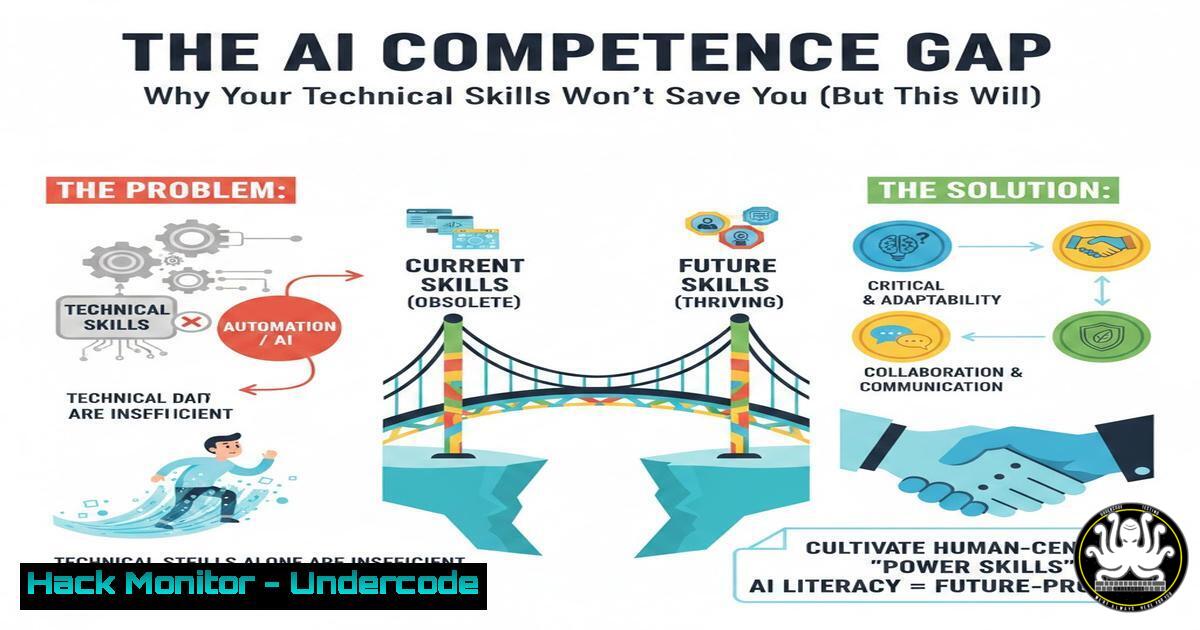
As Vint Cerf, a founding father of the internet, highlights a “thought-provoking read” on the current state of AI, the technology sector is facing a massive disconnect. Michel Fox Berens succinctly summarizes the core issue: “the gap between what AI can actually do today and what most professionals think it can do has gotten dangerously wide.” This article dissects the technical and professional realities of the AI shift, moving beyond the hype to provide actionable strategies for IT and security professionals to bridge this competence gap and secure their relevance in an AI-driven landscape.
Learning Objectives:
- Understand the specific technical limitations of current LLMs and how they create security and operational risks.
- Learn practical command-line and scripting techniques to automate AI tooling and enhance cybersecurity postures.
- Identify the infrastructure bottlenecks (GPU, networking) that will define the next wave of AI scalability and vulnerability.
You Should Know:
- Auditing AI-Generated Code: The “Trust and Accountability” Check
Lin Z.’s comment regarding “Trust and Accountability” touches on a critical technical vulnerability: the blind acceptance of AI-generated code or configurations. AI models can produce scripts that are statistically correct but logically flawed or insecure. You must treat AI outputs as a junior developer’s first draft.
To audit changes made by an AI agent or a code assistant, you cannot rely on peer review alone; you need system-level auditing.
– Linux: Use `auditd` to monitor changes to critical directories. If an AI tool modifies web server configurations, you can trace the exact command and process ID.
 Install auditd
sudo apt-get install auditd -y
 Add a watch rule to monitor changes to the nginx directory
sudo auditctl -w /etc/nginx/ -p wa -k nginx_ai_changes
 Search the logs for changes
sudo ausearch -k nginx_ai_changes
– Windows: Enable PowerShell Script Block Logging to capture deobfuscated code that AI might generate during automated penetration tests or system admin.
 Via Group Policy or Registry
reg add "HKLM\SOFTWARE\Policies\Microsoft\Windows\PowerShell\ScriptBlockLogging" /v EnableScriptBlockLogging /t REG_DWORD /d 1 /f
2. API Security for Autonomous Agents
As Robert Pye hints at “agent spawn,” the future involves AI agents communicating via APIs. If your API security is weak, you are handing the keys to an automated attacker. You must shift from static authentication to dynamic, behavior-based rate limiting.
Implement a rate-limiting strategy that accounts for AI’s speed.
– Nginx Configuration for AI Traffic: Assume traffic from AI-integrated tools will be faster and more repetitive than human traffic. Configure `limit_req` to handle this.
 Define a zone for AI-related endpoints (e.g., your LLM proxy)
limit_req_zone $binary_remote_addr zone=ai_api:10m rate=10r/s;

server {
location /api/v1/ai-query/ {
 Burst of 20 requests, then delay excess
limit_req zone=ai_api burst=20 nodelay;
proxy_pass http://your_ai_backend;
}
}
– API Gateways (Kong/AWS): Implement “bot detection” plugins specifically looking for the user-agent strings of known AI crawlers or libraries (e.g., Python-urllib, Go-http-client). While legitimate agents will use these, malicious ones will too. Route these requests to a higher-security WAF profile.
3. The Hardware Reality Check: GPU Stress Testing
Nazym P. correctly notes that “AI scaling is starting to collide with the physical realities of infrastructure.” If you are deploying on-prem AI models, your cybersecurity now includes physical hardware resilience. GPU failures can lead to model corruption or data loss.
Before putting an AI server into production, stress-test the GPUs to ensure they aren’t faulty (a common issue with high-power draw cards).
– Linux Command for GPU Burn-In:
 Install gpu-burn tool
git clone https://github.com/wilicc/gpu-burn
cd gpu-burn
make
 Run a 60-second burn test
./gpu_burn 60
– Monitoring: While the burn runs, monitor temperature and power draw with nvidia-smi.
watch -n 1 nvidia-smi
If the card overheats or throttles immediately, it is a physical security risk to your data center’s cooling and power redundancy.
- Hollowing Out the Middle: Automating Triage with Python
Alfonso G’s comment about AI being “compared to capital” suggests that efficiency is king. In a SOC (Security Operations Center), AI is already handling Tier-1 triage. To avoid being “hollowed out,” you must learn to build the tools that replace the mundane tasks.
Create a simple Python script that uses an LLM API to summarize firewall logs before a human ever looks at them. This is the “white collar displacement” in action—the human moves from reader to validator.
– Python Snippet (Conceptual with OpenAI):
import openai
import subprocess

Fetch last 50 blocked IPs from UFW logs
result = subprocess.run(['grep', 'BLOCK', '/var/log/ufw.log'], capture_output=True, text=True)
log_snippet = result.stdout[-2000:]  Truncate for token limit

Ask AI to summarize the threat
response = openai.ChatCompletion.create(
model="gpt-4",
messages=[
{"role": "system", "content": "You are a SOC analyst. Summarize these firewall blocks into potential threat categories (e.g., Port Scan, Brute Force, C2 Beacon)."},
{"role": "user", "content": log_snippet}
]
)
print(response.choices[bash].message.content)
5. Securing the MLOps Pipeline (CI/CD for Models)
With the pace of change Marc-Oliver Pahl mentions (“Factor 10”), models are updated constantly. If an attacker compromises your model registry, they can poison every application using that model. You must harden your MLOps pipeline just like you harden your software pipeline.
Use HashiCorp Vault to inject database credentials into your training pipeline, ensuring secrets aren’t hardcoded into Jupyter notebooks.
– Vault Agent Configuration:
 vault-agent-config.hcl
vault {
address = "https://vault.example.com:8200"
}

template {
source = "/etc/secrets/db-creds.tpl"
destination = "/opt/ml-project/.env"
perms = "0644"
}
This ensures your training script reads the DB credentials from a temporary `.env` file that Vault manages, rather than from a static config file that could be leaked in a git repo.
6. Network Segmentation for AI Inference
As Ryan Anderson states, “I am no longer needed for the actual technical work of my job.” To stay needed, focus on the architecture around the AI. AI models are data-dense; you need to ensure that the high-speed network (InfiniBand or RoCE) used for training is completely segmented from the corporate network to prevent lateral movement.
Step-by-step Linux network namespace isolation:
If you have a single server doing both web serving and AI inference, use network namespaces to separate them.
– Create a new namespace for the AI process: `sudo ip netns add ai_inference`
– Move the second network interface into that namespace: `sudo ip link set eth1 netns ai_inference`
– Run your AI model inside that namespace: `sudo ip netns exec ai_inference python run_model.py`
This ensures that even if the web app (running in the default namespace) is compromised, the attacker cannot probe or interact with the AI model’s network interface.
What Undercode Say:
- AI is a protocol, not a product: Treat AI interactions as you would HTTP—it’s a new vector for data exfiltration and injection. The “Cambrian moment” Ryan Anderson describes means we must build security filters for AI-native traffic immediately.
- The infrastructure gap is the new vulnerability: The comments highlight a critical shift—software is easy, but hardware (GPUs, power, networking) is hard. Attackers will target the physical and infrastructure layers because they know organizations are rushing AI deployment and neglecting physical security and hardware supply chain integrity.
- The “Fundamentals” are now advanced: Marc-Oliver Pahl’s advice is key. With AI handling syntax and configuration, the human value lies in deep systems architecture, understanding protocol logic, and accountability—exactly the skills that cannot be prompted into existence yet.
Prediction:
Within the next 18 months, we will see the emergence of “AI Egress Firewalls.” As autonomous agents become commonplace (as discussed in the “agent spawn” thread), traditional web application firewalls (WAFs) will fail because they cannot distinguish between a malicious prompt injection and a legitimate complex query. The next major breach won’t be a database dump, but an “AI Poisoning” attack where an attacker manipulates the AI’s long-term memory (RAG database) to slowly bleed proprietary algorithms or alter business logic over time. The industry’s focus will pivot from “how to build AI” to “how to secure the conversation with AI.”
▶️ Related Video (80% Match):
🎯Let’s Practice For Free:
IT/Security Reporter URL:
Reported By: Vint Cerf – Hackers Feeds
Extra Hub: Undercode MoN
Basic Verification: Pass ✅


