Listen to this Post
Introduction:
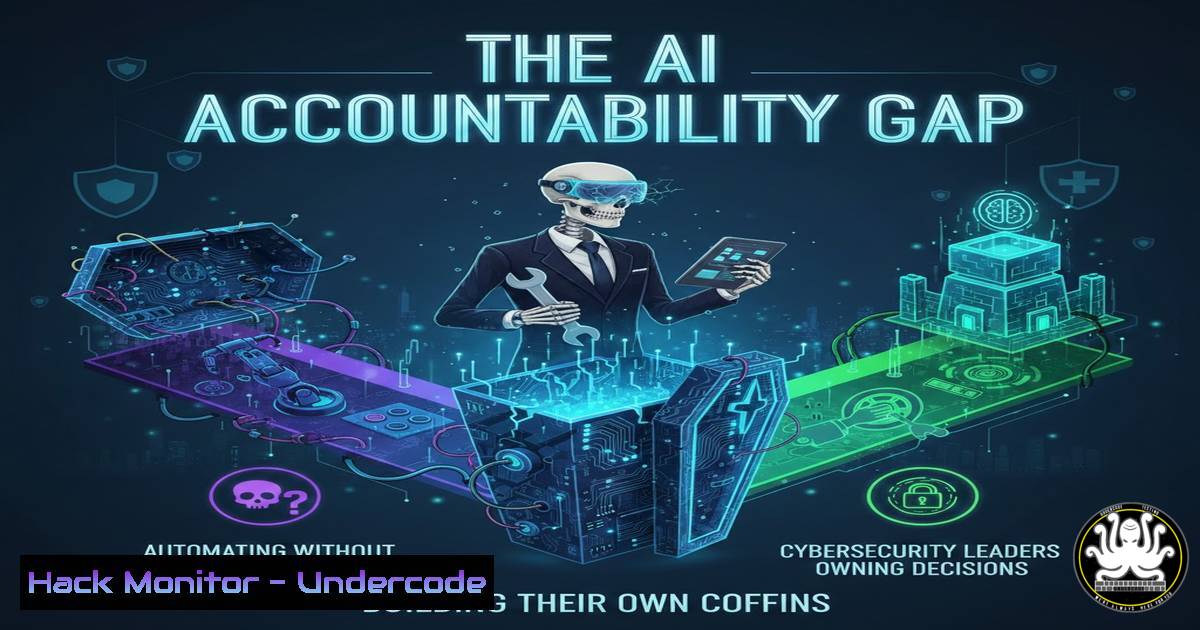
The rapid integration of Artificial Intelligence into cybersecurity frameworks is not merely a technological upgrade; it is a fundamental redistribution of operational risk and decision-making authority. Leaders who focus solely on feature sets and automation velocity are blind to the profound leadership challenge at the core of AI adoption. This article deconstructs the triad of Reasoning, Risk, and Responsibility to provide a technical and strategic blueprint for secure AI implementation.
Learning Objectives:
- Understand the technical and ethical imperative for maintaining a “Human-in-the-Loop” (HITL) framework in automated security systems.
- Identify and mitigate the specific, tangible risks introduced by AI’s dual-use nature in both defensive and offensive security postures.
- Implement governance models and technical controls that enforce clear accountability for AI-driven actions.
You Should Know:
1. Human-in-the-Loop (HITL): The Technical Implementation of Reason
The core premise is that AI assists, but does not replace, human judgment. This requires deliberate architectural design to force critical decisions back to a human operator.
Step‑by‑step guide:
First, define your escalation thresholds. These are not just confidence scores, but contextual rules. For instance, an AI detecting a potential data exfiltration attempt with >85% confidence from a privileged user account must trigger a HITL workflow.
Second, integrate this into your Security Orchestration, Automation, and Response (SOAR) platform. Using a platform like Splunk Phantom, OpenCTI, or even custom scripts with TheHive, you can create playbooks that pause for human review.
Example conditional logic in a Python-based SOAR action:
if alert.severity == "CRITICAL" and ai_confidence > 0.85 and user.role == "admin":
 Create a pending task for SOC lead, do NOT auto-remediate
create_human_approval_task(alert_id, required_approver="soc_lead")
send_slack_notification(channel="soc-approvals", details=alert)
else:
 Allow automated containment for lower-risk alerts
execute_containment_playbook(alert)
Finally, log every instance of human override and AI recommendation. This creates an audit trail for continuous improvement and accountability.
- The Dual-Use Dilemma: Hardening Your AI Against Adversarial Exploitation
AI tools strengthen defense but also empower attackers. This includes data poisoning, model theft, and adversarial attacks that fool AI classifiers.
Step‑by‑step guide:
To protect your AI models, start with strict access controls. Isolate your model training and serving infrastructure. On AWS, for example, ensure your SageMaker notebooks and endpoints are in a private VPC with security groups allowing traffic only from specific, trusted IPs.
Use the following AWS CLI command to check and tighten security group rules:
aws ec2 describe-security-groups --group-ids sg-0xxxxxx --query 'SecurityGroups[bash].IpPermissions'
For model integrity, implement signature verification for input data. Before processing, validate data against a known schema and checksum. Defend against evasion attacks by employing adversarial training—injecting crafted, malicious-looking samples into your training data to improve robustness.
Monitor for model drift and data poisoning by tracking performance metrics (e.g., F1-score, false positive rate) over time. A sudden drop could indicate an attack. Set up CloudWatch Alarms (AWS) or Prometheus alerts (on-prem/Kubernetes) to trigger on these anomalies.
- Ownership and Attribution: Designing Systems for Human Accountability
When an AI-driven tool blocks a port or quarantines a file, a human must be ultimately accountable. This requires unambiguous logging and attribution.
Step‑by‑step guide:
Implement immutable, detailed audit logs for every AI-initiated action. In a Linux environment, ensure all actions taken by your AI agent (running under a dedicated service account) are logged via auditd.
Configure `/etc/audit/audit.rules`:
-a always,exit -F arch=b64 -S execve -F uid=ai_service_account_uid -k AI_ACTION
-w /etc/passwd -p wa -k AI_ACTION
This logs all commands executed by the AI service account and any writes to critical files.
In your centralized log management (e.g., ELK Stack, Splunk), tag all AI-generated alerts and actions with a metadata field: decision_maker: "ai_model_v1". Ensure every dashboard and incident report clearly displays this tag alongside the name of the human team responsible for overseeing that model. Use Role-Based Access Control (RBAC) to ensure only authorized humans can modify or deactivate AI controls, and require multi-factor authentication (MFA) for such privileged actions.
- The Shared Risk Model in Cloud AI Services
When using managed AI services (e.g., Google Cloud Vision API for malware classification, AWS Rekognition), you operate on a shared responsibility model. The provider secures the service, but you are responsible for securing your data and how you use the output.
Step‑by‑step guide:
First, encrypt all data in transit and at rest. When calling an AI API, always use TLS 1.2+ and encrypt payloads with customer-managed keys (CMKs). In AWS, configure KMS to encrypt data before sending it to Comprehend or Rekognition.
Second, implement output validation. Do not trust AI classification blindly. For a critical function like malware detection, use a secondary, rule-based or signature-based scan to validate the AI’s finding. This reduces the risk of false negatives/positives from a potentially poisoned or inaccurate model.
Third, conduct regular permissions reviews for the service accounts and IAM roles that invoke AI services. The principle of least privilege is critical. A command like the following can help list roles with excessive permissions in GCP:
gcloud asset analyze-iam-policy --organization=ORG_ID --json | jq -r '.response.analysisResults[] | select(.iamBinding.role=="roles/aiplatform.user")'
5. Red Teaming Your AI Systems
Proactively test your AI-powered security controls by simulating how an attacker would exploit or bypass them. This is beyond traditional penetration testing.
Step‑by‑step guide:
Assemble a red team with knowledge of adversarial machine learning. Their goal is to bypass your AI-driven security systems (e.g., phishing email detectors, anomaly-based IDS).
Start with model inversion and membership inference attacks to see if sensitive training data can be extracted. Use open-source tools like IBM’s Adversarial Robustness Toolbox (ART) to craft evasion attacks.
from art.attacks.evasion import FastGradientMethod
from art.estimators.classification import SklearnClassifier
 Create a fictitious classifier (replace with your model)
classifier = SklearnClassifier(model=your_model)
 Craft adversarial samples
attack = FastGradientMethod(estimator=classifier, eps=0.1)
x_test_adv = attack.generate(x=x_test)
Test if these adversarial samples (x_test_adv) are misclassified by your model. Document all successful bypasses and use them to retrain and harden your models. Schedule these red team exercises quarterly, especially after major model updates.
What Undercode Say:
- Governance Precedes Technology: The most sophisticated AI model is a liability without a governance framework that enforces human oversight, ethical boundaries, and clear ownership. The first line of code written should be for logging and audit, not inference.
- The Attacker’s AI is Your New Constant: Defensive AI must be stress-tested against offensive AI. Assuming your AI tools are inherently secure is the modern equivalent of assuming your firewall is unbreachable because you turned it on. Continuous adversarial testing is non-negotiable.
Prediction:
The next 18-24 months will see the first major regulatory fines and litigation stemming not from a direct data breach, but from negligent AI governance in cybersecurity. A company will be held liable for damages caused by an fully automated, un-auditable AI system that took a harmful action (e.g., wrongfully blocking critical business traffic, falsely accusing an employee). This will catalyze a new industry standard for “AI Security Governance” roles, mandatory certifications, and insurance products, forcing a maturation from experimental tooling to rigorously accountable operational frameworks. Leaders who architect accountability today will avoid catastrophic liability tomorrow.
▶️ Related Video (74% Match):
🎯Let’s Practice For Free:
IT/Security Reporter URL:
Reported By: Swatithecybergirl Rooting4u – Hackers Feeds
Extra Hub: Undercode MoN
Basic Verification: Pass ✅


