Listen to this Post
Introduction:
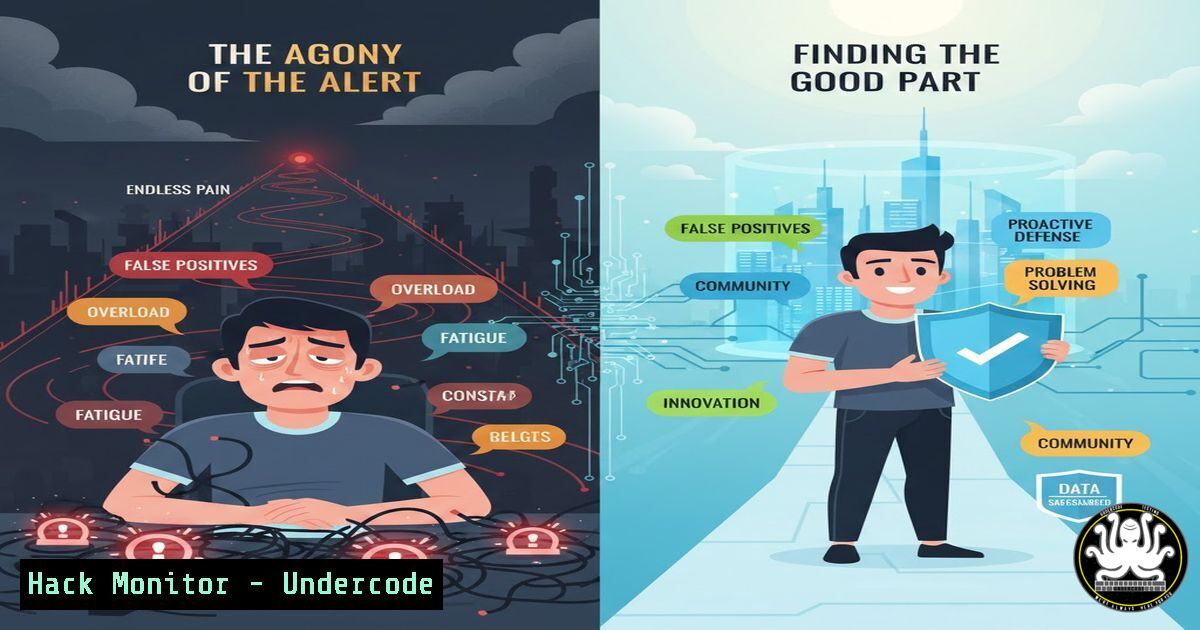
For many cybersecurity professionals, the daily reality is a relentless barrage of alerts, vulnerabilities, and threats that feels more like chronic pain than a fulfilling career. The cryptic LinkedIn post asking “All pain now… so when’s the good part?” encapsulates the widespread fatigue and frustration in the industry. This article deconstructs this “pain” into its core technical components—alert fatigue, vulnerability overload, and tool sprawl—and provides actionable, command-level guidance to transform operational suffering into strategic security confidence.
Learning Objectives:
- Identify and quantify the primary sources of operational “pain” in a modern SOC.
- Implement technical strategies to automate triage and reduce noise from key security tools.
- Build a proactive hygiene program to shift from reactive firefighting to strategic defense.
You Should Know:
- Diagnosing the Pain: Alert Fatigue and the SIEM Noise Crisis
The “good part” remains elusive when analysts are drowning in thousands of low-fidelity alerts. The pain often originates in poorly tuned Security Information and Event Management (SIEM) systems and endemic logging issues.
Step-by-step guide explaining what this does and how to use it.
First, you must measure the noise. If using Elastic Stack (ELK), run a pain query to find top noisily rules:
 In Kibana Dev Tools Console, run a query over your alerts index
GET /siem-signals-default/_search
{
"size": 0,
"aggs": {
"noisy_rules": {
"terms": {
"field": "signal.rule.name.keyword",
"size": 10,
"order": { "_count": "desc" }
}
}
}
}
This aggregation identifies the top 10 rules generating the most alerts. The next step is tuning. For a rule triggering on numerous failed logins, instead of alerting on any single event, refine the rule logic to alert only after 10 failures from a single source IP within 5 minutes, and exclude known penetration testing IP ranges. This immediate reduction in volume turns pain into manageable data.
- The Patch Pain: Vulnerability Management That Never Ends
The endless stream of CVEs is another core pain point. The “good part” comes from prioritizing exploitability over mere severity scores.
Step-by-step guide explaining what this does and how to use it.
Integrate tools like Nmap and Metasploit to validate critical vulnerabilities instead of blindly patching everything. For a critical RCE like CVE-2021-44228 (Log4Shell), first, identify potentially vulnerable services:
sudo nmap -sV --script=http-log4shell,ssh-log4shell -p 80,443,8080 <target_subnet> -oA log4scan
Then, use Metasploit to safely validate exploitability in a test environment:
msf6 > use exploit/multi/http/log4shell_header_injection
msf6 exploit(log4shell_header_injection) > set RHOSTS <target_ip>
msf6 exploit(log4shell_header_injection) > set SRVHOST <your_ip>
msf6 exploit(log4shell_header_injection) > set PAYLOAD java/shell_reverse_tcp
msf6 exploit(log4shell_header_injection) > check
 If 'vulnerable', you have validated the finding and can justify immediate, prioritized patching.
This approach moves from a list of thousands of CVEs to a targeted list of exploitable vulnerabilities, focusing effort where it truly matters.
- Credential Pain: Preventing Lateral Movement at the Source
Breaches often persist due to credential weaknesses. The pain of constant account lockouts and lateral movement can be mitigated with strong authentication policies and continuous monitoring.
Step-by-step guide explaining what this does and how to use it.
On Windows Active Directory, enforce strong policies and hunt for weak hashes using PowerShell and Mimikatz-inspired audits (for authorized testing only):
 Enforce strong Kerberos encryption types (disable DES/RC4)
Set-ADAccountControl -Identity <Domain> -CompoundIdentitySupported $true
Set-ADDCCloningExcludedApplicationList -Add "DES"

Audit for users with potentially weak password hashes (like DES). Use PowerShell AD module:
Get-ADUser -Filter  -Properties SamAccountName, PasswordLastSet |
Get-ADUserResultantPasswordPolicy |
Where-Object { $_.PasswordComplexityEnabled -eq $false } |
Format-List SamAccountName
For Linux, immediately detect SSH brute force attempts and block them:
 Use fail2ban to dynamically block IPs
sudo apt-get install fail2ban
sudo systemctl enable fail2ban
sudo systemctl start fail2ban

Customize jail for SSH in /etc/fail2ban/jail.local
[bash]
enabled = true
port = ssh
filter = sshd
logpath = /var/log/auth.log
maxretry = 3
bantime = 3600
This hardens the initial access point, drastically reducing the pain of incident response later.
4. Cloud Misconfiguration Pain: The Silent Breach Vector
In cloud environments (AWS, Azure, GCP), misconfigured storage buckets and over-permissive identities are a constant source of pain. Automation is key to finding the “good part” of cloud security.
Step-by-step guide explaining what this does and how to use it.
Use AWS CLI and Prowler to run continuous configuration audits:
 Install Prowler
git clone https://github.com/prowler-cloud/prowler
cd prowler

Run a specific check for public S3 buckets
./prowler -c extra732

For automated daily scans, integrate with AWS Security Hub:
./prowler -M json-asff -S -q
For immediate remediation of a publicly readable S3 bucket:
aws s3api put-bucket-acl --bucket <bucket-name> --acl private
aws s3api put-public-access-block --bucket <bucket-name> \
--public-access-block-configuration \
"BlockPublicAcls=true,IgnorePublicAcls=true,BlockPublicPolicy=true,RestrictPublicBuckets=true"
This shifts cloud security from a chaotic, manual audit process to an automated, compliant baseline.
- The “Good Part”: Automating Response with SOAR Playbooks
The transition from pain to satisfaction is achieved through automation. Simple Security Orchestration, Automation, and Response (SOAR) playbooks can eliminate repetitive tasks.
Step-by-step guide explaining what this does and how to use it.
Using a tool like Shuffle or Cortex XSOAR, you can automate the response to a phishing alert. A basic playbook logic:
1. Trigger: Email reported via phishing button.
- Automated Action 1: Quarantine the email across all mailboxes using an API call to Microsoft Graph.
Example pseudo-code for Graph API import requests headers = {'Authorization': 'Bearer <token>'} email_id = "<message_id>" url = f"https://graph.microsoft.com/v1.0/users/{user_id}/messages/{email_id}/move" body = {"destinationId": "JunkEmail"} requests.post(url, headers=headers, json=body) - Automated Action 2: Extract IOC (URLs, hashes) and block them on the firewall via an API call.
- Automated Action 3: Create a ticket in ServiceNow and notify the SOC lead.
This playbook, running in minutes, turns what was an hour of manual work into a consistent, automated process—this is the “good part.”
What Undercode Say:
- Pain is a Data Problem: The frustration expressed in the post is not philosophical; it’s a technical signal. Each “pain point” corresponds to a measurable inefficiency—be it low signal-to-noise ratio in alerts, unprioritized vulnerabilities, or manual response loops. The path forward requires treating these pains as data inputs for optimization.
- The Good Part is Engineered, Not Found: Satisfaction in cybersecurity doesn’t arrive passively. It is architected through the deliberate implementation of automation, precise tuning, and proactive hardening. The shift from pain to control is a direct function of the scripts written, rules tuned, and playbooks deployed.
Prediction:
The collective “pain” voiced by professionals will be the primary driver for the mass adoption of AI-driven security operations within the next 3-5 years. We will see a move beyond basic SOAR towards predictive AI that doesn’t just automate responses but pre-emptively reconfigures defenses based on threat intelligence and behavioral analysis. The “good part” will evolve from simply reducing alert fatigue to achieving a predictive security posture where platforms autonomously harden systems against imminent attack vectors before exploitation occurs. The human role will shift from firefighter to strategic overseer and threat hunter, fundamentally changing the job’s emotional calculus from one of chronic stress to one of empowered command.
▶️ Related Video (72% Match):
🎯Let’s Practice For Free:
IT/Security Reporter URL:
Reported By: Randiansyah Happy – Hackers Feeds
Extra Hub: Undercode MoN
Basic Verification: Pass ✅


