Listen to this Post
Introduction:
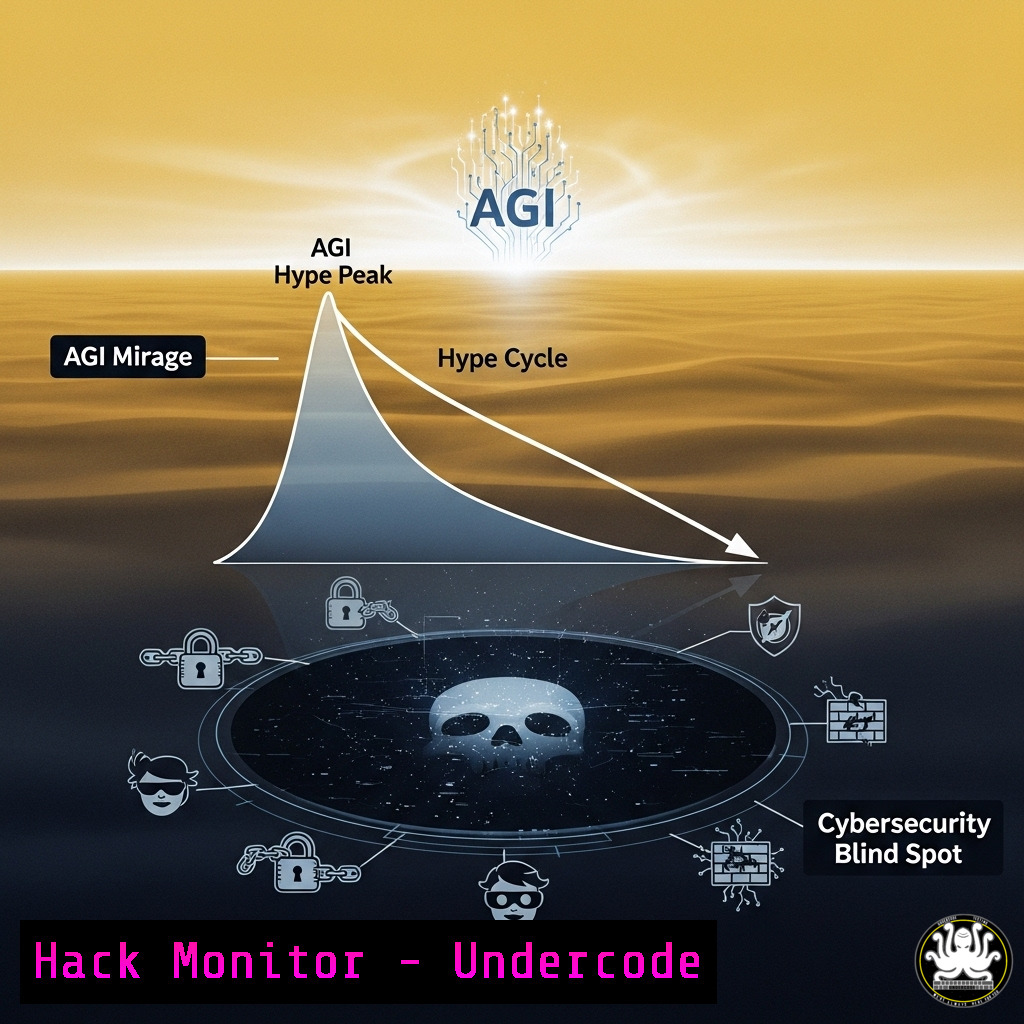
The relentless pursuit of Artificial General Intelligence (AGI) is dominating tech discourse, but a dangerous gap is emerging between marketing promises and technical reality. This “1% science, 99% fundraising” environment is creating a fertile ground for novel cybersecurity threats as organizations rush to integrate immature AI systems without proper safeguards, leaving critical infrastructure exposed.
Learning Objectives:
- Understand the new attack surfaces introduced by Large Language Models (LLMs) and AI-integrated applications.
- Learn to harden AI endpoints, secure API gateways, and audit AI-generated code for vulnerabilities.
- Implement monitoring and detection strategies specific to AI-powered threat vectors.
You Should Know:
1. Securing AI Model Endpoints
Exposed model APIs are low-hanging fruit for attackers. An unsecured OpenAI or Hugging Face endpoint can be exploited for data exfiltration or model poisoning.
` Example: Nmap scan for exposed API endpoints
nmap -p 443 –script http-title,http-headers -oA exposed_apis`
Step 1: Run the Nmap command against your external IP range to identify services running on port 443.
Step 2: Review the `http-title` and `http-headers` in the output file (exposed_apis.xml) to identify potential AI/ML inference endpoints (e.g., servers with titles containing “Jupyter”, “Gradio”, “Inference”).
Step 3: Ensure each discovered endpoint is behind a robust API gateway with strict authentication, rate-limiting, and input sanitization enabled.
2. Detecting Prompt Injection Attacks
Prompt injection is a primary method for hijacking LLM behavior, potentially leading to data leakage or unauthorized actions.
Log analysis command to detect potential prompt injection attempts

<h2 style="color: yellow;">grep -i -E "(ignore|previous|system|password|token|key)" /var/log/ai/api_access.log | head -20
Step 1: AI application logs should be aggregated to a central, secure server.
Step 2: Regularly run pattern-matching commands like the one above to search for keywords commonly used in prompt injection attacks aimed at overriding system prompts.
Step 3: Implement a Web Application Firewall (WAF) with custom rules to block requests containing these patterns before they reach the model.
3. Hardening Containerized AI Environments
AI workloads are often deployed in containers. A misconfigured Kubernetes pod is a gateway for compromise.
Kubescape scan for misconfigurations in a Kubernetes cluster

<h2 style="color: yellow;">kubescape scan framework nsa --exclude-namespaces kube-system
Step 1: Install Kubescape, an open-source Kubernetes security tool.
Step 2: Run the scan command against your cluster to check compliance with the NSA hardening guidelines.
Step 3: Address critical failures first, such as containers running as root, overly permissive roles, or exposed dashboards.
4. Auditing AI-Generated Code for Vulnerabilities
AI coding assistants can introduce critical security flaws. All generated code must be rigorously audited.
Using Semgrep to scan for a common vulnerability (SQL injection) in Python code

<h2 style="color: yellow;">semgrep --config=p/python.sqlalchemy --config=p/python.security.audit.sql-injection .
Step 1: Integrate Semgrep into your CI/CD pipeline.
Step 2: The command scans the current directory (.) for patterns indicative of SQL injection vulnerabilities, specifically in SQLAlchemy code.
Step 3: Configure the pipeline to fail on high-confidence security findings, preventing vulnerable AI-generated code from being deployed.
5. Validating AI Training Data Integrity
Data poisoning attacks corrupt the model at its source. Ensuring the integrity of training data is paramount.
Using hashing to verify the integrity of a dataset file

<h2 style="color: yellow;">sha256sum training_dataset.csv > dataset.sha256</h2>

<h2 style="color: yellow;"> Later, verify with:</h2>

<h2 style="color: yellow;">sha256sum -c dataset.sha256
Step 1: Generate a cryptographic hash (SHA-256) of your clean, vetted training dataset immediately after creation.
Step 2: Store the hash (dataset.sha256) in a secure, immutable location.
Step 3: Before initiating any training job, verify the hash to ensure the dataset has not been altered or poisoned.
6. Monitoring for Model Drift and Adversarial Inputs
Models can behave unpredictably with drift or malicious inputs, requiring active monitoring.
Example PromQL query for monitoring prediction latency spikes in Prometheus

<h2 style="color: yellow;">rate(model_inference_latency_seconds_sum[bash]) / rate(model_inference_latency_seconds_count[bash]) > 0.5
Step 1: Instrument your AI application to export metrics like inference latency, input length, and prediction confidence to Prometheus.
Step 2: This query calculates the average latency over 5 minutes and triggers an alert if it exceeds 0.5 seconds—a potential sign of an adversarial attack designed to degrade performance.
Step 3: Create dashboards and alerts for these metrics to detect anomalies in real-time.
7. Enforcing Zero-Trust for AI Data Access
AI systems must operate on a strict need-to-know basis, following zero-trust principles.
Windows command to audit access control lists (ACLs) on a directory containing sensitive data

<h2 style="color: yellow;">icacls "C:\app\model_training_data" /save audit_rules.txt /t
Step 1: Identify directories and databases containing sensitive data used for training or inference.
Step 2: Use `icacls` (Windows) or `getfacl` (Linux) to regularly audit and dump the current permissions to a file.
Step 3: Review the `audit_rules.txt` file to ensure that only specific, authorized service accounts and users have access, following the principle of least privilege.
What Undercode Say:
- The obsession with AGI fundraising is creating a “security debt” time bomb in AI infrastructure that will be exploited at scale.
- The attack surface is shifting from traditional OS-level vulnerabilities to the application layer, focusing on data integrity, model logic, and API security.
The industry’s breakneck speed towards an AGI future is prioritizing demos over defense. This analysis indicates that the vast majority of newly deployed AI systems are riddled with basic security misconfigurations, from unauthenticated endpoints to unaudited code. The coming year will see a surge in attacks specifically designed to manipulate, poison, or exfiltrate from these poorly defended systems. The core vulnerability isn’t in the AI itself, but in the rushed and often negligent way it is integrated into existing tech stacks, creating a golden era for attackers specializing in this new frontier.
Prediction:
Within the next 18-24 months, we will witness the first major critical infrastructure breach directly caused by an exploited vulnerability in an integrated AI system. This will not be a sophisticated AI takeover, but a simple exploitation of a misconfigured API or a poisoned dataset, leading to massive data loss or system failure. This event will trigger a watershed moment, forcing mandatory security frameworks and auditing standards for all production AI systems, significantly slowing deployment but ultimately making the technology more robust and trustworthy.
🎯Let’s Practice For Free:
IT/Security Reporter URL:
Reported By: Michael Kisilenko – Hackers Feeds
Extra Hub: Undercode MoN
Basic Verification: Pass ✅


