Listen to this Post
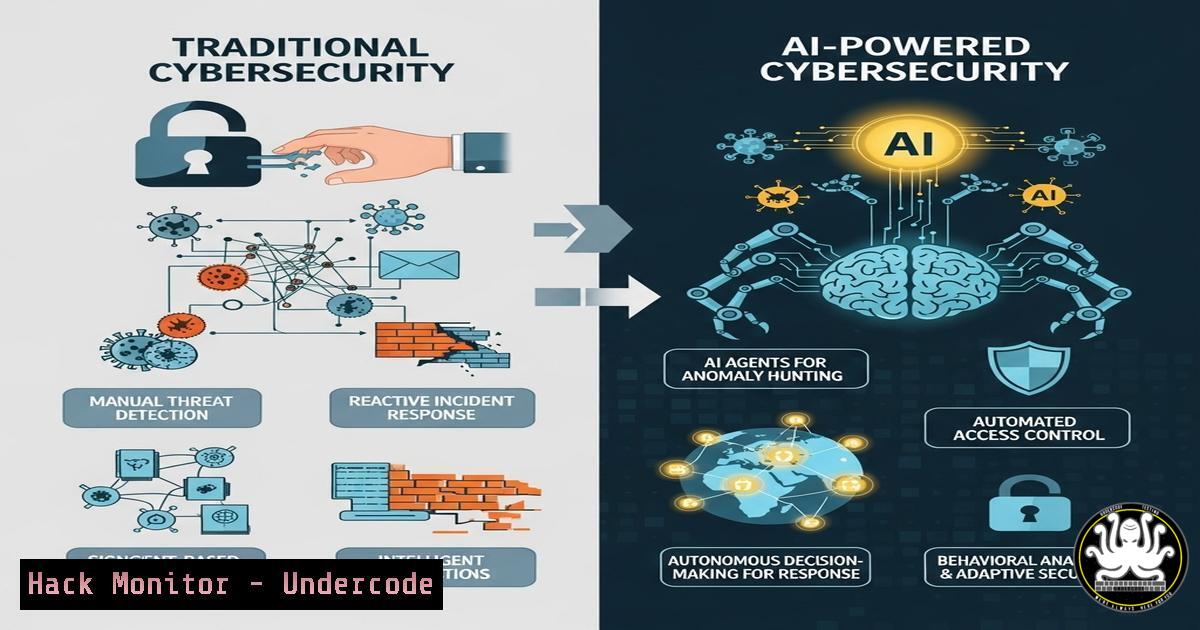
Introduction:
The rise of agentic AI, where autonomous systems make decisions and execute complex tasks without human intervention, is creating a new frontier in cybersecurity. This paradigm shift introduces unprecedented efficiency but also opens a Pandora’s box of novel attack vectors and defensive possibilities. Understanding the technical mechanics of these systems is no longer optional for cybersecurity professionals.
Learning Objectives:
- Understand the core architecture of agentic AI systems and their inherent security implications.
- Learn to identify and mitigate potential vulnerabilities introduced by autonomous AI decision-making.
- Acquire practical skills for securing AI pipelines, monitoring agent behavior, and implementing defensive controls.
You Should Know:
1. Securing the AI Agent Environment
Agentic AI systems operate within defined environments; securing this runtime is paramount. Containerization and strict resource constraints are critical first steps.
Linux: Run an AI agent in a constrained Docker container

<h2 style="color: yellow;">docker run --rm -it \</h2>

--cpu-quota 50000 \

--memory="512m" \

--cap-drop=ALL \

--network="none" \

<h2 style="color: yellow;">python:3.11-slim python agent_script.py
This `docker run` command creates a highly restricted environment for an AI agent. `–cpu-quota` limits CPU usage, preventing resource exhaustion attacks. `–memory=”512m”` caps memory to stop memory-based attacks. `–cap-drop=ALL` removes all Linux capabilities, and `–network=”none”` disables networking, severely limiting a compromised agent’s ability to interact with external systems. Always run untrusted or newly developed agents in such a sandboxed environment.
2. Monitoring Agent API Calls for Anomalies
Agents make API calls to perform tasks; monitoring these calls in real-time is essential for detecting prompt injection or data exfiltration attempts.
` Linux: Use tcpdump to capture and inspect outbound traffic from an agent process
sudo tcpdump -i any -A -s 0 host api.openai.com and port 443 | grep -E “(POST|GET|Authorization)”`
This `tcpdump` command monitors all traffic to a common AI API endpoint. It captures packets (-i any) and prints ASCII output (-A) without size limits (-s 0), filtering for HTTP methods and authorization headers. Redirect this output to a log file and use a SIEM or script to alert on unusual request volumes, high character count prompts, or calls to unauthorized domains, which could indicate a compromise.
3. Implementing Input Sanitization for AI Prompts
Malicious user input can weaponize an AI agent through prompt injection attacks. Rigorous input validation is a necessary defense.
` Python: Basic input sanitization function for AI prompts
import re
def sanitize_prompt(user_input):
Remove potentially dangerous system-level commands
sanitized = re.sub(r'(?i)(rm\s|-rf|mkdir|wget|curl|\.\./)’, ”, user_input)
Limit input length to prevent resource abuse
if len(sanitized) > 1000:
raise ValueError(“Input length exceeds maximum allowed characters.”)
Escape special characters that could break the prompt context
sanitized = re.sub(r'([\”\’\`\\])’, r’\\\1′, sanitized)
return sanitized
Example usage
try:
safe_prompt = sanitize_prompt(user_prompt)
except ValueError as e:
print(f”Input rejected: {e}”)`
This Python function demonstrates a multi-layered sanitization approach. It uses regex to remove common command injection payloads, imposes a strict character limit to prevent denial-of-service via extremely long prompts, and escapes special characters that could be used to break out of the intended prompt context and inject malicious instructions.
4. Hardening the AI Model Inference Server
The server hosting the AI model is a high-value target. Applying standard web server hardening techniques is non-negotiable.
` Nginx configuration snippet for securing an AI inference API endpoint
server {
listen 443 ssl;
server_name inference.yourcompany.com;
TLS hardening
ssl_protocols TLSv1.2 TLSv1.3;
ssl_ciphers ECDHE-ECDSA-AES128-GCM-SHA256:ECDHE-RSA-AES128-GCM-SHA256;
Rate limiting to prevent abuse
limit_req_zone $binary_remote_addr zone=api_limit:10m rate=1r/s;
location /v1/completions {
Apply rate limiting
limit_req zone=api_limit burst=5 nodelay;
Only allow POST requests
if ($request_method !~ ^(POST)$ ) {
return 405;
}
Strict Content-Type checking
if ($content_type !~ “application/json”) {
return 415;
}
Proxy pass to your AI model server
proxy_pass http://localhost:8000;
}
}`
This Nginx configuration implements critical security controls. It enforces modern TLS protocols, rate limits requests to prevent model abuse or denial-of-service, restricts endpoints to only accept POST methods, and validates the Content-Type header. This mitigates a wide range of common web-based attacks targeting the inference endpoint.
5. Auditing Agent Actions with Immutable Logging
Maintaining an immutable audit trail of every action an autonomous agent takes is crucial for post-incident forensic analysis and compliance.
` Linux: Using journald for structured, immutable logging of agent actions
Configure a systemd service for your AI agent
/etc/systemd/system/ai-agent.service
[bash]
Description=AI Agent Service
[bash]
ExecStart=/usr/bin/python3 /opt/ai-agent/main.py
Restart=on-failure
Logging directives
LogLevelMax=INFO
LogExtraFields=AGENT_ID=%n AGENT_ACTION=EXECUTE
StandardOutput=journal
StandardError=journal
Use auditd to make logs immutable
/etc/audit/audit.rules
-w /var/log/journal -p wa -k agent_audit_log`
This setup leverages `systemd` journald for structured logging, automatically capturing stdout/stderr. The `LogExtraFields` adds context. More importantly, the `auditd` rule (-w /var/log/journal -p wa) monitors the log directory for any write or attribute changes, generating an audit event if anyone tries to tamper with the logs, thus preserving evidence.
- Implementing Network Segmentation for AI Components
Isolate AI agents, models, and data stores from the main corporate network to contain potential breaches.` Windows: Using PowerShell to configure advanced firewall rules for AI segmentation
Create a new firewall rule to allow traffic only from the AI agent subnet to the model server
New-NetFirewallRule -DisplayName “Allow_AI_Agent_to_Model_Server” `
-Direction Inbound `
-LocalPort 8000 `
-Protocol TCP `
-Action Allow `
-Profile Domain, Private `
-RemoteAddress 192.168.10.0/24 `
-Description “Allow traffic from AI agent subnet to model inference port.”Block all other inbound traffic to the model server port
New-NetFirewallRule -DisplayName “Block_All_Other_to_Model_Server” `
-Direction Inbound `
-LocalPort 8000 `
-Protocol TCP `
-Action Block `
-Profile Any `
-Description “Block all other traffic to model server.”`
These PowerShell commands create a Windows Advanced Firewall policy that implements a basic segmentation strategy. The first rule explicitly allows traffic only from a specific AI agent subnet (192.168.10.0/24) to the model server port. The second rule is a explicit block rule for all other traffic to that port, ensuring the isolation is enforced by deny-by-default.
- Validating and Hardening Third-Party AI Dependencies
Agents often rely on open-source libraries and models; these dependencies must be vetted for vulnerabilities.` Linux: Using safety (https://github.com/pyupio/safety) and grype to scan Python AI dependencies
Scan for vulnerabilities in Python packages (e.g., langchain, transformers)
safety check -r requirements.txt –full-reportUse Grype to scan a downloaded AI model Docker image
grype your-ai-model-image:latestVerify checksum of a downloaded pre-trained model file
echo “a1b2c3d4e5f6… ./models/pretrained-llm.bin” | sha256sum -c -`The `safety` command scans your Python `requirements.txt` for known vulnerabilities in packages like LangChain or Hugging Face Transformers. `grype` performs a comprehensive vulnerability scan on a Docker image containing your model. Finally, always verify the checksum of downloaded pre-trained model files against a trusted source to ensure they haven’t been tampered with, substituting the example hash with the correct one.
What Undercode Say:
– The attack surface is shifting from the application layer to the prompt and model layer, requiring a new mindset for security practitioners.
– The speed and scale of agentic AI operations mean manual response is impossible; security must be automated and baked into the agent’s lifecycle from the start.
The paradigm of agentic AI is not just another technology to secure; it represents a fundamental shift in the anatomy of an attack. Traditional vulnerability scanning and perimeter defense are necessary but insufficient. The new battleground is the prompt—a simple text field that can become a remote code execution gateway. Security teams must now understand natural language processing, model biases, and the intricate chain of reasoning an agent employs. The principle of least privilege must be applied not just to users, but to the AI agents themselves, constraining their permissions, network access, and allowable actions. The organizations that will succeed are those that integrate security into the prompt engineering and agent training process itself, creating a culture of “SecAgentOps” where safety and security are foundational requirements, not afterthoughts.
Prediction:
The widespread adoption of agentic AI will lead to the first major “Model Worm” incident within the next 18-24 months. This worm will propagate by using compromised AI agents to identify and exploit vulnerabilities in other connected AI systems, leveraging natural language communication to spread laterally in a way traditional malware cannot. It will exfiltrate sensitive training data and manipulate AI-driven financial markets or critical infrastructure. This event will serve as a catastrophic wake-up call, forcing the industry to develop standardized AI security frameworks, mandatory model auditing, and AI-specific incident response protocols, ultimately leading to the emergence of a new cybersecurity specialization: AI Threat Intelligence and Response.
🎯Let’s Practice For Free:
IT/Security Reporter URL:
Reported By: Naveen Aswal – Hackers Feeds
Extra Hub: Undercode MoN
Basic Verification: Pass ✅


